Gradual vs. Insidious can cause confusion because both words describe change, but their meanings are distinct and not interchangeable in every situation. Gradual describes something that happens slowly over time through a slow, steady process, while insidious suggests a harmful change that develops quietly and may go unnoticed.
It usually has a neutral or positive meaning and can describe gradual improvement in health, gradual growth in business, or small changes in company operations. A company might implement a gradual approach to reducing its carbon footprint over a period of years, with each step building on the previous one in a deliberate, intentional, step-by-step fashion. Insidious, however, has a negative meaning and refers to problems, dangers, or harmful situations that develop, spread, or happen slowly in a harmful, sneaky, or deceptive way.
In my experience with English learners and native speakers, the key difference becomes easier to understand when you check the pace, nature, and result of the change. To avoid common mistakes, choose gradual for a slow process that may be neutral or positive, and insidious for something harmful that remains hidden or unnoticed until it becomes serious. These real-life examples make the comparison easy to remember and help you use each word correctly in a sentence when you are unsure which word fits.
Quick Answer
The main difference between gradual and insidious is their meaning and emotional impact.
| Word | Meaning | Tone | Example |
| Gradual | Something that happens slowly over time | Neutral | “The company experienced gradual growth over several years.” |
| Insidious | Something harmful that develops slowly and secretly | Negative | “The disease had an insidious effect on his health.” |
A simple way to remember:
- Gradual = slow change
- Insidious = slow harmful change
Every insidious change is gradual, but not every gradual change is insidious.
What Does Gradual Mean?
The word gradual describes something that happens slowly in small steps rather than suddenly. It focuses only on the pace of change, not whether the change is good or bad.
A gradual process usually feels steady and predictable. It may take days, months, or even years to complete.
For example:
- A student gradually improves their writing skills through practice.
- A city gradually expands as more people move there.
- A person gradually becomes healthier after changing their lifestyle.
In each example, the change happens over time. However, none of these examples automatically suggest danger or harm.
Definition of Gradual
Gradual (adjective): Happening slowly over a period of time, usually through small changes.
Common dictionary meanings include:
- Slow and steady development
- Occurring little by little
- Increasing or decreasing step by step
The word comes from the idea of moving through stages rather than making a sudden jump.
Examples of Gradual Changes
Gradual changes appear in many areas of life.
Personal development:
“Her confidence grew gradually after years of public speaking.”
Confidence does not usually appear overnight. It develops through repeated experiences.
Technology:
“The gradual adoption of electric vehicles is changing the automobile industry.”
The transition does not happen instantly. It takes time as consumers, companies, and governments adjust.
Nature:
“The gradual erosion of the coastline has changed the landscape.”
Natural processes often happen slowly but visibly.
Read More: Analyst vs Analist: Which Spelling Is Correct?
What Does Insidious Mean?
The word insidious describes something that develops slowly while causing harm. The key idea is that the problem is often hidden, unnoticed, or difficult to recognize in the beginning.
Unlike gradual, the word insidious carries a negative meaning.
An insidious problem often works quietly in the background until its effects become serious.
For example:
- A disease may develop without clear early symptoms.
- False information may spread slowly and influence public opinion.
- A toxic workplace culture may damage employees over time.
Definition of Insidious
Insidious (adjective): Developing gradually but causing serious harm in a way that is difficult to notice.
The word often describes:
- Hidden dangers
- Slow damage
- Secret harmful influences
- Problems that grow unnoticed
Examples of Insidious Situations
Health example:
“The illness had an insidious beginning, with symptoms appearing slowly over several years.”
The danger was not obvious at first.
Social example:
“The insidious spread of misinformation affected how people understood important issues.”
The problem grew quietly before many people recognized it.
Workplace example:
“An insidious culture of fear reduced employee creativity and motivation.”
The damage developed slowly rather than appearing immediately.
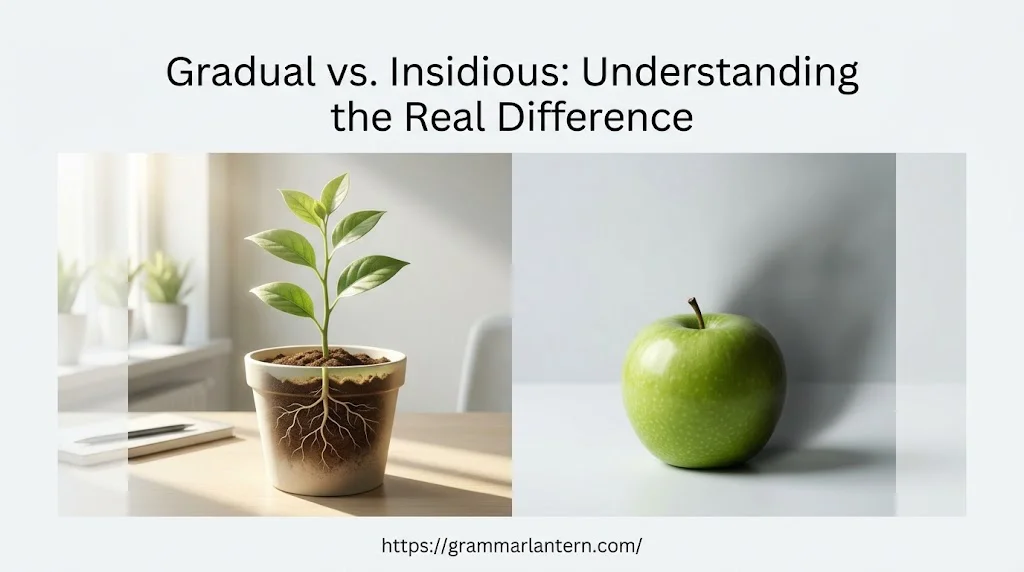
Key Differences
Although these words overlap, several important differences separate them.
| Difference | Gradual | Insidious |
| Speed | Slow | Slow |
| Hidden nature | Not necessarily hidden | Often hidden |
| Meaning | Neutral | Usually negative |
| Harm involved | Not required | Usually involves harm |
| Awareness | May be obvious | Often unnoticed |
1. Gradual Focuses on Time, While Insidious Focuses on Harm
The biggest difference is what the word emphasizes.
Gradual answers the question:
“How does something happen?”
It tells you that a process takes place slowly.
Example:
“The temperature gradually increased during the afternoon.”
The sentence only describes the speed of change.
Insidious answers a different question:
“How does something harmful develop?”
Example:
“The insidious effects of pollution damaged the ecosystem.”
The sentence suggests slow damage that creates negative consequences.
2. Gradual Changes Can Be Positive or Negative
A gradual change does not have a built-in emotional meaning.
It can describe improvement:
“The athlete made gradual progress after months of training.”
It can describe decline:
“The company experienced a gradual decrease in sales.”
It can describe a normal process:
“The gradual transition from winter to spring brings warmer weather.”
The word simply explains that something happens slowly.
3. Insidious Changes Usually Involve Hidden Problems
When you use insidious, you warn the reader that something dangerous is happening beneath the surface.
For example:
A gradual increase in exercise is healthy.
An insidious increase in stress may damage mental and physical health over time.
The difference is not the speed. Both happen slowly. The difference is the impact.
Examples in Real Situations
Health and Medicine
Health is one of the most common areas where these words appear.
Gradual:
“The patient experienced gradual recovery after surgery.”
The recovery happened slowly but positively.
Insidious:
“The disease had an insidious progression and remained undetected for years.”
The disease developed quietly and caused harm.
Business and Organizations
Businesses also experience slow changes.
Gradual:
“The company achieved gradual growth by improving customer service.”
The growth was steady and beneficial.
Insidious:
“The insidious decline in workplace morale affected productivity.”
The problem developed slowly and harmed the organization.
Technology and Society
Modern problems often have slow effects.
Gradual:
“The gradual development of artificial intelligence has transformed many industries.”
The change describes progress over time.
Insidious:
“The insidious spread of online scams has affected millions of users.”
The issue grows quietly while causing damage.
Common Mistakes
Mistake 1: Calling Every Slow Change Insidious
A slow process is not automatically harmful.
Incorrect:
“The insidious growth of a child.”
Correct:
“The gradual growth of a child.”
Children naturally grow over time. There is no hidden danger involved.
Mistake 2: Using Gradual When Describing Hidden Damage
Sometimes writers choose gradual when they need a stronger warning.
Example:
Weak:
“The gradual effects of corruption damaged society.”
Better:
“The insidious effects of corruption damaged society.”
The second sentence shows that the corruption spread quietly and caused harm.
Mistake 3: Thinking Insidious Means Sudden
Many people misunderstand insidious and think it means sudden or shocking.
However, insidious problems are usually the opposite.
They develop slowly.
The danger comes from the fact that people may not notice them until the damage becomes serious.
Synonyms
Choosing the right synonym can improve your writing.
Synonyms for Gradual
- Slow
- Steady
- Progressive
- Incremental
- Step-by-step
- Continuous
Examples:
“The gradual improvement in performance was noticeable.”
Similar:
“The steady improvement in performance was noticeable.”
Synonyms for Insidious
- Harmful
- Sneaky
- Hidden
- Deceptive
- Stealthy
- Treacherous
Examples:
“The insidious influence of propaganda changed public opinions.”
Similar:
“The deceptive influence of propaganda changed public opinions.”
How to Remember the Difference
A simple memory trick can make these words easier.
Think about a tree.
A tree growing taller each year is gradual.
A disease slowly damaging the tree from inside is insidious.
The first example shows slow development. The second shows slow destruction.
You can also use this quick test:
Ask yourself:
Is the change only slow?
Use gradual.
Is the change slow and harmful?
Use insidious.
Read More: Envolve vs Involve: Correct Spelling, Meaning, and Usage
FAQs
1. What is the main difference between gradual and insidious?
Gradual describes something that happens slowly over time, often in a steady or natural way. Insidious describes something that develops slowly but causes harm, often without being noticed at first.
2. Is gradual always a positive word?
No. Gradual is usually neutral. It can describe positive changes, such as gradual improvement, or negative changes, such as gradual decline.
3. Is insidious always negative?
Yes. Insidious normally has a negative meaning because it describes something harmful, dangerous, or unpleasant that develops quietly.
4. Can gradual and insidious be used interchangeably?
No. Although both can describe slow development, their meanings are different. Gradual focuses on the pace of change, while insidious emphasizes hidden or harmful effects.
5. What does gradual mean in simple English?
Gradual means happening slowly, little by little, instead of happening suddenly.
6. What does insidious mean in simple English?
Insidious means something harmful that develops slowly and quietly, often before people realize there is a problem.
7. Can I use gradual for business growth?
Yes. Gradual growth is a common phrase for business expansion that happens steadily over time rather than suddenly.
8. What are common examples of insidious problems?
Examples include insidious disease, hidden corruption, harmful habits, and environmental damage that develops slowly without immediate warning.
9. How can I remember the difference?
Think of gradual as “slow and steady” and insidious as “slow and harmful.” This simple contrast makes the difference easier to remember.
10. Which word should I use for a slow but harmless change?
Use gradual when the change is simply slow and does not suggest hidden danger or harm.
Conclusion
Understanding gradual vs. insidious becomes easier when you focus on what the words emphasize. Gradual describes the speed of a change and can be neutral, positive, or negative. Insidious, however, points to something harmful that develops slowly, quietly, and often without immediate notice.
When choosing between these words, ask yourself whether you are simply describing a slow process or warning about a hidden danger. If the change is steady and does not suggest harm, gradual is usually the right choice. If it develops quietly and causes or threatens harm, insidious fits better.

For Shafiq ur Rehman, writing is an art form and grammar is the toolbox that makes it beautiful. As a dedicated content writer at Grammar Lantern, Shafiq approaches every topic like an architect carefully laying down strong foundations of understanding before adding the finer details. He loves diving into the trickiest grammar points and resurfacing with simple, bite-sized takeaways that anyone can grasp. When he’s not crafting articles, you’ll likely find him strategizing over a game of chess, exploring dusty local bookshops, or quietly jotting down poetic observations in his notebook.