When I explored Plating vs Platting, I learned these commonly confused words differ in spelling, meaning, and usage despite their similar appearance. Plating is the correct spelling for a process where a metal coating adds a thin coating of metal to an object for protection, better appearance, and improved durability. These words have different definitions, definition, contexts, and applications, so understanding their distinction helps you distinguish the differences easily.
A complete guide with grammar, grammar rules, grammar tips, proper usage, and correct usage can help learners avoid confusion. In many industries, including manufacturing, automotive, electronics, jewelry, industrial production, and metal finishing, professionals use plating for practical and decorative purposes.
This comparison helps an English learner, student, writer, professional, or homeowner compare, understand, and build better understanding of both terms. Using pronunciation, common uses, meanings, and examples removes uncertainty, guesswork, doubt, and misunderstanding while selecting the correct word. These memory tricks make the learning process memorable, beginner-friendly, easy-to-understand, simple, clear, and practical, helping you communicate more accurately, confidently, and improve your English while avoiding common mistakes and unnecessary errors.
Quick Answer
Plating means covering something with a thin layer of another material or arranging food for presentation.
Examples:
- Gold plating adds a thin layer of gold to jewelry.
- A chef focuses on plating when arranging a dish.
Platting means creating an official land map that shows property divisions, streets, and boundaries.
Example:
- A developer completes platting before creating a new housing subdivision.
| Word | Meaning | Common Use |
| Plating | Adding a layer or arranging food | Jewelry, manufacturing, cooking |
| Platting | Mapping and dividing land | Real estate, surveying, city planning |
What Does Plating Mean?
The word plating comes from the verb plate, which means to cover, coat, or place something on a plate. The meaning changes depending on the situation, but the central idea remains the same: adding, covering, or arranging.
Plating appears in many industries because it improves appearance, protection, or performance. It can make an ordinary object look more valuable or help a machine part last longer.
For example, a cheap metal object can receive a thin gold coating and appear more attractive. Similarly, a restaurant meal can become more appealing when a chef carefully arranges ingredients on a plate.
The word has several common uses:
- Metal plating
- Food plating
- Industrial plating
- Decorative plating
- Protective coating processes
Metal Plating: Adding a Protective or Decorative Layer
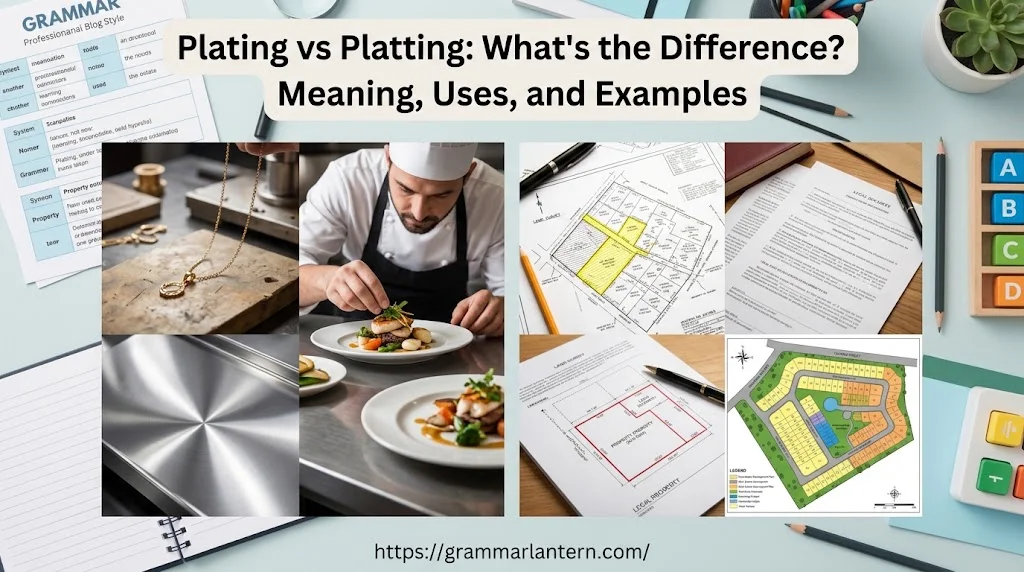
One of the most common meanings of plating relates to metal finishing. Metal plating involves covering one material with a thin layer of another metal.
Manufacturers often use plating because it improves both function and appearance.
For example:
- Gold plating gives jewelry a luxurious appearance without using solid gold.
- Chrome plating creates a shiny finish on automotive parts.
- Nickel plating helps protect metal surfaces from corrosion.
Metal plating is widely used in industries such as:
- Automotive manufacturing
- Electronics
- Aerospace
- Jewelry production
- Machinery manufacturing
A simple way to understand metal plating is to imagine putting a protective jacket on an object. The base material remains underneath, but the outer layer provides additional benefits.
Benefits of Metal Plating
| Benefit | Explanation |
| Better appearance | Creates a polished or valuable-looking surface |
| Corrosion protection | Helps prevent rust and damage |
| Increased durability | Makes surfaces resist wear |
| Improved performance | Enhances electrical or mechanical properties |
For example, electronic components often use plating because certain metals conduct electricity better and resist damage over time.
Food Plating: Creating Attractive Dishes
The word plating also plays an important role in the culinary world. In restaurants, plating refers to how chefs arrange food on a plate before serving it.
A meal is not only about taste. Presentation affects how people experience food.
Professional chefs consider:
- Color balance
- Portion size
- Ingredient placement
- Texture contrast
- Garnishes
- Plate design
A beautifully plated meal can make simple ingredients feel special.
For example:
A chef serving grilled chicken might arrange vegetables carefully, add a colorful sauce, and place herbs on top. The ingredients remain the same, but the presentation creates a more memorable experience.
As chefs often say:
“People eat with their eyes first.”
Good plating creates a visual introduction before the first bite.
Read More: Can You Start a Sentence With “Otherwise”? Complete Guide
What Does Platting Mean?
Unlike plating, platting is not commonly used in everyday conversations. It is a technical term connected to land development and property management.
Platting comes from the word plat, which means an official map showing how land is divided.
When someone talks about platting, they usually mean the legal process of preparing and recording a land subdivision.
For example, imagine a large piece of farmland that a developer wants to turn into a neighborhood. Before homes can be built and sold, the land may need to be divided into individual lots.
That process is called platting.
What Is a Plat?
A plat is an official map that shows details about a piece of land.
A plat usually includes:
- Property boundaries
- Individual lots
- Streets and roads
- Easements
- Public areas
- Utility locations
Unlike a simple sketch, a plat is usually a legal document reviewed by government authorities.
A properly approved plat helps establish clear property ownership and prevents future disputes.
Where Is Platting Used?
Platting is mainly used in real estate and land planning.
Common examples include:
- Creating a new residential neighborhood
- Dividing a large property into smaller lots
- Developing commercial areas
- Planning streets and public spaces
For example:
A real estate company purchases 50 acres of undeveloped land. Before selling individual homesites, the company works with surveyors and local authorities to complete the platting process.
The final plat shows where each lot begins and ends.
Main Differences
Although these words look similar, their meanings are completely different.
| Difference | Plating | Platting |
| Root word | Plate | Plat |
| Main idea | Adding a layer or arranging something | Creating a land map |
| Industry | Manufacturing, cooking, jewelry | Real estate and surveying |
| Everyday use | Very common | Mostly technical |
| Example | Gold plating on a necklace | Platting land for a subdivision |
A helpful way to remember the difference:
Plating = improving or arranging something.
Platting = planning and dividing land.
Why Do People Confuse Plating and Platting?
The confusion happens because the words share several similarities.
Both words:
- Begin with “plat”
- Have similar pronunciation
- Look almost identical
- End with “-ing”
However, the extra t in platting changes the meaning.
The difference comes from the base words:
- Plate → Plating
- Plat → Platting
A plate is something related to surfaces, objects, or food. A plat is a legal land map.
Common Mistakes
Using Platting for Jewelry or Metal Coating
Incorrect:
- The company offers gold platting services.
Correct:
- The company offers gold plating services.
Why?
Gold is applied as a surface layer, so plating is the correct term.
Using Plating for Land Development
Incorrect:
- The developer finished the plating process for the new neighborhood.
Correct:
- The developer finished the platting process for the new neighborhood.
Why?
The developer is dividing and mapping land, so the correct word is platting.
Thinking Platting Is Incorrect
Some people assume platting is a spelling error because they rarely see it.
However, platting is a legitimate technical term used in property development and surveying.
Read More: Comming vs Coming: Correct Spelling, Meaning, and How to Use
Related Words: Plate, Plat, Plated, and Platted
Understanding related words makes the difference easier to remember.
Plate
A plate can mean:
- A dish used for food
- A flat piece of material
- A surface layer
Examples:
- “She placed the meal on a ceramic plate.”
- “The machine uses a steel plate.”
Plat
A plat is a legal land map.
Example:
- “The county approved the final plat for the housing project.”
Plated
Plated is the past tense of plate.
Examples:
- “The necklace was plated with silver.”
- “The chef plated the dessert beautifully.”
Platted
Platted describes land that has gone through the platting process.
Example:
- “The newly platted area will include residential lots and parks.”
How to Remember Easily
Use this simple memory trick:
Plating = Plate + Surface
Think about:
- Food
- Jewelry
- Metal coating
Platting = Plat + Property
Think about:
- Land
- Maps
- Real estate
A quick visual comparison:
| Remember | Think About |
| Plating | Adding something to a surface |
| Platting | Dividing land into sections |
FAQs
1. What is the difference between plating and platting?
Plating refers to adding a thin layer of metal to an object to improve its protection, appearance, or durability. Platting usually relates to land division, property mapping, and planning processes.
2. Is plating the correct spelling?
Yes, plating is the correct spelling when you are talking about metal coating, finishing, or covering an object with a layer of metal.
3. Is platting a real word?
Yes, platting is a real word, but it has a different meaning. It is mainly used in real estate, surveying, and land development to describe the process of creating land maps or plans.
4. Why do people confuse plating and platting?
People often confuse these words because they look almost identical and differ by only one letter. Their similar spelling makes it easy to mix up their meanings.
5. Where is plating commonly used?
Plating is widely used in industries such as automotive, electronics, jewelry, manufacturing, and metal finishing to improve the quality and appearance of products.
6. Where is platting commonly used?
Platting is commonly used in land development, urban planning, civil engineering, surveying, and property records to organize and document land divisions.
7. How can I remember the difference between plating and platting?
You can remember that plating contains “metal” in its meaning, while platting connects with “plats,” which are land maps or property plans.
8. Can plating and platting be used interchangeably?
No, plating and platting cannot be used interchangeably because they describe completely different processes and contexts.
9. What are common mistakes with plating and platting?
Common mistakes include using platting when referring to metal coating or using plating when discussing property maps and land planning.
10. How can learning the difference improve writing skills?
Understanding the difference between plating and platting helps you choose the correct word, avoid confusion, improve communication, and write more accurately.
Conclusion
Plating and platting may appear almost identical, but their meanings, applications, and industries are completely different. Plating focuses on metal coating, surface protection, and improving the appearance of objects, while platting deals with land division, property planning, and surveying. Recognizing these differences helps you avoid spelling mistakes and use each word correctly in the right context.
Learning commonly confused words like plating and platting improves your vocabulary, writing accuracy, and communication skills. With a clear understanding of their definitions, examples, and proper usage, you can confidently select the correct term and prevent unnecessary misunderstandings in professional and everyday writing.

For Shafiq ur Rehman, writing is an art form and grammar is the toolbox that makes it beautiful. As a dedicated content writer at Grammar Lantern, Shafiq approaches every topic like an architect carefully laying down strong foundations of understanding before adding the finer details. He loves diving into the trickiest grammar points and resurfacing with simple, bite-sized takeaways that anyone can grasp. When he’s not crafting articles, you’ll likely find him strategizing over a game of chess, exploring dusty local bookshops, or quietly jotting down poetic observations in his notebook.


[…] Read More: Plating vs Platting: What’s the Difference? […]