Choosing between Hemmed and Unhemmed clothing can seem like a small detail, but it affects how a garment looks, fits, and feels. A finished edge gives clothing a polished appearance, while a raw edge creates a more unfinished or relaxed look. Knowing the difference becomes especially useful when buying trousers, suits, or other garments that may need alterations.
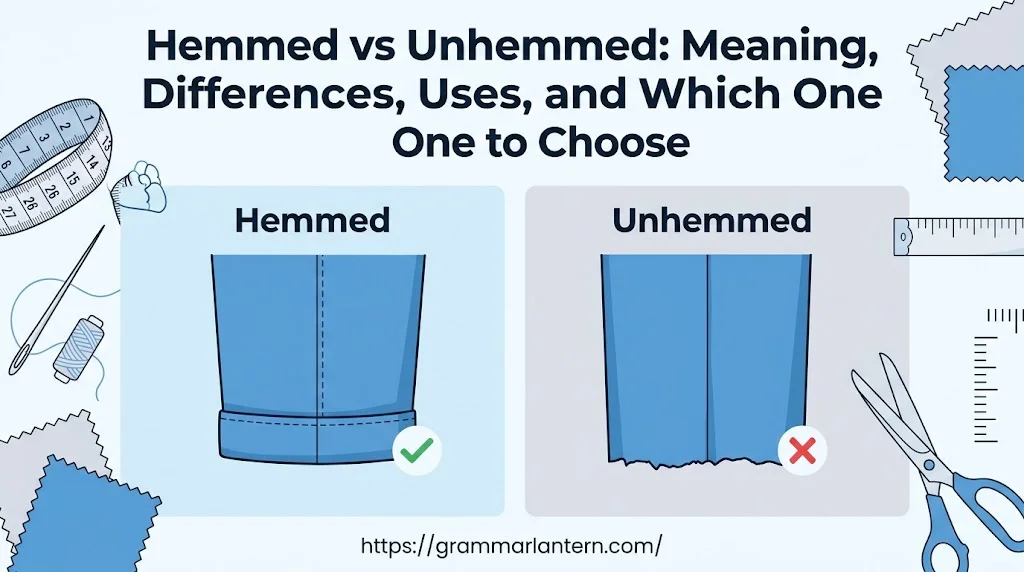
In simple terms, Hemmed clothing has a folded edge that is stitched down to keep the fabric secure. Unhemmed clothing leaves the fabric edge unfinished, giving you extra material that a tailor can adjust. This distinction is particularly important when choosing pants because the correct length can change the overall appearance of your outfit.
I have found that understanding Hemmed vs Unhemmed makes clothing choices much easier. Hemmed garments are convenient when you want something ready-to-wear, while Unhemmed garments offer more flexibility for custom tailoring. Once you understand these differences, selecting the right finish becomes a much simpler decision.
Quick Answer
Hemmed means the edge of a garment has been folded, finished, and secured with stitching. The finished edge helps control fraying and gives the garment a clean appearance.
Unhemmed means the edge has been left unfinished. The fabric may have a raw cut edge, although the exact appearance depends on how the manufacturer prepared the garment.
Here is the basic difference:
| Feature | Hemmed | Unhemmed |
| Edge | Finished | Unfinished |
| Appearance | Neat and polished | Raw or incomplete |
| Length | Usually predetermined | Can be customized |
| Fraying | Better controlled | More likely |
| Tailoring | Usually unnecessary | Often required |
| Flexibility | Lower | Higher |
| Ready to wear | Usually yes | Usually no |
| Best for | Immediate use | Custom fitting |
A useful rule is simple:
Hemmed means finished. Unhemmed means you still have finishing work to do.
What Does Hemmed Mean?
Hemmed describes a fabric edge that has been finished by folding or turning the material and securing it with stitching.
The hem usually sits at the end of a garment. On pants, it’s around the bottom of each leg. On a skirt, it runs around the lower edge, and On a shirt, it commonly appears around the bottom opening and sometimes the sleeves.
The purpose isn’t purely cosmetic. A good hem keeps the fabric edge controlled while creating a cleaner visual finish.
Definition of Hemmed
In clothing terminology, hemmed means that a fabric edge has been folded, stitched, or otherwise finished to prevent an exposed edge from remaining unfinished.
For example:
- Hemmed pants have finished leg openings.
- A hemmed skirt has a finished lower edge.
- A hemmed shirt has a finished bottom edge.
- A hemmed curtain has a finished edge instead of a raw cut edge.
The word can also function as the past participle of the verb hem.
For example:
The tailor hemmed my trousers before the wedding.
Here, hemmed describes the action performed on the garment.
How a Hemmed Edge Is Made
A basic hem follows a straightforward process:
- The desired length is measured.
- The fabric is marked.
- Excess material may be trimmed.
- The edge is folded inward.
- The fold is pressed or held in place.
- Stitching secures the fold.
- The finished edge is checked for evenness.
Different garments require different hem treatments. Lightweight fabric may need a narrow finish. Heavy denim can require a sturdier construction.
The hem also needs to match the garment’s design. A casual T-shirt doesn’t necessarily need the same hem treatment as tailored wool trousers.
Common Examples of Hemmed Clothing
You encounter hems almost everywhere in clothing.
Common examples include:
- Dress pants
- Jeans
- Chinos
- Shorts
- Skirts
- Dresses
- Shirts
- T-shirts
- Jackets
- Coats
- Curtains
- Table linens
In everyday conversation, however, hemmed often comes up when discussing trousers and jeans.
Hemmed as a Verb in Clothing Terminology
The word can describe either the finished result or the action.
As a noun:
The pants have a narrow hem.
As a verb:
The tailor will hem the pants tomorrow.
As an adjective or participle:
I bought a pair of hemmed trousers.
That distinction matters because hem refers to both the edge finish and the process of creating it.
Read More: Stub vs. Stab: Meaning, Difference, Pronunciation, and Usage
What Does Unhemmed Mean?
Unhemmed means the edge hasn’t received a finished hem.
This doesn’t automatically mean the garment is badly made. In many cases, manufacturers intentionally leave certain garments unhemmed because the buyer will have the length adjusted later.
Dress trousers provide a classic example.
A manufacturer can produce trousers with extra fabric at the bottom. The customer then visits a tailor who measures the trousers while the customer wears the shoes they plan to use. The tailor creates the final hem at the appropriate length.
Definition of Unhemmed
An unhemmed garment has an edge that remains unfinished or hasn’t received its final hem treatment.
You may see:
- A loose fabric edge
- A clean but raw-cut edge
- Extra fabric below the intended finished length
- Temporary stitching
- A garment intentionally prepared for tailoring
The exact appearance varies by garment and manufacturer.
What an Unhemmed Edge Looks Like
An unhemmed trouser leg can look noticeably different from a finished one.
The fabric may extend below the ankle with a raw edge. Some trousers arrive with extra length specifically so a tailor can determine the final inseam.
An unhemmed edge can also fray with repeated wear. That’s particularly noticeable with fabrics that shed threads easily.
However, unhemmed doesn’t always mean “damaged.” Context matters.
Why Some Garments Are Sold Unhemmed
Custom and higher-end trousers are often left unhemmed because body measurements vary considerably.
Consider two people who both wear the same waist size. Their inseam lengths may differ substantially. One person might need a 29-inch inseam while another needs a 33-inch inseam.
Selling both people identical pre-hemmed trousers would force at least one customer into an imperfect fit.
Unhemmed construction solves that problem.
Common Examples of Unhemmed Clothing
Unhemmed garments commonly include:
- Dress trousers
- Suit trousers
- Made-to-measure pants
- Some jeans
- Sewing-project garments
- Custom skirts
- Tailoring blanks
- Certain curtains and fabric pieces
The term is especially useful when shopping for trousers that require final tailoring.
The Main Difference
The central difference is finish versus flexibility.
A hemmed garment already has a completed edge. An unhemmed garment gives you more room to decide exactly where that edge should end.
Think of it like buying a picture frame.
A finished frame is ready to hang. A blank frame gives you more control over how you prepare it. The extra flexibility can be useful, but it also creates additional work.
Hemmed vs Unhemmed at a Glance
| Factor | Hemmed | Unhemmed |
| Finished edge | Yes | No |
| Custom length | Limited | High flexibility |
| Tailoring needed | Usually no | Usually yes |
| Immediate wear | Yes | Usually no |
| Edge protection | Better | Depends on fabric |
| Alteration potential | Depends on available fabric | Usually greater |
| Appearance | Finished | Incomplete until finished |
| Common purpose | Retail-ready clothing | Custom fitting |
The Key Difference in Simple Terms
If you want something ready to wear, hemmed usually makes more sense.
If you want precise customization, unhemmed may be preferable.
Neither term automatically indicates superior quality. A carefully hemmed inexpensive garment can have a better finish than a poorly tailored expensive one.
Hemmed vs Unhemmed Pants
The distinction becomes particularly important with pants.
Trouser length changes how the entire outfit looks. A hem that’s too long can create excessive fabric around the shoe. One that’s too short can expose too much sock or ankle for the intended style.
What Hemmed Pants Mean
Hemmed pants have finished leg openings.
The manufacturer or tailor has already determined the length and completed the bottom edge. You can generally wear them immediately if the measurements suit you.
For everyday chinos or casual trousers, this convenience can be valuable.
What Unhemmed Pants Mean
Unhemmed pants usually contain extra length that allows a tailor to establish the final inseam.
This gives you an opportunity to consider:
- Your height
- Your inseam
- Your shoes
- The trouser cut
- Your preferred break
- The fabric’s behavior
- The intended level of formality
That flexibility is one reason tailored trousers often arrive unfinished.
Why Dress Pants Are Often Sold Unhemmed
Formal trousers require more precise fitting than many casual garments.
The ideal trouser length depends partly on the shoes you wear. A dress shoe, loafer, boot, and sneaker can create different visual proportions.
A tailor can also choose among different trouser breaks.
A no-break hem creates a cleaner, shorter appearance. A slight break allows a small fold of fabric at the shoe. A full break produces more fabric gathering around the shoe.
The correct choice depends on the cut and personal style.
Choosing the Right Pant Length
Don’t decide trouser length while standing barefoot.
Wear the shoes you expect to use with the pants. Then examine the fabric from the front, side, and back.
Look for these signs:
- The hem doesn’t drag on the floor.
- The fabric doesn’t bunch excessively.
- The trousers don’t look unnaturally short.
- Both legs sit at the same level.
- The hem works with the shoe shape.
- The overall silhouette remains balanced.
A tailor can make the final adjustment after checking these details.
Cuffed, Plain-Hemmed, and Unfinished Trouser Legs
Not every finished trouser needs a simple plain hem.
You may encounter:
Plain hem: A standard folded finish without a visible cuff.
Cuffed hem: Fabric folds outward to create a visible band around the trouser bottom.
Unfinished hem: The trousers haven’t received their final edge treatment.
The choice changes the appearance and sometimes the tailoring requirements.
Hemmed vs Unhemmed Jeans
Jeans add another layer to the discussion because denim has its own construction and styling traditions.
Finished Jean Hems
A standard finished jean hem creates a clean lower edge. Manufacturers commonly stitch the hem with thread designed to match the garment’s overall appearance.
With mass-produced jeans, the hem is normally determined before the customer buys them.
Raw or Unhemmed Jean Edges
Unhemmed jeans can give denim enthusiasts more control over length and finishing.
Some people deliberately leave denim unhemmed until they establish the exact inseam. Others want to preserve extra length for later changes.
However, raw denim culture also involves specific preferences around how the denim develops with wear. The treatment of the hem can influence the final appearance.
Original Hem vs New Hem
This distinction is especially important when shortening jeans.
An original hem refers to preserving the manufacturer’s existing hem while shortening the jeans.
A new hem removes the original finishing and creates a replacement hem.
Why does that matter?
Because the original hem may contain:
- Distinctive stitching
- Fading
- Wear patterns
- Decorative details
- A specific factory finish
Preserving it can maintain the original visual character of the jeans.
Shirts, Skirts, Dresses, and Other Garments
Pants aren’t the only garments where this distinction matters.
Shirt and T-Shirt Hems
Most commercially sold shirts and T-shirts arrive hemmed.
The bottom edge needs a finished appearance because customers generally expect to wear the garment immediately.
A shirt hem also helps stabilize the fabric and reduce edge distortion during washing and wearing.
Skirt and Dress Hems
Skirts and dresses can use many hem styles.
The ideal finish depends heavily on fabric weight and garment design. A flowing dress might use a narrow rolled finish, while a structured skirt may use a deeper folded hem.
The hem can also influence how the garment hangs.
Shorts and Trouser Hems
Shorts usually have a defined finished length. Some casual styles intentionally use frayed or raw-looking edges, though that doesn’t mean every raw edge is simply an unhemmed garment.
That distinction is worth remembering.
A deliberately distressed edge is a design choice. An unhemmed edge is an unfinished construction detail.
Curtains and Other Fabric Items
The same terminology applies beyond clothing.
Curtains often have hems along the bottom and sides. Tablecloths, napkins, blankets, and other textile products can also have finished edges.
The principle remains the same: the hem controls and finishes the fabric edge.
Why Are Some Clothes Sold Unhemmed?
There are several practical reasons.
Customization
Body proportions vary. Standard sizing cannot perfectly match everyone.
Unhemmed trousers allow the final length to be selected after fitting.
Different Body Measurements
Two people with the same waist measurement can have different inseams.
That’s why waist size alone doesn’t tell you whether trousers will fit correctly.
Tailoring Requirements
Some garments are designed with the assumption that a tailor will complete the final alterations.
This is common with formalwear.
Manufacturing and Retail Considerations
Leaving a garment unhemmed can also make it easier to offer one product to customers with different length requirements.
Instead of stocking numerous combinations of waist and inseam measurements, a retailer can provide extra fabric and let alterations determine the final length.
Advantages of Hemmed Clothing
Hemmed garments offer several practical benefits.
Ready to Wear
The biggest advantage is convenience.
You don’t need to arrange tailoring before wearing the garment.
Cleaner Appearance
A finished edge gives the garment a completed look. The stitching also creates visual structure around the garment’s edge.
Better Edge Control
A proper hem reduces the exposure of the cut fabric edge.
That can help control fraying and keep the garment looking neat.
Easier Everyday Care
A finished edge generally handles ordinary washing and wearing better than a completely raw edge.
The exact durability still depends on fabric and construction quality.
Disadvantages of Hemmed Clothing
A finished hem isn’t always ideal.
Less Length Flexibility
Once a garment has been shortened, you may not have enough material to make it substantially longer.
This is especially important when buying expensive trousers.
Alteration May Be Necessary
A garment can technically be hemmed and still have the wrong length for you.
In that case, you’ll need another alteration.
Existing Hems Can Limit Adjustments
The amount of extra fabric inside the hem determines how much length a tailor can recover.
Some hems contain enough allowance for minor changes. Others don’t.
Original Hem Details May Be Lost
With jeans, removing an original factory hem can change the garment’s appearance.
That is why some alterations preserve the existing hem instead.
Advantages of Unhemmed Clothing
Unhemmed clothing offers a different set of benefits.
More Freedom to Choose the Length
You can determine the final length based on your measurements and preferences.
Useful for Tailoring
A tailor has more freedom when working with extra fabric.
This makes unhemmed trousers particularly practical for custom fitting.
Suitable for Custom-Fit Garments
If your body proportions differ from standard sizing, an unfinished garment can provide a better starting point.
Preserves More Fabric for Alterations
Extra material gives the tailor something to work with.
Once you cut fabric away, you can’t simply wish it back.
Disadvantages of Unhemmed Clothing
Unhemmed garments require more attention.
Requires Additional Work
You may need a tailor before you can wear the garment properly.
Raw Edges Can Fray
Some fabrics begin shedding threads quickly after cutting.
A finished hem helps control this problem.
Not Always Ready to Wear
If you’re buying trousers for an event tomorrow, unhemmed pants may create an inconvenient extra step.
May Require Professional Tailoring
Formal trousers often benefit from precise fitting. Trying to guess the final length can produce an awkward silhouette.
Hemming Methods and Finishes
A hem isn’t always created the same way.
Basic Folded Hem
The fabric edge folds inward and receives stitching.
This is one of the most common finishing methods.
Blind Hem
A blind hem uses stitching designed to remain subtle from the outside.
It’s useful when a visible line of stitching would distract from the garment.
Double-Fold Hem
The fabric folds inward more than once.
This encloses the raw edge and creates a clean finish.
Rolled Hem
A narrow amount of fabric rolls inward before stitching.
This works particularly well for lightweight fabrics and certain delicate garments.
Original-Hem Alteration
With jeans, a tailor may preserve the original hem while shortening the garment.
This approach maintains much of the factory appearance.
How to Hem Unhemmed Pants
If you want to finish unhemmed pants yourself, accuracy matters more than speed.
Measure the Desired Length
Put on the pants with the shoes you’ll normally wear.
Then determine where you want the finished hem to sit.
Mark the Hemline
Use tailor’s chalk, pins, or another suitable marking method.
Check both legs carefully.
Account for Seam Allowance
The final hem needs enough fabric to fold and secure properly.
Don’t cut immediately after marking the finished length.
Cut Excess Fabric
Once you’re certain about the measurement, trim only the necessary excess.
Measure twice.
Cut once.
Fold and Press the Edge
A clean fold makes sewing much easier.
Pressing helps create a stable, even edge.
Sew the Hem
Use a suitable stitch and thread for the fabric.
Heavy denim requires different handling from lightweight cotton.
Check the Final Fit
Try the pants on again.
Walk around. Sit down. Check the shoes.
A hem that looks perfect while standing still can behave differently once you move.
How to Choose
Your situation should drive the decision.
Choose Hemmed When You Want Ready-to-Wear Clothing
Hemmed garments make sense when convenience matters most.
They’re especially useful for everyday clothing bought in a standard size.
Choose Unhemmed When You Need Custom Length
If standard inseams rarely fit you, unhemmed trousers can give you much more control.
Consider Your Height and Body Proportions
Height alone doesn’t determine trouser length.
Your inseam and proportions matter more.
Consider the Garment’s Fabric
Heavy denim, wool, linen, silk, and stretchy fabrics behave differently.
A tailor should consider the fabric before choosing the hem style and construction.
Consider the Intended Style
A formal trouser hem may need a more precise finish than a casual pair of work pants.
Style affects both length and construction.
Consider Alteration Costs
An unhemmed garment may require additional tailoring.
Factor that cost into the total purchase price.
A seemingly cheaper garment can become more expensive after alterations.
For Different Situations
| Situation | Better Starting Point | Reason |
| Ready-to-wear pants | Hemmed | They can usually be worn immediately |
| Custom-tailored trousers | Unhemmed | The tailor determines the final length |
| Raw denim | Unhemmed | Allows personalized finishing |
| Formal trousers | Either | Depends on measurements and tailoring |
| Children’s clothing | Depends | Extra length may allow later alterations |
| DIY sewing project | Unhemmed | Provides maximum flexibility |
| Last-minute event outfit | Hemmed | Saves tailoring time |
| Unusual inseam | Unhemmed | Gives more control over final length |
Common Mistakes and Misunderstandings
Confusing Unhemmed With Poor Quality
An unfinished edge doesn’t automatically indicate poor manufacturing.
Some garments intentionally arrive this way for tailoring.
Assuming Every Hem Looks the Same
Hem width, stitching, folding, and construction can vary dramatically.
A dress trouser hem won’t necessarily resemble a denim hem.
Cutting Before Checking the Desired Length
This is one of the costliest mistakes.
Once you remove fabric, restoring the original length becomes difficult or impossible.
Ignoring Fabric Behavior
Fabric can stretch, shrink, drape, or distort.
A good hem accounts for these characteristics.
Removing an Original Hem Without Considering Its Appearance
Jeans often have distinctive factory hems.
Replacing one without considering the original construction can change the garment’s appearance.
A Practical Case Study: Buying Unhemmed Dress Pants
Imagine buying a pair of unhemmed wool trousers.
The waist fits perfectly, but the legs are intentionally long.
Instead of cutting them immediately, you put on your usual dress shoes. A tailor pins the trousers at the desired length and checks how the fabric falls over the shoes.
The tailor then establishes the hem style and finishes both legs evenly.
The result is more precise than simply buying the nearest standard inseam.
Now imagine buying the same trousers already hemmed. If the length happens to match your measurements, that’s convenient. If not, another alteration becomes necessary.
This example captures the central trade-off:
Hemmed saves time. Unhemmed provides control.
Which Is Better?
The best choice depends on the purpose of the garment.
Best Choice for Ready-to-Wear Clothing
Choose hemmed when you want convenience and don’t need alterations.
This works particularly well for everyday shirts, shorts, jeans, and trousers that already fit correctly.
Best Choice for Custom Tailoring
Choose unhemmed when precise measurements matter.
Tailors can establish the final length after seeing the garment on your body.
Best Choice for Jeans and Denim
Either option can work.
If preserving the original factory appearance matters, an original-hem alteration may be worth considering. If you want complete control over the final length, unhemmed denim provides more flexibility.
Best Choice for Alterations
Unhemmed clothing generally gives the tailor more freedom at the finishing stage.
Still, a properly constructed hemmed garment can also be altered when enough fabric remains.
Read More: Labeler vs. Labeller: Which Spelling Is Correct?
FAQs
1. What does hemmed mean in clothing?
Hemmed clothing has a finished edge where the fabric is folded and sewn. This creates a neat appearance and helps protect the edge from fraying.
2. What does unhemmed mean?
Unhemmed means the fabric edge has not been folded or sewn. The raw edge remains unfinished, so it may need tailoring before the garment is ready to wear.
3. Are unhemmed pants meant to be tailored?
Yes. Unhemmed pants are often made with extra length so a tailor can adjust them to your measurements and preferred shoe break.
4. Are hemmed pants ready to wear?
Usually, yes. Hemmed pants already have a finished length, making them suitable for immediate wear without additional tailoring.
5. Which is more durable, hemmed or unhemmed clothing?
Hemmed clothing is generally more durable at the edge because stitching helps prevent fraying and unraveling during regular use and washing.
6. Can unhemmed clothing be worn without tailoring?
It can be, but the raw edge may look unfinished. Unhemmed garments are usually designed to be adjusted before wearing, especially when they are intentionally made extra-long.
7. What is the main difference between hemmed and unhemmed pants?
The main difference is the edge finish. Hemmed pants have a folded and stitched edge, while unhemmed pants have a raw edge that can be customized.
8. Why do high-end trousers often come unhemmed?
High-end trousers may come unhemmed because customers have different heights, inseams, and preferences for the trouser break. Tailoring provides a more personalized fit.
9. Can unhemmed clothing be part of modern fashion?
Yes. An unfinished edge can be an intentional design choice in raw-edge and grunge fashion, where a casual or slightly rugged appearance is desired.
10. Should I choose hemmed or unhemmed clothing?
Choose hemmed clothing when you want convenience and a finished length. Choose unhemmed clothing when you want custom tailoring, extra length, or a particular style.
Conclusion
The choice between hemmed vs unhemmed clothing depends largely on finish, fit, and personal preference. Hemmed garments offer a clean, finished edge and are usually ready to wear, while unhemmed garments provide extra fabric that can be adjusted to your measurements.
For everyday clothing, a hemmed finish is practical and convenient. For formal trousers or custom garments, an unhemmed option gives you greater control over length and fit. Understanding this simple difference can help you choose clothing that looks better and fits the way you want.

For Shafiq ur Rehman, writing is an art form and grammar is the toolbox that makes it beautiful. As a dedicated content writer at Grammar Lantern, Shafiq approaches every topic like an architect carefully laying down strong foundations of understanding before adding the finer details. He loves diving into the trickiest grammar points and resurfacing with simple, bite-sized takeaways that anyone can grasp. When he’s not crafting articles, you’ll likely find him strategizing over a game of chess, exploring dusty local bookshops, or quietly jotting down poetic observations in his notebook.