Looking for 23 best replies to “It Is What It Is” witty and funny? You’re in the right place! Sometimes, life throws unexpected problems your way, and all you can do is accept them. But when someone responds with “It is what it is,” a little humor can make the situation more enjoyable. The right comeback can turn an awkward moment into a laugh and keep the conversation going.
The phrase meaning often relates to accepting reality when you can’t change certain circumstances. However, depending on the speaker’s attitude and perspective, this philosophical phrase can sound wise, dismissive, or downright funny. Instead of taking it seriously, you can use sarcasm, clever responses, or playful comeback lines to express your feelings without making things uncomfortable.
In this guide, you’ll discover 23 best replies, including witty replies, funny replies, and memorable witty comebacks for everyday conversation. These alternative replies are perfect for casual conversation, friendly teasing, and lighthearted social interaction. Whether you want to make someone laugh or deliver a clever comeback, you’ll find plenty of funny comebacks and clever remarks to match your mood.
Quick Answer
The best reply to “It is what it is” depends on the speaker’s tone and the situation. If you want something witty, try “Until it isn’t.” If you want to encourage action, say “True, but what can we do next?” For a funny response, try “Put that on a motivational poster.”
Here are a few quick options:
- Witty: “Until it isn’t.”
- Funny: “And here I was expecting a plot twist.”
- Clever: “That’s a very philosophical way to say nothing.”
- Sarcastic: “That’s not exactly a solution.”
- Practical: “Fair enough, but what happens next?”
- Supportive: “I know. It still sucks, though.”
- Professional: “Understood. Let’s focus on what we can control.”
- Casual: “Fair enough.”
Choose a playful reply when you’re joking with friends. When someone feels hurt or disappointed, a little empathy usually works better than a sharp comeback.
What Does “It Is What It Is” Mean?
The expression “it is what it is” means that a situation exists as it is, even if someone dislikes it or wishes it were different. People often use it to accept reality, express resignation, or move past something they cannot easily change.
For example, imagine that your friend planned a weekend trip, but heavy rain ruined the plans. Your friend might shrug and say, “It is what it is.”
In this situation, the phrase probably means, “I’m disappointed, but there’s nothing I can do about the weather.”
However, the expression doesn’t always communicate acceptance in a healthy or helpful way. Sometimes people use it to avoid discussing a problem, end an uncomfortable conversation, or dismiss concerns they don’t want to address.
Consider these common meanings:
- Acceptance: “The tickets sold out. It is what it is.”
- Disappointment: “I studied hard, but I didn’t pass. It is what it is.”
- Frustration: “They changed the schedule again. It is what it is.”
- Resignation: “Nobody wants to fix the problem, so it is what it is.”
- Conversation-ending: “That’s how things work here. It is what it is.”
The context matters because the same words can express very different feelings. Someone might genuinely have made peace with a situation, while another person might be hiding frustration behind a casual phrase.
Your response should reflect that difference.
How to Choose the Best Reply
A clever response works best when it fits the relationship, the speaker’s mood, and the reason behind the statement. Before you fire off a comeback, take a second to read the room.
Consider the Person and Your Relationship
The same reply can sound funny to a close friend and rude to a coworker. Your relationship determines how much teasing or sarcasm the conversation can handle.
For example, you might tell your best friend, “That’s a very philosophical way to say nothing.” If your manager uses the phrase during a project discussion, however, a better response would be, “Understood. What options do we have moving forward?”
Keep these differences in mind:
- Friends: Use playful jokes, witty remarks, and light sarcasm.
- Partners: Choose honest, thoughtful responses that encourage communication.
- Coworkers: Stay professional and focus on solutions.
- Family members: Match your response to the person’s mood and your usual communication style.
- Someone who’s upset: Show understanding before offering advice or humor.
Read the Tone Before Responding
Words don’t tell the whole story. Facial expressions, timing, and tone often reveal what someone really means.
If a friend says the phrase with a laugh, they might welcome a funny comeback. If someone says it quietly after receiving disappointing news, they might need support instead.
Pay attention to whether the person seems relaxed, frustrated, embarrassed, or emotionally exhausted. A little awareness can save you from turning an ordinary conversation into an argument.
Read More: How Are You Faring or Fairing? Meaning, Difference, and Usage
Decide Whether to Be Funny, Supportive, or Direct
Think about what you want your response to accomplish. Do you want to make someone laugh, challenge their attitude, or find a way forward?
A funny reply keeps things light. A supportive response acknowledges someone’s feelings. A direct question can move the conversation toward a solution.
For example:
Person: “We missed the deadline. It is what it is.”
- Funny: “Well, that deadline certainly came and went.”
- Supportive: “It’s frustrating, but we can figure out what to do next.”
- Direct: “What caused the delay, and how can we prevent it next time?”
Each answer fits a different purpose. The best one is the response that helps the conversation rather than simply winning the exchange.
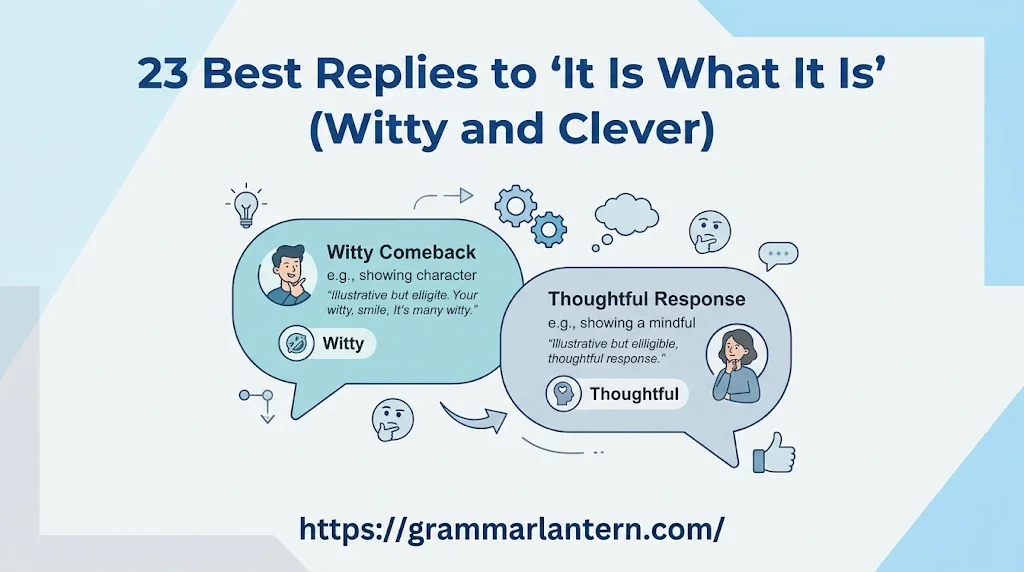
23 Best Replies to “It Is What It Is”
These 23 replies cover different situations, from friendly banter to serious discussions. Each option includes an explanation and an example to help you use it naturally.
Witty and Clever Replies to “It Is What It Is”
Best for casual conversations where a clever twist can make the exchange more interesting.
1. “Until it isn’t.”
This is one of the shortest and cleverest replies to “It is what it is.” It challenges the idea that the current situation must remain unchanged.
The phrase works because circumstances can change, even when they seem permanent. Use it when someone assumes there’s no possibility of improvement.
Example:
Friend: “I’ll probably be stuck in this boring job forever. It is what it is.”
You: “Until it isn’t.”
Your response offers a little optimism without turning into a motivational speech.
2. “That’s a very philosophical way to say nothing.”
Use this comeback when someone gives you a vague answer instead of addressing your question. It’s sarcastic enough to be funny but can sound pointed if the other person is already frustrated.
Example:
You: “Why did the team change the plan at the last minute?”
Coworker: “It is what it is.”
You: “That’s a very philosophical way to say nothing.”
This response works best when the conversation is relaxed. In a tense workplace discussion, ask a specific follow-up question instead.
3. “And here I was expecting a plot twist.”
This reply adds humor when something predictable or disappointing happens. It treats everyday life like a movie that failed to deliver an exciting ending.
Example:
Friend: “My favorite team lost again. It is what it is.”
You: “And here I was expecting a plot twist.”
It’s particularly useful for harmless disappointments, canceled plans, or situations where both people can laugh at the outcome.
4. “Well, that clears absolutely nothing up.”
Sometimes someone uses “It is what it is” when you want a genuine explanation. This response points out the lack of information with a dry sense of humor.
Example:
You: “So, are we meeting at six or seven?”
Friend: “It is what it is.”
You: “Well, that clears absolutely nothing up.”
Use it when the conversation is playful. If you need an actual answer, follow up with a clear question about the time or plan.
5. “Life really does love a plot twist.”
This response acknowledges that things don’t always go according to plan. It’s less confrontational than a sarcastic comeback and works well when you want to keep the mood light.
Example:
Friend: “I prepared for an outdoor party, and now it’s raining. It is what it is.”
You: “Life really does love a plot twist.”
The reply recognizes the inconvenience without making the other person feel foolish for being disappointed.
Funny Replies to “It Is What It Is” for Friends
Use these responses with people who understand your humor and enjoy playful teasing.
6. “Deep thoughts, huh?”
This short response pokes fun at the phrase’s philosophical sound. It’s ideal for a casual conversation where neither person takes the situation too seriously.
Example:
Friend: “I forgot my lunch again. It is what it is.”
You: “Deep thoughts, huh?”
The joke works because it treats an ordinary problem like a profound life lesson.
7. “Put that on a motivational poster.”
This is a funny reply when someone delivers a predictable statement as if they’ve discovered the secret to life.
Example:
Friend: “Sometimes things don’t work out. It is what it is.”
You: “Put that on a motivational poster.”
It’s especially effective with friends who enjoy dry humor. Deliver it with a smile so it doesn’t sound like you’re mocking their feelings.
8. “And yet, here we are.”
This understated response acknowledges the situation without making a big deal out of it. Depending on your tone, it can sound amused, resigned, or slightly sarcastic.
Example:
Friend: “We got lost again. It is what it is.”
You: “And yet, here we are.”
It’s a natural fit for road trips, minor mishaps, and those moments when plans fall apart in an almost predictable way.
9. “Well, that’s one way to keep expectations low.”
Use this reply when someone responds to a disappointing situation with very little enthusiasm or ambition.
Example:
Friend: “I might apply for that promotion, but I probably won’t get it. It is what it is.”
You: “Well, that’s one way to keep expectations low.”
This comeback gently challenges pessimism. However, if your friend genuinely feels discouraged, consider offering encouragement instead of teasing them.
10. “Can’t argue with the facts, I guess.”
This is a casual response when someone points out an obvious reality. It accepts the situation while leaving room for a little humor.
Example:
Friend: “We’re out of snacks, the movie’s over, and it’s midnight. It is what it is.”
You: “Can’t argue with the facts, I guess.”
It’s a good choice when there’s no serious disagreement and you simply want to acknowledge what’s happening.
Sarcastic Comebacks to “It Is What It Is”
These replies are sharper, so use them when the situation calls for directness rather than reassurance.
11. “That’s not exactly a solution.”
This comeback is useful when someone acknowledges a problem but refuses to discuss what might fix it.
Example:
You: “The same scheduling mistake keeps happening. How can we prevent it?”
Coworker: “It is what it is.”
You: “That’s not exactly a solution.”
Unlike a purely sarcastic joke, this response highlights the real issue. It encourages the other person to move beyond acceptance and consider practical next steps.
12. “So we’re just accepting defeat?”
Use this response when someone gives up too quickly despite having options.
Example:
Friend: “I made one mistake during the interview. It is what it is.”
You: “So we’re just accepting defeat?”
The reply challenges the person’s conclusion. Still, avoid using it when someone needs time to process a setback. Encouragement works better when it respects their feelings.
13. “Convenient answer, isn’t it?”
This is a pointed comeback when someone seems to be using the phrase to avoid responsibility.
Example:
You: “You promised to send the report yesterday. What happened?”
Coworker: “It is what it is.”
You: “Convenient answer, isn’t it?”
This response can expose an attempt to dismiss a legitimate concern. Because it sounds confrontational, use it carefully, especially when workplace relationships are involved.
14. “I was hoping for something more useful.”
Sometimes you need advice, information, or an explanation, but the other person offers only resignation. This response makes your expectations clear.
Example:
You: “Do you know how we can fix this error?”
Friend: “It is what it is.”
You: “I was hoping for something more useful.”
The message is direct without relying on an insult. If you want a more diplomatic version, try, “Could we look at a possible solution?”
Smart Replies to “It Is What It Is” That Encourage Action
15. “True, but what can we do next?”
This response accepts reality without treating it as the end of the conversation. It’s useful when something has gone wrong but you still have choices.
Example:
Teammate: “We lost the client. It is what it is.”
You: “True, but what can we do next?”
Instead of dwelling on what happened, you redirect attention toward recovery. That might mean reviewing the proposal, contacting other prospects, or identifying what the team can improve.
16. “Let’s focus on what we can control.”
This thoughtful reply works when worrying about circumstances won’t change them. It encourages a practical approach without pretending every problem has an easy answer.
Example:
Friend: “The concert got canceled, and there’s nothing we can do. It is what it is.”
You: “Let’s focus on what we can control. We could still plan something fun tonight.”
The response acknowledges the disappointment while identifying an alternative. It doesn’t erase the problem; it helps the conversation move forward.
17. “That doesn’t mean we can’t change it.”
This is a confident answer when someone treats a difficult situation as permanent, even though improvement remains possible.
Example:
Friend: “My room is always a mess. It is what it is.”
You: “That doesn’t mean we can’t change it.”
The phrase encourages action without promising instant results. You can use it for habits, routines, work problems, or personal goals that require consistent effort.
18. “What’s done is done. What’s next?”
This reply recognizes that the past cannot be rewritten. It also reminds the other person that the next decision still matters.
Example:
Teammate: “We submitted the wrong file. It is what it is.”
You: “What’s done is done. What’s next?”
The response works well when people need to stop blaming themselves or one another and start planning a recovery. It’s especially useful in team settings where time matters.
Supportive and Thoughtful Replies to “It Is What It Is”
Choose these responses when someone feels disappointed, discouraged, or emotionally drained.
19. “Yeah, sometimes you just have to accept things.”
This response shows that you understand the limits of what someone can change. It doesn’t force them to feel positive or pretend everything will work out.
Example:
Friend: “I really wanted that apartment, but someone else got it. It is what it is.”
You: “Yeah, sometimes you just have to accept things.”
The reply offers quiet understanding. If your friend wants to talk more, give them room to express their disappointment.
20. “I know. It still sucks, though.”
Sometimes the most helpful response is an honest acknowledgment that a situation is disappointing. You don’t need to turn every setback into a lesson.
Example:
Friend: “My vacation got canceled. It is what it is.”
You: “I know. It still sucks, though.”
This response validates the person’s feelings without exaggerating the problem. It’s especially useful when someone wants sympathy rather than advice.
21. “Hopefully, things get better from here.”
This gentle reply offers hope without making promises you can’t keep. It recognizes the difficulty of the present while leaving room for improvement.
Example:
Friend: “I’ve had a rough week. It is what it is.”
You: “Hopefully, things get better from here.”
It’s a natural choice when you want to show support without pushing someone to explain everything.
22. “I’m here if you want to talk about it.”
When someone uses “It is what it is” after bad news, they might be trying to hide their feelings or end an uncomfortable discussion. Offering support gives them the choice to open up.
Example:
Friend: “Things didn’t work out between us. It is what it is.”
You: “I’m here if you want to talk about it.”
This response is caring without being intrusive. You acknowledge the situation and let the other person decide whether to share more.
Short and Casual Replies to “It Is What It Is”
23. “Fair enough.”
Sometimes a conversation doesn’t need a witty comeback or a deep response. “Fair enough” acknowledges what the other person said without adding unnecessary tension.
Example:
Friend: “The restaurant was full, so we went somewhere else. It is what it is.”
You: “Fair enough.”
This reply works when you accept the circumstances, understand the other person’s point, or simply want to move on. However, if you disagree or need more information, don’t use it just to avoid a conversation.
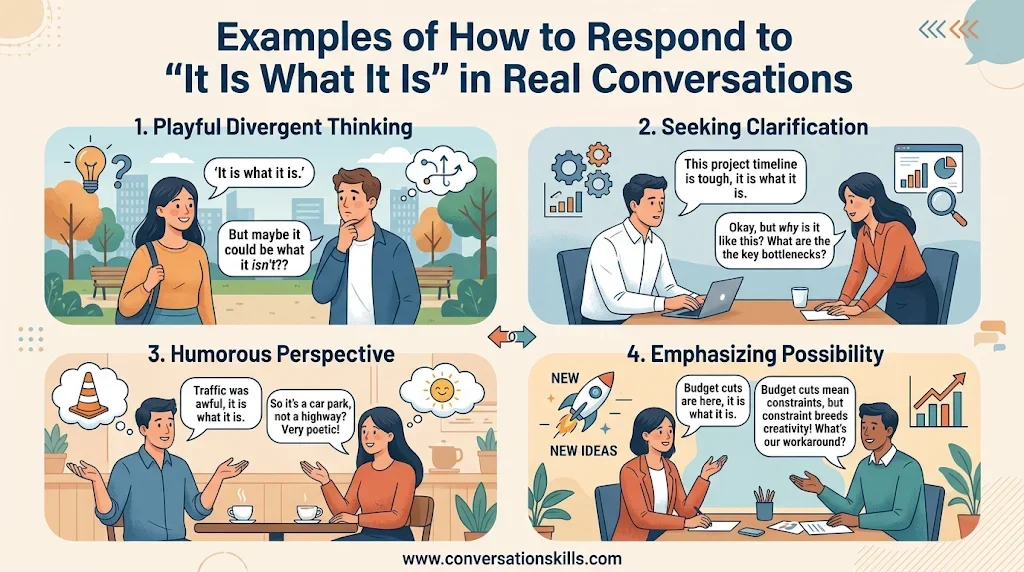
Examples of How to Respond to “It Is What It Is” in Real Conversations
Understanding a reply is one thing. Knowing when to use it is another. These realistic conversations show how a small change in wording can affect the tone of an exchange.
When a Friend Cancels Plans
Friend: “Sorry, I can’t make it tonight. Something came up. It is what it is.”
You: “Fair enough. We can plan something another time.”
This response is relaxed and understanding. You acknowledge the change without making your friend feel guilty.
If you want a more playful answer, you could say, “And here I was expecting a plot twist.” That works best when the cancellation isn’t serious and your friend appreciates your humor.
When a Coworker Discusses a Failed Project
Coworker: “The presentation didn’t go well. It is what it is.”
You: “True, but what can we do next?”
This response accepts the outcome while encouraging the team to learn from it. Perhaps the presentation lacked clear data, the timing was poor, or the audience needed a different approach.
Instead of blaming people, focus on specific improvements. That turns a disappointing outcome into a chance to make the next attempt stronger.
When a Friend Feels Discouraged
Friend: “I didn’t get the job. It is what it is.”
You: “I know. It still sucks, though.”
Your friend might not want a list of job-search tips right away. Acknowledging the disappointment shows that you understand how much the opportunity mattered.
Once they’ve had time to process the news, you can ask whether they’d like help preparing for another interview.
When Someone Avoids Responsibility
You: “You said you’d finish the assignment yesterday. Why didn’t you tell me there was a delay?”
Other person: “It is what it is.”
You: “That’s not exactly a solution. Can we discuss what happened?”
Here, the phrase dismisses a practical concern. A direct response brings the discussion back to the missed commitment and the need for better communication.
The goal isn’t to win an argument. It’s to get a clear answer and agree on what happens next.
Best Replies to “It Is What It Is” by Situation
If you need a quick answer, use this table to find a response that fits your conversation.
| Situation | Suggested reply | Why it works |
| A friend is joking | “Deep thoughts, huh?” | Adds playful teasing. |
| Someone feels disappointed | “I know. It still sucks, though.” | Acknowledges their feelings. |
| A coworker discusses a setback | “What’s done is done. What’s next?” | Shifts attention toward action. |
| Someone gives a vague answer | “That’s a very philosophical way to say nothing.” | Highlights the lack of detail. |
| A problem can still be fixed | “That doesn’t mean we can’t change it.” | Encourages constructive action. |
| You want to end a casual discussion | “Fair enough.” | Keeps the exchange simple. |
| Someone needs emotional support | “I’m here if you want to talk about it.” | Offers support without pressure. |
| A friend is being sarcastic | “And yet, here we are.” | Matches a dry sense of humor. |
| Someone gives up too quickly | “So we’re just accepting defeat?” | Challenges resignation. |
| You need a professional response | “Let’s focus on what we can control.” | Keeps the conversation productive. |
The most useful approach is to match your words to your goal. If you want to connect with someone, choose empathy. If you need an answer, ask a direct question. And if everyone is in a playful mood, a clever comeback can keep the conversation entertaining.
When Should You Avoid a Witty Reply?
A clever comeback can make an ordinary conversation more enjoyable, but timing matters. Humor that works with a close friend might hurt someone who’s struggling.
When Someone Is Dealing With Bad News
If someone has lost a job, experienced a breakup, or received disappointing news, avoid making their situation the punchline.
For example, replying “Put that on a motivational poster” might sound dismissive when someone genuinely feels overwhelmed.
A better response would be, “I’m sorry. I know you were hoping for a different outcome.”
When the Conversation Is Already Tense
Sarcasm can intensify an argument, especially when someone already feels criticized. Replies such as “Convenient answer, isn’t it?” may express your frustration but rarely encourage calm discussion.
Instead, explain the issue clearly. You could say, “I understand that things didn’t work out, but I’d like to know what happened.”
When You Need a Real Solution
A witty comeback might feel satisfying, but it won’t resolve a missed deadline, a broken agreement, or a repeated mistake.
If the issue needs attention, ask a specific question and suggest a practical next step. Save the jokes for moments when they won’t distract from the problem.
When Someone Is Setting an Emotional Boundary
Sometimes “It is what it is” means a person doesn’t want to discuss the subject any further. You can offer support without demanding an explanation.
Try saying, “I understand. If you want to talk later, I’m here.”
A useful rule: If a joke might make someone feel worse about an already difficult situation, choose kindness over cleverness.
Read More: Village vs. Subdivision: Definitions, Differences, and Examples
FAQs
1. What does “It Is What It Is” mean?
“It is what it is” means accepting a situation you cannot change. People often use this phrase when something disappointing happens and there’s little they can do about it.
2. What is a funny reply to “It Is What It Is”?
You can say, “And water is wet, but here we are!” This playful response adds humor to the conversation without sounding too harsh.
3. What is a witty comeback to “It Is What It Is”?
Try saying, “And yet, somehow, I expected better!” It’s a clever comeback that works when you want to express mild frustration with a touch of sarcasm.
4. How do you respond to “It Is What It Is” sarcastically?
You could reply, “Wow, what a groundbreaking discovery!” This sarcastic response works best with friends who understand your sense of humor.
5. Is “It Is What It Is” a positive or negative phrase?
It can be either. Some people use it to express acceptance and move forward, while others use it to dismiss a problem or end a conversation.
6. How do you respond to “It Is What It Is” over text?
Keep your reply short and playful. For example, “True, but I reserve the right to complain!” This response feels natural in casual text messages.
7. What is a flirty reply to “It Is What It Is”?
You could say, “Maybe, but everything gets better when you’re around.” It adds a little flirtation while keeping the conversation light and sweet.
8. How do you respond when someone says “It Is What It Is” after a disappointment?
You might say, “Yeah, but that doesn’t mean I have to like it!” This reply acknowledges reality while giving you room to express your feelings.
9. Can “It Is What It Is” sound rude?
Yes, depending on the context and tone. If someone shares a serious problem, this phrase may sound dismissive. A more thoughtful response would acknowledge their feelings before offering advice or humor.
10. What are some alternatives to saying “It Is What It Is”?
You can say “That’s life,” “We’ll deal with it,” “It’s out of our hands,” or “Let’s make the best of it.” Each expression communicates acceptance in a slightly different way.
Conclusion
Finding the best replies to “It Is What It Is” witty and funny can make everyday conversations more entertaining. Whether you prefer sarcasm, clever comebacks, or lighthearted jokes, the right response helps you express yourself without making a situation unnecessarily awkward. Sometimes, a quick one-liner is all you need to turn frustration into laughter.
Choose a reply that matches your personality and the situation. A playful comeback can work wonders with friends, but a little empathy may be better when someone is dealing with a genuine problem. After all, accepting reality doesn’t mean giving up your sense of humor. The next time someone says, “It is what it is,” you’ll have the perfect response ready!

Muhammad Haroon is the voice behind many of the clear, practical grammar guides you’ll find on Grammar Lantern. With a strong background in content writing and a genuine love for the English language, Haroon specializes in breaking down intimidating grammar topics into simple, digestible lessons. His goal is simple: to empower readers to write with confidence and clarity. Whether he’s explaining tricky tenses or demystifying punctuation, Haroon approaches each topic with patience, precision, and a touch of warmth—because he knows that learning grammar is a journey, not a race.