Have you ever met someone who says hurtful things without considering how their words affect others? Perhaps they dismiss your problems, ignore your emotions, or make every situation about themselves. Dealing with such people can feel frustrating, especially when you expect kindness, understanding, and basic consideration.
Finding the right words to describe someone who doesn’t care about others’ feelings helps you explain their behavior more clearly. Some people lack empathy, while others act selfishly, show emotional indifference, or deliberately disregard another person’s pain. Although these behaviors can look similar, their meanings aren’t exactly the same.
Whether you’re describing a difficult friend, an inconsiderate partner, a self–centered coworker, or someone who repeatedly dismisses your emotions, choosing the right term matters. Here are eight useful words, their meanings, examples, and differences to help you describe such behavior accurately.
Quick Answer
Someone who doesn’t care about others’ feelings can be described as unempathetic, insensitive, selfish, callous, heartless, unfeeling, narcissistic, or self-absorbed.
Each word highlights a slightly different personality trait or behavior.
| Word | Meaning |
| Unempathetic | Unable or unwilling to understand other people’s emotions |
| Insensitive | Not considerate of other people’s feelings |
| Selfish | Prioritizes personal needs over others |
| Callous | Shows little concern for other people’s pain |
| Heartless | Appears to lack compassion or kindness |
| Unfeeling | Shows little emotional response or concern |
| Narcissistic | Displays excessive self-importance and self-centered behavior |
| Self-absorbed | Focuses excessively on personal interests and experiences |
The most suitable word depends on the situation. For example, insensitive describes someone who makes thoughtless remarks, while callous describes someone who shows little concern when another person suffers.
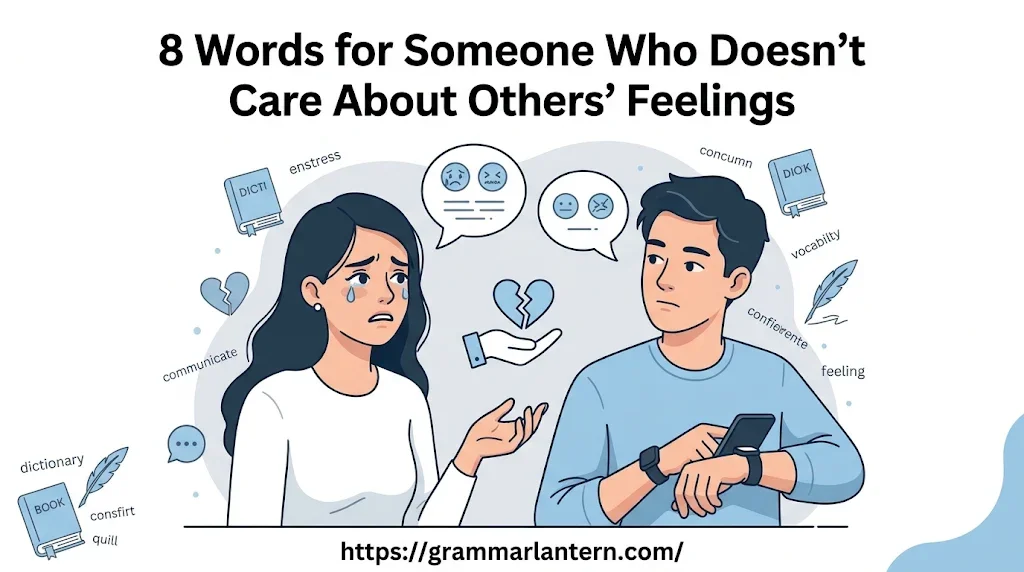
8 Words for Someone Who Doesn’t Care About Others’ Feelings
English offers several words for describing people who disregard other people’s emotions. However, each term carries a slightly different meaning and level of intensity.
Let’s explore eight accurate words, including their definitions, everyday examples, and appropriate uses.
Unempathetic
Unempathetic describes someone who struggles to understand, recognize, or share another person’s emotions. Such a person may find it difficult to imagine how someone else feels in a particular situation.
Empathy allows people to understand another person’s emotional experience. It helps you recognize when someone feels disappointed, embarrassed, frightened, or overwhelmed. Without empathy, conversations and relationships can become difficult.
For example, imagine telling a friend that you lost your job. Instead of acknowledging your disappointment, they immediately change the subject or criticize you for feeling upset. Their response may suggest a lack of empathy.
An unempathetic person might:
- Struggle to understand why others feel hurt.
- Dismiss emotional problems as unimportant.
- Show little interest in other people’s experiences.
- Have difficulty recognizing emotional distress.
- Respond awkwardly when someone needs comfort.
Example sentences:
- His unempathetic response made her feel even worse about the situation.
- An unempathetic manager rarely considers how workplace decisions affect employees.
- She seemed unempathetic when her friend shared a deeply personal problem.
When to use it: Choose unempathetic when you want to describe someone’s difficulty understanding or responding to other people’s emotions.
It’s also useful when discussing emotional awareness without automatically suggesting deliberate cruelty.
Insensitive
Insensitive describes someone who fails to consider how their words or actions might affect another person’s feelings.
Insensitive people may make inappropriate jokes, bring up painful subjects, or offer criticism without thinking about the emotional consequences. Sometimes they don’t realize they’ve hurt someone. Other times, they simply don’t consider the other person’s perspective.
Imagine someone making jokes about your appearance after you’ve explained that the subject makes you uncomfortable. Even if they claim they’re only joking, their behavior is insensitive.
Common examples include:
- Making jokes about someone’s personal struggles.
- Interrupting people when they discuss emotional problems.
- Ignoring another person’s boundaries.
- Making rude comments about appearance or personal circumstances.
- Dismissing someone’s feelings with phrases like “You’re too sensitive.”
Example sentences:
- His insensitive comments embarrassed everyone at the dinner table.
- She was insensitive to her coworker’s feelings during the meeting.
- Making jokes about someone’s financial problems is incredibly insensitive.
Insensitivity vs. lack of empathy: These expressions overlap, but they aren’t identical. A person can understand that something hurts someone and still make an insensitive comment. Meanwhile, an unempathetic person may struggle to recognize the emotional impact in the first place.
When to use it: Use insensitive when someone behaves thoughtlessly or disregards emotional boundaries.
Selfish
Selfish describes someone who consistently prioritizes personal interests, comfort, or happiness without giving enough consideration to other people.
Selfishness often appears in everyday relationships. A selfish friend might expect everyone to listen to their problems but refuse to offer support when someone else needs help. Similarly, a selfish partner may make important decisions without considering their significant other’s needs.
Being selfish doesn’t always mean someone has no empathy. They might understand another person’s feelings but still choose their own interests.
Common signs of selfish behavior include:
- Expecting favors without returning them.
- Making decisions that benefit only themselves.
- Ignoring other people’s needs.
- Taking credit for shared achievements.
- Refusing to compromise.
- Expecting constant attention and support.
Read More: 5 Good Synonyms for Having Mixed Feelings Meaning Explained
Example sentences:
- His selfish behavior gradually damaged their friendship.
- She became frustrated with her selfish coworker, who never shared responsibilities.
- It’s selfish to expect support from everyone while refusing to help anyone else.
Selfishness vs. healthy self-interest: Looking after yourself isn’t automatically selfish. Setting boundaries, protecting your time, and prioritizing your well-being are healthy practices. Selfishness becomes a problem when you repeatedly disregard other people’s legitimate needs.
When to use it: Choose selfish when someone regularly puts personal interests ahead of other people’s feelings or well-being.
Callous
Callous describes someone who shows little sympathy, kindness, or concern for another person’s suffering.
This word carries a stronger meaning than insensitive. While an insensitive person might make an inappropriate remark, a callous person may appear completely unconcerned when someone experiences genuine pain.
For example, imagine an employee explaining that a family emergency has affected their work schedule. A manager responds by saying that personal problems don’t matter and refuses to consider the circumstances. That response could reasonably be described as callous.
Callous behavior may include:
- Showing little concern for people experiencing hardship.
- Making cruel remarks about someone’s suffering.
- Ignoring serious emotional distress.
- Treating vulnerable people without compassion.
- Dismissing another person’s difficult circumstances.
Example sentences:
- His callous reaction surprised everyone in the room.
- The company received criticism for its callous treatment of struggling employees.
- She couldn’t believe how callous he was after hearing about the accident.
Callous vs. insensitive: An insensitive person may overlook someone’s feelings through carelessness. A callous person demonstrates a more pronounced lack of concern for another person’s pain.
When to use it: Use callous when someone’s behavior shows a serious lack of compassion toward people who are suffering.
Heartless
Heartless describes someone who appears to have little kindness, compassion, or sympathy for others.
People commonly use this word when someone’s behavior seems particularly cruel or emotionally harsh. It often describes situations where someone ignores another person’s suffering despite having an opportunity to show kindness.
For instance, imagine a person refusing to comfort a close friend after a painful breakup. Instead, they mock the friend’s emotions and tell them to stop complaining. Many people would describe that response as heartless.
Heartless behavior can involve:
- Showing no concern for someone going through hardship.
- Deliberately saying things that cause emotional pain.
- Refusing to help someone in a difficult situation.
- Mocking people during vulnerable moments.
- Treating emotional suffering as meaningless.
Example sentences:
- His heartless remarks made an already difficult situation worse.
- It was heartless to abandon someone who genuinely needed support.
- She couldn’t understand why her friend acted so heartlessly.
Heartless vs. callous: Both words describe a lack of compassion. However, heartless often expresses a stronger emotional judgment, while callous emphasizes an apparent indifference to another person’s suffering.
When to use it: Use heartless when describing behavior that seems especially cruel, unkind, or lacking in compassion.
Unfeeling
Unfeeling describes someone who appears emotionally detached, indifferent, or unconcerned about other people’s experiences.
An unfeeling person may show little emotional response when others express sadness, disappointment, or distress. They might listen without reacting or respond in a cold, distant manner.
However, there’s an important distinction between being emotionally reserved and genuinely disregarding other people’s feelings. Some people simply express emotions differently. A quiet person isn’t necessarily unfeeling.
For example, imagine someone listening to a friend’s difficult experience without offering any reassurance or showing visible concern. Depending on the circumstances, their response might seem unfeeling.
Common characteristics include:
- Showing little emotional reaction to painful situations.
- Appearing distant during emotional conversations.
- Offering minimal comfort or reassurance.
- Responding to personal problems with indifference.
- Struggling to express warmth or affection.
Example sentences:
- His unfeeling response made the conversation uncomfortable.
- She considered his behavior cold and unfeeling.
- The manager seemed unfeeling when employees discussed their concerns.
Unfeeling vs. emotionally reserved: An emotionally reserved person may care deeply but struggle to express affection or sympathy. An unfeeling person appears indifferent to emotional experiences.
When to use it: Choose unfeeling when someone seems emotionally detached or shows little visible concern for others.
Narcissistic
Narcissistic describes behavior associated with excessive self-focus, self-importance, and a strong desire for admiration or attention.
Someone displaying narcissistic traits may struggle to consider other people’s perspectives, especially when those perspectives conflict with personal desires. They might expect special treatment, dismiss criticism, or focus conversations on their own achievements.
For example, imagine telling a friend about an important personal achievement. Instead of celebrating with you, they immediately redirect the conversation toward their own success. If this behavior happens repeatedly, it may suggest self-centered or narcissistic tendencies.
Some behaviors associated with narcissistic traits include:
- Constantly seeking attention or admiration.
- Expecting special treatment from others.
- Struggling to accept criticism.
- Dismissing other people’s experiences.
- Prioritizing personal recognition.
- Showing limited consideration for others’ perspectives.
Example sentences:
- His narcissistic behavior made it difficult to maintain a healthy friendship.
- She noticed several self-centered and narcissistic tendencies in his attitude.
- A narcissistic coworker may constantly seek recognition for shared achievements.
Narcissistic behavior vs. Narcissistic Personality Disorder (NPD): These terms shouldn’t be confused. Someone can display narcissistic traits without having Narcissistic Personality Disorder. NPD is a recognized mental health condition that requires assessment by a qualified mental health professional.
It’s also inaccurate to label everyone who behaves selfishly or dismisses emotions as narcissistic.
When to use it: Use narcissistic when describing a recurring pattern of excessive self-focus, entitlement, or attention-seeking behavior. Avoid using it as a casual diagnosis.
Self-Absorbed
Self-absorbed describes someone who becomes so focused on personal thoughts, feelings, interests, or problems that they pay little attention to others.
Unlike someone who occasionally needs attention, a self-absorbed person may consistently dominate conversations and overlook opportunities to show interest in other people’s lives.
For example, imagine having lunch with a friend who spends the entire conversation discussing personal achievements, problems, and plans. Whenever you try to share something, they quickly bring the discussion back to themselves.
That pattern may suggest self-absorbed behavior.
Common signs include:
- Turning almost every conversation toward themselves.
- Showing little interest in other people’s experiences.
- Expecting others to listen without offering the same attention.
- Focusing excessively on personal achievements.
- Overlooking the needs and concerns of friends.
- Struggling to recognize when others need support.
Example sentences:
- He is so self-absorbed that he rarely asks about anyone else’s life.
- Her self-absorbed attitude created tension within the friendship.
- It’s exhausting to communicate with someone who constantly makes everything about themselves.
Self-absorbed vs. selfish: A self-absorbed person focuses excessively on personal thoughts and experiences. A selfish person actively prioritizes personal interests over other people’s needs. These qualities can overlap, but they describe different aspects of behavior.
When to use it: Use self-absorbed when someone consistently makes conversations, relationships, and situations revolve around themselves.
Comparison Table
Although these eight words share similar meanings, they aren’t interchangeable. Understanding their differences helps you choose the most accurate description.
| Word | Main characteristic | Common behavior |
| Unempathetic | Limited emotional understanding | Struggles to recognize others’ feelings |
| Insensitive | Lack of consideration | Makes thoughtless remarks |
| Selfish | Self-prioritization | Ignores others’ needs |
| Callous | Lack of compassion | Shows little concern for suffering |
| Heartless | Apparent cruelty | Behaves harshly toward vulnerable people |
| Unfeeling | Emotional indifference | Shows little emotional response |
| Narcissistic | Excessive self-focus | Seeks admiration and special treatment |
| Self-absorbed | Excessive personal focus | Makes conversations about themselves |
Which Word Should You Use?
Consider the situation before choosing a word.
- For someone who doesn’t understand your emotions: Unempathetic.
- For someone who makes hurtful remarks: Insensitive.
- For someone who always puts themselves first: Selfish.
- For someone who ignores another person’s suffering: Callous.
- For someone who behaves cruelly: Heartless.
- For someone who seems emotionally detached: Unfeeling.
- For someone who constantly seeks admiration: Narcissistic.
- For someone who makes everything about themselves: Self-absorbed.
Choosing the right term makes your description more meaningful and prevents unnecessary exaggeration.
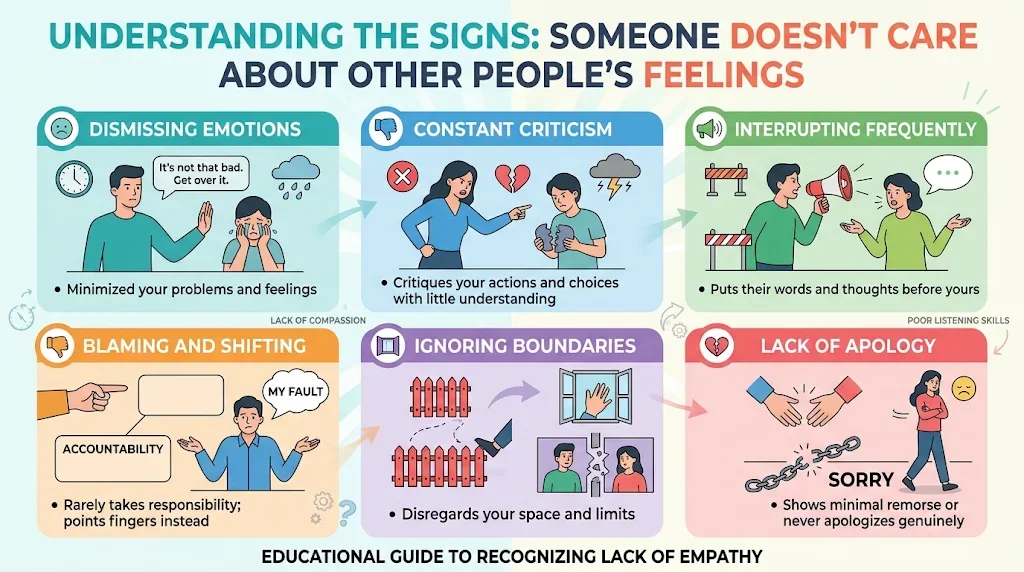
Signs Someone Doesn’t Care About Other People’s Feelings
Sometimes, a person’s behavior reveals more than their words. Someone might claim to care about you while repeatedly dismissing your emotions.
One disagreement doesn’t necessarily indicate a lack of empathy. However, repeated patterns deserve attention.
Here are several behaviors that may suggest someone consistently disregards other people’s feelings.
They Dismiss Your Emotions
When you explain that something hurt you, they tell you that you’re overreacting. Instead of listening, they minimize your experience.
Statements such as “You’re too sensitive” or “It’s not a big deal” can make someone feel misunderstood.
They Rarely Apologize
Everyone makes mistakes. However, people who care about their relationships usually recognize when they’ve caused harm.
Someone who repeatedly refuses to apologize may avoid responsibility or believe their feelings matter more than yours.
They Make Everything About Themselves
You might start discussing a personal problem only to find the conversation redirected toward their experiences.
This behavior can make relationships feel one-sided.
They Ignore Emotional Boundaries
A person who disregards your feelings may continue discussing sensitive subjects after you’ve asked them to stop.
Respecting boundaries means recognizing that other people have emotional limits.
They Show Little Concern During Difficult Times
When someone experiences grief, disappointment, or personal hardship, a considerate person usually offers some form of support.
Someone who consistently ignores these situations may demonstrate emotional indifference.
They Make Hurtful Jokes
Humor can strengthen relationships, but it shouldn’t become an excuse for cruelty.
If someone repeatedly makes jokes about your insecurities and refuses to stop, their behavior shows little consideration.
They Expect Support but Rarely Give It
Healthy relationships involve mutual care. If someone expects you to listen, help, and offer encouragement but never returns that support, the relationship may lack balance.
They Refuse to Consider Your Perspective
People don’t always agree. However, healthy communication requires a willingness to understand different viewpoints.
Someone who refuses to consider your perspective may repeatedly create unnecessary conflict.
Why Do Some People Not Care About Others’ Feelings?
Not everyone who appears emotionally indifferent has the same reasons for behaving that way. Their attitudes can develop through different experiences, habits, and personal circumstances.
Understanding possible explanations can help you interpret behavior without immediately making assumptions.
Lack of Emotional Awareness
Some people struggle to recognize emotions in themselves and others. They might not notice when their comments cause embarrassment, sadness, or frustration.
Limited emotional awareness can make supportive communication difficult.
Self-Centered Attitudes
People who consistently prioritize personal interests may overlook how their decisions affect others.
This behavior can develop into a habit, particularly when nobody challenges their lack of consideration.
Learned Behavior
Family environments and early social experiences can influence how people communicate.
Someone who grew up around dismissive communication may consider harsh remarks normal. However, learned behavior doesn’t excuse repeatedly hurting others.
Emotional Defensiveness
Some individuals avoid emotional conversations because they feel uncomfortable discussing vulnerability.
They might change the subject, become defensive, or dismiss another person’s concerns instead of addressing them.
Stress and Emotional Exhaustion
Stress can affect someone’s ability to respond patiently and thoughtfully.
A person dealing with intense pressure may temporarily become withdrawn or less emotionally available. That doesn’t automatically mean they lack compassion.
Different Communication Styles
Some people express concern through practical actions rather than emotional language.
For example, a friend might not offer comforting words but may help you solve a problem or accompany you through a difficult experience.
Therefore, limited emotional expression shouldn’t automatically be mistaken for a lack of empathy.
How to Describe It in Different Situations
The best word often depends on your relationship with the person and the behavior you’re describing.
In a Friendship
A friend who repeatedly dismisses your emotions might be described as insensitive, selfish, or self-absorbed.
For example, imagine sharing exciting news with a friend who immediately criticizes your achievement and starts discussing their own success.
You could say:
- “He’s too self-absorbed to celebrate anyone else’s achievements.”
- “Her insensitive comments make it difficult to open up.”
- “I feel like this friendship has become one-sided.”
Friendship should involve mutual interest, respect, and emotional support. You shouldn’t always have to provide understanding without receiving it.
In a Romantic Relationship
A partner who repeatedly ignores your emotional needs might be described as unempathetic, emotionally unavailable, or insensitive.
Consider a situation where one partner regularly dismisses the other’s concerns. Whenever they try to discuss relationship problems, the conversation ends with criticism or avoidance.
Possible descriptions include:
- “My partner is emotionally dismissive.”
- “He rarely considers how his actions affect me.”
- “Our relationship feels emotionally one-sided.”
- “She seems indifferent to my concerns.”
A healthy relationship doesn’t require partners to agree about everything. It does require mutual respect and a willingness to listen.
In the Workplace
Professional environments require communication, cooperation, and consideration.
A manager who ignores employee concerns might be described as insensitive, inconsiderate, or callous.
For example, an employee explains that an unrealistic deadline is affecting the team’s ability to complete quality work. Instead of discussing a solution, the manager dismisses the concern.
Professional ways to describe this behavior include:
- “The manager demonstrates little consideration for employee concerns.”
- “His communication style can be insensitive.”
- “The supervisor appears dismissive of team feedback.”
- “The decision reflects a lack of consideration for employee well-being.”
These expressions focus on observable workplace behavior rather than making personal attacks.
In a Family Relationship
Family relationships can become emotionally complicated when someone repeatedly dismisses personal feelings.
A relative who makes hurtful comments or refuses to acknowledge emotional boundaries might be described as insensitive, unfeeling, or selfish.
For example, imagine telling a family member that a particular subject makes you uncomfortable. They continue bringing it up during gatherings and laugh when you become upset.
You might explain:
- “He’s insensitive to my feelings.”
- “She never considers how her words affect the family.”
- “His behavior feels emotionally dismissive.”
- “I wish they would respect my boundaries.”
Family relationships still require mutual respect. Being related doesn’t give anyone permission to disregard another person’s emotions.
How to Tell Someone They Are Hurting Your Feelings
Finding the right word can help you describe someone’s behavior, but communicating your concerns is equally important.
You don’t always need to call someone selfish, heartless, or insensitive. Sometimes, explaining exactly what happened creates a better opportunity for understanding.
Focus on Specific Behavior
Avoid making broad statements about someone’s entire personality.
Instead of saying, “You never care about anyone,” explain what they did and why it bothered you.
For example:
“You interrupted me several times while I was explaining something important. It made me feel like my concerns didn’t matter.”
Specific examples make conversations more productive.
Use Direct but Respectful Language
You can express disappointment without insulting someone.
Try phrases such as:
- “That comment hurt my feelings.”
- “I don’t appreciate being dismissed when I share my concerns.”
- “I wish you would consider my perspective.”
- “Your response made me feel unimportant.”
Clear communication helps the other person understand the impact of their actions.
Set Emotional Boundaries
If someone repeatedly makes hurtful comments, explain which behavior you won’t accept.
For example:
“I’ve already told you that jokes about my appearance make me uncomfortable. Please stop making them.”
A boundary communicates what you will accept and what you will do if the behavior continues.
Pay Attention to Their Response
Someone’s reaction can tell you a lot about their willingness to understand your concerns.
A considerate person may listen, apologize, or make an effort to change. Someone who repeatedly mocks your feelings or shifts the blame may not be willing to address the problem.
You can’t control another person’s behavior, but you can decide how much access they have to your time and emotional energy.
Common Mistakes
Choosing an accurate word matters because similar expressions can communicate different meanings.
Here are some common mistakes to avoid.
Confusing Insensitivity With Intentional Cruelty
An insensitive comment isn’t always deliberately cruel. Someone might speak without thinking and later recognize their mistake.
However, repeatedly hurting someone after they’ve explained the problem suggests a more serious disregard.
Using Narcissistic as a Synonym for Selfish
Selfishness and narcissistic traits can overlap, but they aren’t identical.
Someone who prioritizes personal interests isn’t automatically narcissistic. The term has a more specific psychological meaning and shouldn’t be used as a casual diagnosis.
Assuming Quiet People Lack Empathy
Not everyone expresses emotions openly.
Some people demonstrate concern through practical assistance, thoughtful actions, or simply being present. Their quiet personality doesn’t prove they lack compassion.
Judging Someone Based on One Incident
Everyone has difficult days. A single thoughtless response doesn’t establish someone’s entire personality.
Look for repeated patterns before describing someone as callous, heartless, or unempathetic.
Confusing Emotional Distance With Indifference
A person might struggle to express affection because of their communication style or personal experiences.
Emotional reserve and a genuine lack of concern are different things. Consider someone’s overall behavior rather than relying on one emotional reaction.
Read More: Rules for Writing Out Numbers: A Complete Guide With Examples
FAQs
1. What Is the Word for Someone Who Doesn’t Care About Others’ Feelings?
Several words describe someone who doesn’t care about others’ feelings, including insensitive, unempathetic, selfish, callous, and heartless. The most appropriate choice depends on their behavior. For example, insensitive describes thoughtless actions, while callous suggests little concern for another person’s suffering.
2. What Do You Call a Person Who Has No Empathy?
A person who struggles to understand or share other people’s emotions can be described as unempathetic or lacking empathy. However, difficulty expressing empathy doesn’t necessarily mean someone has no compassion or concern.
3. What Is Another Word for Emotionally Insensitive?
Common alternatives include unfeeling, callous, coldhearted, inconsiderate, and emotionally detached. Each term has a slightly different meaning. For instance, unfeeling emphasizes emotional indifference, while inconsiderate focuses on failing to consider other people’s needs.
4. What Do You Call Someone Who Only Cares About Themselves?
A person who consistently prioritizes personal interests over everyone else’s needs is called selfish. You can also describe someone as self-absorbed when they focus excessively on their own experiences, achievements, and problems.
5. Is Being Callous the Same as Being Heartless?
Not exactly. Both words describe a lack of compassion, but they emphasize different qualities. Callous describes someone who shows little concern for another person’s suffering. Heartless often suggests particularly cruel or unkind behavior.
6. What Is the Difference Between Insensitive and Unempathetic?
An insensitive person fails to consider how their actions affect others. An unempathetic person struggles to understand or share another person’s emotions. Someone can understand another person’s feelings and still behave insensitively.
7. Can Someone Be Selfish Without Being Narcissistic?
Yes. Selfishness doesn’t automatically indicate narcissism or a personality disorder. Someone might prioritize personal interests without displaying the broader patterns of entitlement, excessive self-importance, and admiration-seeking associated with narcissistic traits.
8. What Is a Professional Word for Someone Who Disregards Others’ Feelings?
Inconsiderate, insensitive, dismissive, and lacking empathy are useful professional descriptions. For workplace communication, it’s usually better to describe specific behavior rather than label someone’s entire personality.
9. How Do You Describe Someone Who Dismisses Your Emotions?
You can describe such a person as emotionally dismissive, insensitive, invalidating, or unempathetic. For example, someone who repeatedly tells you that your concerns don’t matter may demonstrate emotionally dismissive behavior.
10. Can a Person Learn to Become More Empathetic?
Yes. People can develop stronger empathy through active listening, emotional awareness, perspective-taking, and thoughtful communication. Practicing these skills can help someone recognize other people’s feelings and respond with greater understanding.
Conclusion
Finding the right words for someone who doesn’t care about others’ feelings helps you describe difficult behavior accurately. Terms such as unempathetic, insensitive, selfish, callous, heartless, unfeeling, narcissistic, and self-absorbed each highlight a different aspect of emotional disregard. Although their meanings overlap, they aren’t interchangeable. Understanding these differences allows you to communicate more clearly without exaggerating someone’s behavior.
Remember that actions often reveal more than labels. Someone might occasionally make a thoughtless comment without intending to hurt you. However, repeatedly dismissing your emotions, ignoring your boundaries, and showing little concern for your well-being can damage any relationship. Recognize the behavior, express your concerns, and protect your emotional boundaries. Everyone deserves relationships built on kindness, mutual respect, and genuine consideration.

Muhammad Haroon is the voice behind many of the clear, practical grammar guides you’ll find on Grammar Lantern. With a strong background in content writing and a genuine love for the English language, Haroon specializes in breaking down intimidating grammar topics into simple, digestible lessons. His goal is simple: to empower readers to write with confidence and clarity. Whether he’s explaining tricky tenses or demystifying punctuation, Haroon approaches each topic with patience, precision, and a touch of warmth—because he knows that learning grammar is a journey, not a race.