
Have you ever confused hake with flake when ordering fish and chips? Although their names sound similar, they describe two different things in the seafood world. Hake is a true fish from the cod family, scientifically known as Merluccidae. This marine species has white flesh, a mild flavor, and a slightly sweet taste.
Its delicate texture and softer flesh separate into smaller flakes when cooked. Hake also has a well-defined texture, making it suitable for pan-frying, baking, and grilling. Compared with cod, it offers a softer bite and works well in everyday seafood dishes.
Flake, however, has a different meaning in Australian cuisine. It refers to the boneless meat of small sharks, especially gummy shark and school shark. This Australian slang term describes popular seafood sold in local fish shops. Unlike hake, shark meat comes from cartilaginous fish, which have cartilage instead of bones.
Quick Answer
The main difference between flake and hake is their species classification. Flake is an Australian seafood market name for the flesh of certain hound sharks, particularly the gummy shark (Mustelus antarcticus) and New Zealand rig (Mustelus lenticulatus). Hake refers to several species of marine fish in the Merlucciidae family.
Here’s a quick comparison:
| Feature | Flake | Hake |
| Fish type | Shark | Bony marine fish |
| Common species | Gummy shark and New Zealand rig | European hake, Pacific hake, and others |
| Scientific family | Triakidae | Merlucciidae |
| Flesh color | White to pale pink | White |
| Flavor | Mild and slightly sweet | Mild and delicate |
| Texture | Firm and thick | Tender and relatively delicate |
| Bones | Cartilaginous skeleton; fillets are commonly boneless | Bony skeleton; fillets may contain bones |
| Popular cooking methods | Frying, grilling, baking, and poaching | Frying, baking, grilling, and poaching |
| Common association | Australian fish and chips | International seafood markets |
In simple terms: Flake comes from certain sharks, while hake belongs to a separate family of bony fish. Both offer mild seafood flavors, but their textures and cooking characteristics differ.
What Is Flake Fish?
Flake is a seafood name commonly used in Australia, particularly in fish and chip shops. It generally describes the edible flesh of certain shark species rather than identifying one fish by its scientific name.
The most familiar species associated with flake is the gummy shark, scientifically known as Mustelus antarcticus. Another species included in the Australian standard flake grouping is New Zealand rig, or Mustelus lenticulatus.
Gummy shark has a long history in Australian seafood markets. Its mild flavor, thick flesh, and convenient fillets have made it a popular choice for everyday seafood meals.
Scientific Classification and Species of Flake
To understand flake properly, you need to look beyond its market name.
Gummy sharks belong to the Triakidae family, commonly known as hound sharks. They are cartilaginous fish, meaning their skeletons consist mainly of cartilage rather than bone.
The two species associated with the Australian standard name Flake are:
- Gummy shark (Mustelus antarcticus): A shark found in Australian waters and the traditional source of Australian flake.
- New Zealand rig (Mustelus lenticulatus): A related shark species native to New Zealand waters. Its flesh has also entered the Australian seafood market.
These species have similar qualities when processed into fillets. That’s one reason their flesh can be marketed under the same seafood name.
An important distinction exists between the fish’s name and the name of its flesh. Gummy shark remains the standard species name for Mustelus antarcticus. Flake identifies the marketed flesh associated with the approved group.
Physical Appearance and Characteristics of Flake
A gummy shark has an elongated body, a pointed snout, and two dorsal fins. Its upper body generally appears gray, while its underside looks lighter or silvery.
Unlike many familiar sharks, gummy sharks have relatively small teeth suited to crushing and eating prey such as crustaceans, mollusks, and smaller fish.
Some important characteristics include:
- Body shape: Long and streamlined, helping the shark move efficiently through coastal waters.
- Skin: Generally gray above and lighter underneath.
- Size: Gummy sharks can reach approximately 1.75 meters in length.
- Skeleton: Made primarily of cartilage rather than hard bone.
- Habitat: Found in coastal and offshore waters around southern Australia.
Once fishmongers process the shark, consumers usually see thick white or pale-pink fillets rather than the whole animal. These fillets have a firm structure that makes them suitable for several cooking methods.
Taste and Texture of Flake
Flake has a mild, slightly sweet seafood flavor. It doesn’t usually have the strong fishy taste associated with some oily fish.
Its texture is one of its most recognizable qualities. The flesh feels firm and substantial rather than extremely soft or delicate.
When cooked correctly, flake remains moist and develops a satisfying bite. It also holds its shape reasonably well during frying and grilling.
The Australian Fisheries Management Authority describes gummy shark flesh as sweet and highlights its thick, boneless flakes. This quality helps explain its popularity in traditional fish and chips.
However, cooking matters. Overcooking can make flake dry and less enjoyable, even though its flesh starts with a relatively firm texture.
Read More: Jesus’ or Jesus’s? Here’s the Correct Possessive Form
Common Culinary Uses of Flake
Flake works well in recipes that benefit from thick, firm fillets. Its mild flavor also pairs easily with familiar seasonings.
Popular ways to prepare flake include:
- Fish and chips: Coat the fillets in batter or breadcrumbs and fry until golden.
- Grilled flake: Brush the fish with olive oil, lemon juice, garlic, and herbs.
- Baked flake: Place the fillets in a baking dish with vegetables and simple seasonings.
- Barbecued flake: Cook the fish over moderate heat until the flesh becomes opaque and separates easily.
- Poached flake: Gently cook the fillets in seasoned broth for a moist, tender result.
For a straightforward meal, season a flake fillet with salt, black pepper, lemon juice, and garlic. Pan-fry it until cooked through, then serve it with roasted vegetables or a fresh salad.
What Is Hake Fish?
Hake is a group of marine fish recognized for their white flesh and mild flavor. These fish belong to the Merlucciidae family and appear in seafood markets across Europe, North America, South America, and other regions.
Unlike flake, hake does not refer to shark meat. Hake species are bony fish with different physical characteristics and biological classifications.
European hake is particularly familiar in Mediterranean and European cooking. Other species, including Pacific and Argentine hake, support important commercial fisheries.
Scientific Classification and Common Hake Species
Hake belongs to the genus Merluccius within the Merlucciidae family. Several species carry the common name hake.
Some widely recognized examples include:
- European hake (Merluccius merluccius): Found in the northeastern Atlantic and Mediterranean regions.
- Pacific hake (Merluccius productus): Also called Pacific whiting, this species occurs in the northeastern Pacific Ocean.
- Southern hake (Merluccius australis): Found in southern ocean waters around South America and New Zealand.
- Argentine hake (Merluccius hubbsi): An important commercial species in the southwestern Atlantic.
Although these fish share the hake name, their distribution, sizes, and commercial characteristics can differ.
This distinction matters when comparing taste, nutritional information, and prices. A nutritional figure for European hake doesn’t automatically describe every other hake species.
Physical Appearance and Characteristics of Hake
Hake generally has a long, slender body with a relatively large head and mouth. Its skin commonly appears silvery-gray, sometimes with darker coloring along the back.
Its large mouth contains sharp teeth that help it catch smaller fish and other marine animals.
Several characteristics help identify hake:
- Body shape: Elongated and streamlined.
- Skin color: Usually silver, gray, or darker gray along the back.
- Mouth: Relatively large, with noticeable teeth.
- Skeleton: Made of bones, unlike the cartilaginous skeleton of sharks.
- Habitat: Marine waters, often along continental shelves and slopes.
Hake fillets generally have white flesh. Their thickness and structure depend on the particular species and the portion of the fish being sold.
Because hake has a bony skeleton, buyers should check prepared fillets for remaining bones before cooking or serving them.
Taste and Texture of Hake
Hake has a mild, clean flavor that makes it suitable for people who prefer delicate seafood. It generally lacks the strong taste of oily fish such as sardines or mackerel.
Its flesh is usually tender and moist when cooked properly. Compared with flake, hake often has a softer texture and can break apart more easily.
This delicate structure makes cooking technique important. Gentle handling helps preserve the shape of the fillet.
Hake also absorbs seasonings well. Lemon, garlic, paprika, parsley, black pepper, and olive oil complement its mild flavor without overpowering it.
Common Culinary Uses of Hake
Hake is a versatile ingredient in many seafood dishes. Its tender white flesh works particularly well in recipes that don’t require the fish to withstand excessive handling.
Common preparations include:
- Pan-fried hake: Lightly season the fillets and cook them in a small amount of oil.
- Baked hake: Combine the fish with lemon, garlic, tomatoes, and herbs.
- Grilled hake: Use thicker portions and handle them carefully to prevent breaking.
- Hake soup: Add pieces of fish to vegetable or seafood broth.
- Hake stew: Combine the fish with tomatoes, potatoes, onions, and spices.
- Breaded hake: Coat the fillets in breadcrumbs and cook until golden.
For a simple dinner, bake hake with lemon slices, chopped parsley, garlic, and olive oil. The ingredients enhance the fish’s natural flavor while keeping the preparation uncomplicated.
Key Differences Explained
Although flake and hake can look similar after processing, several important differences separate them. Understanding these distinctions makes seafood shopping and meal preparation easier.
Species and Scientific Classification
The biggest difference between flake and hake is their biological classification.
Flake is associated with certain shark species belonging to the Triakidae family. Hake belongs to the Merlucciidae family.
Sharks are cartilaginous fish, while hake has a skeleton made of bone. They also differ in their evolutionary relationships and physical anatomy.
This means flake isn’t a type of hake, and hake isn’t a variety of shark.
Appearance and Physical Features
Whole gummy sharks and hake have noticeably different appearances.
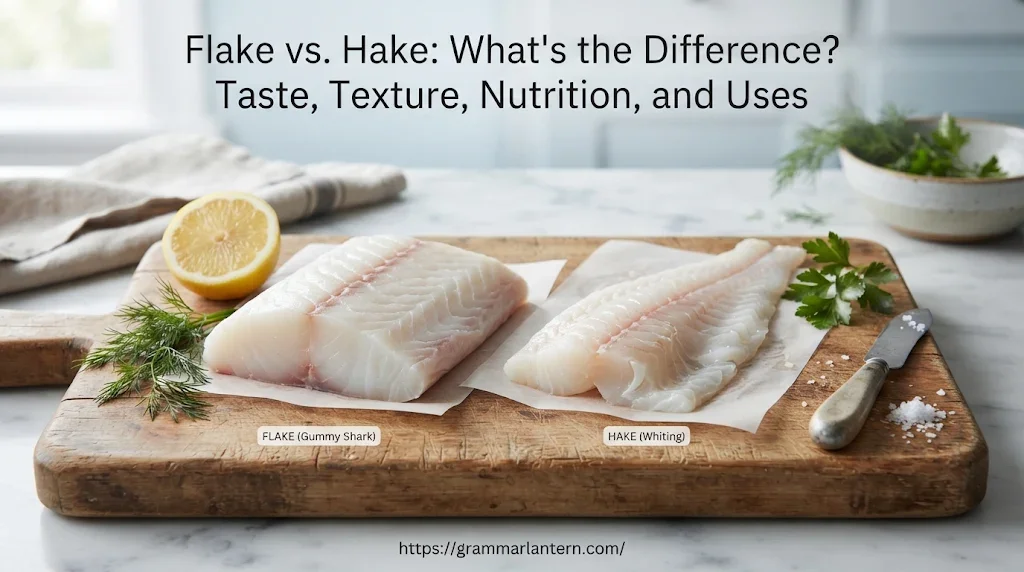
Gummy sharks have the familiar elongated shark body, paired fins, and a cartilaginous skeleton. Hake has a bony fish body, a prominent head, and a large mouth with sharp teeth.
Their prepared fillets can look more alike because both usually have pale flesh.
| Appearance | Flake | Hake |
| Whole-fish shape | Shark-like and elongated | Slender bony fish |
| Skeleton | Cartilage | Bone |
| Skin | Gray above and lighter underneath | Silvery-gray |
| Flesh | White to pale pink | White |
| Fillet structure | Thick and firm | Generally tender |
Taste and Flavor
Both fish offer mild flavors, but their eating qualities aren’t identical.
Flake generally has a slightly sweet taste and a firmer bite. Hake has a delicate flavor and softer flesh.
Neither fish needs heavy seasoning. Simple ingredients such as lemon, herbs, garlic, and black pepper work well with both.
The exact flavor can vary according to species, freshness, storage, and preparation.
Texture and Flesh
Texture is especially important when deciding which fish to purchase.
Flake usually has firmer flesh, making it suitable for frying, grilling, and recipes where the fillet needs to hold its shape.
Hake is generally more delicate. Its flesh can separate into pieces more easily during cooking.
Consider these practical differences:
- Choose flake when you want a substantial fillet that holds together.
- Choose hake when you prefer tender white fish.
- Handle hake gently during cooking.
- Avoid overcooking either fish because excessive heat can dry out the flesh.
Nutritional Value
Both flake and hake provide protein and useful nutrients. However, their nutritional composition differs by species and preparation.
For a practical comparison, the following figures use published reference values for raw gummy shark and raw hake.
| Nutrient per 100 g | Gummy shark (flake) | Hake |
| Energy | 86 kcal | 92 kcal |
| Protein | 24.6 g | 18 g |
| Total fat | 0.42 g | 2.2 g |
| Saturated fat | 0.14 g | 0.3 g |
| Carbohydrates | 0 g | 0 g |
These are representative reference values, not universal figures for every species sold under these names. Different analytical databases and fish species can produce different results.
Both options provide substantial protein without naturally containing carbohydrates.
Gummy shark has a particularly high protein figure in the reference data above. Hake also supplies protein while providing a low-fat seafood option.
Cooking ingredients change the final nutritional profile. Deep-frying adds fat and energy, while creamy sauces can increase calories considerably.
Habitat and Geographical Distribution
Flake and hake come from different marine environments and geographical regions.
Gummy sharks live in Australian coastal waters, particularly around southern Australia. New Zealand rig occurs in New Zealand waters and can enter Australian seafood markets as an imported product.
Hake species have a much broader international presence.
For example:
- European hake occurs in the northeastern Atlantic and Mediterranean.
- Pacific hake lives in the northeastern Pacific.
- Argentine hake occurs in the southwestern Atlantic.
- Southern hake occurs in southern ocean waters.
These geographical differences influence seafood availability, transport costs, and market prices.
Price and Availability
Flake is strongly associated with Australian fish and chip shops and seafood retailers. Hake appears in a wider range of international markets.
Their prices depend on several factors:
- Species and fish size.
- Fishing location.
- Catch volume and seasonal availability.
- Importing and transportation costs.
- Processing and packaging.
- Local consumer demand.
Neither fish has a universally fixed price advantage. In one market, locally caught flake might cost less. In another, imported hake could be more affordable.
Check the species name, country of origin, and price per kilogram before comparing products.
Cooking Methods and Versatility
Both fish work with several cooking techniques, but their textures influence the best approach.
Flake handles frying and grilling particularly well because its flesh is relatively firm. Hake suits baking, poaching, and pan-frying when handled carefully.
| Cooking method | Flake | Hake |
| Deep-frying | Excellent | Suitable |
| Pan-frying | Excellent | Excellent with careful handling |
| Baking | Excellent | Excellent |
| Grilling | Very suitable | Suitable with gentle handling |
| Poaching | Suitable | Very suitable |
| Soups and stews | Suitable | Very suitable |
For both fish, cook until the center reaches a safe temperature of 63°C (145°F), or the flesh turns opaque and separates easily with a fork.
Which Is Healthier?
Both fish can contribute to a balanced diet. However, the healthier choice depends on the species, portion size, cooking method, and your nutritional needs.
Looking only at the word healthy doesn’t tell the whole story. Their individual nutrients matter more.
Protein Content
Protein supports muscle maintenance, tissue repair, and several essential functions in the body.
The reference values above show approximately 24.6 grams of protein per 100 grams of gummy shark compared with 18 grams for hake.
Both offer useful amounts of protein. However, actual values vary with species and preparation.
If you’re looking for a protein-rich seafood meal, either can fit into your diet.
Fat and Omega-3 Fatty Acids
Gummy shark is naturally low in total fat according to the reference nutritional data. Hake is also a relatively lean fish.
Both can contain omega-3 fatty acids, although amounts vary considerably.
Omega-3 fats support normal body functions and contribute to a balanced eating pattern. However, neither fish should automatically be treated as having the same omega-3 concentration as oily fish such as salmon.
Calories and Essential Nutrients
Both fish provide protein and minerals.
Hake supplies nutrients such as phosphorus and potassium. Gummy shark also provides phosphorus and selenium, among other nutrients.
Their naturally low carbohydrate content makes both suitable for meals where you want a protein-based main dish.
Remember that preparation changes the nutritional picture. Battered and deep-fried fish contains additional calories compared with plain baked fillets.
Which Is Better for a Healthy Diet?
There isn’t one universal winner.
Choose based on your nutritional requirements, the specific species, and how you prepare the fish.
For a lighter meal, consider:
- Baking with lemon and herbs.
- Grilling with a small amount of olive oil.
- Serving with steamed vegetables.
- Avoiding excessive butter, creamy sauces, and heavy batter.
An important consideration: Shark meat can contain mercury, and levels vary by species and fish size. Follow local seafood consumption guidance, particularly if you’re pregnant, breastfeeding, or choosing fish for young children.

Can You Substitute Flake for Hake in Recipes?
Yes. You can substitute flake for hake in many recipes, although the final texture will differ.
Both have mild flavors, so seasonings and sauces usually work with either fish. The main adjustment involves cooking time and handling.
When Flake Can Replace Hake
Flake can replace hake in recipes that benefit from firm fish.
For example, if a recipe calls for pan-fried hake, flake can provide a thicker, sturdier alternative.
It also works well in:
- Battered fish recipes.
- Grilled seafood dishes.
- Baked fillet meals.
- Fish sandwiches.
- Simple lemon-and-garlic preparations.
However, check the thickness of the fillet before following the original cooking time.
When Hake Can Replace Flake
Hake can replace flake in many baked and pan-fried recipes.
Its delicate flesh works particularly well with gentle cooking techniques.
You can use it in:
- Oven-baked fish dishes.
- Light seafood stews.
- Fish soups.
- Pan-fried fillets.
- Breadcrumb-coated seafood meals.
However, hake may break apart more easily than flake. Use a wide spatula and avoid turning it repeatedly.
Cooking Adjustments When Substituting
A successful substitution requires more than changing the fish.
Keep these practical tips in mind:
- Check thickness: Thicker fillets generally require longer cooking times.
- Control the heat: Excessive heat can dry out fish or damage delicate flesh.
- Handle carefully: Hake needs gentler handling than firm flake.
- Check doneness: Cook fish to an internal temperature of 63°C (145°F).
- Adjust seasonings: Both fish have mild flavors, so use herbs, citrus, and spices according to taste.
A Practical Cooking Example
Imagine you’re preparing traditional fish and chips. Your original recipe calls for hake, but the seafood counter has fresh flake available.
You can use flake instead.
Its firmer texture makes it suitable for coating in batter and frying. Cut the fillets into similar portions, dry their surfaces, and season them before coating.
Now imagine the opposite situation. Your recipe calls for grilled flake, but you only have hake.
You can still prepare the dish. However, use thicker portions if available and handle the fish gently. A fish basket or suitable grill pan can help prevent delicate fillets from breaking.
The flavor will remain mild, but the texture will be softer.
How to Choose
Your choice depends on the meal you’re preparing and the texture you prefer. Both can produce delicious results when you select fresh fish and use the right cooking method.
Choose Flake If You Prefer
Flake may suit you if you enjoy:
- Firm, thick fish fillets.
- Mild and slightly sweet seafood.
- Traditional Australian fish and chips.
- Fish that holds together during grilling and frying.
- A substantial texture in your seafood meals.
Its firm flesh makes it especially useful for recipes where presentation and structure matter.
Choose Hake If You Prefer
Hake may suit you if you enjoy:
- Delicate white fish.
- Mild, clean seafood flavors.
- Tender fillets.
- Baked and poached seafood dishes.
- Fish that works well in soups and stews.
Its softer texture also makes it a useful option for everyday meals that require gentle cooking.
What to Check Before Buying
A good seafood purchase starts with accurate labeling and proper handling.
Before buying either fish, check:
- Species name: Ask whether flake comes from gummy shark or another approved source.
- Country of origin: Check where the fish was caught or produced.
- Freshness: Look for moist flesh without an unpleasant or ammonia-like odor.
- Storage: Make sure the fish stays properly chilled.
- Fillet condition: Avoid flesh that looks excessively dry, damaged, or discolored.
- Sustainability: Check current information about the particular species and fishery.
If the label simply says white fish, ask the seller for the exact species. That small question can prevent confusion later.
Is Flake Really Shark? Understanding Seafood Labels
Yes. In the Australian seafood context, flake refers to the flesh of certain shark species.
This surprises many people because the word flake sounds like a description of fish texture rather than a shark product.
However, the name has a long history in Australian seafood markets.
Gummy shark became particularly popular in the southern Australian fish and chip trade during the twentieth century. Its thick, mild flesh made it a practical alternative to other commonly sold fish.
Over time, the name flake became familiar to consumers.
Why Do Australian Fish and Chip Shops Sell Flake?
Gummy shark has several qualities that suit commercial seafood preparation.
Its flesh is thick and firm. It also has a mild flavor that works well with batter, breadcrumbs, lemon, and traditional fish and chip seasonings.
These qualities helped establish flake as a familiar menu item.
The Australian Fisheries Management Authority identifies gummy shark as a commercially caught species and describes its use in fish and chips, as well as barbecuing, poaching, braising, and baking.
What Does the Australian Fish Names Standard Say?
Australia uses the Australian Fish Names Standard, AS 5300, to provide consistent seafood naming across the industry.
The standard identifies Flake as a group name covering the flesh of:
- Gummy shark (Mustelus antarcticus).
- New Zealand rig (Mustelus lenticulatus).
Importantly, the standard name applies to the flesh, not to renaming the whole animal.
The distinction helps retailers and consumers understand which products belong under the flake name.
Why Seafood Mislabeling Matters
Seafood names can sometimes create confusion between different species.
A product sold under a broad market name might not always communicate its exact biological identity to consumers.
Australia’s Food Standards Australia New Zealand explains that fish can sometimes be incorrectly identified during capture or wholesale distribution. Such mistakes can continue through the supply chain.
That’s why asking for the scientific or common species name can be useful.
For example, a customer ordering flake may expect gummy shark. Knowing the standard definition helps them ask better questions about what they’re purchasing.
Is Flake Sustainable?
Sustainability depends on the specific species, population, and fishing practices.
The Australian Fisheries Management Authority reports that gummy shark fishing operates under catch limits. For the 2026–27 season, its published catch limit is 1,595 tonnes. Its current assessment also lists the stock as not subject to overfishing and not overfished.
However, those figures relate to the managed gummy shark stock. They shouldn’t automatically be applied to every shark species or every product marketed under a broad seafood description.
When sustainability matters to you, check the species, fishing location, and current fishery assessment before purchasing.
Read More: Which vs. Wich vs. Witch: Meaning, Differences, and Examples
FAQs
1. Is hake the same as flake?
No, hake and flake are different. Hake is a marine fish from the cod family, while flake usually refers to shark meat in Australia.
2. What type of fish is hake?
Hake is a white-fleshed marine fish belonging to the Merluccidae family. It’s known for its mild, slightly sweet flavor and delicate texture.
3. What fish is sold as flake in Australia?
Flake usually refers to the meat of the gummy shark or school shark. Australian fish and chip shops commonly use this name.
4. Does flake contain bones?
Flake is generally sold as boneless shark meat. Sharks have cartilage rather than a typical bony skeleton, making their meat different from many other fish.
5. Does hake taste better than flake?
That depends on your taste. Hake has a delicate, slightly sweet flavor, while flake offers a mild taste and soft texture.
6. Is hake good for fish and chips?
Yes, hake works very well in fish and chips. Its soft flesh and mild flavor pair nicely with crispy batter.
7. Why do Australians call shark meat flake?
Flake is an established Australian seafood market name for certain types of shark meat. You’ll often see it on fish shop menus.
8. Can you cook hake and flake in the same way?
Yes, both can be prepared using methods such as frying, baking, and grilling. However, cooking times may vary depending on the thickness of the pieces.
9. What does flake mean in general English?
In everyday English, flake can mean a small, thin piece of something. It can also describe an unreliable person who frequently fails to keep plans.
10. Which is better for everyday cooking, hake or flake?
Both can work well. Hake is a versatile choice for home cooking, while flake is popular in Australian fish and chip shops. Your choice depends on availability, taste, and personal preference.
Conclusion
Although hake and flake sound alike, they have different meanings in the seafood world. Hake is a marine fish from the cod family, while flake is an Australian name for the boneless meat of certain sharks.
Understanding the difference makes shopping, reading seafood menus, and choosing fish much easier. If you want delicate, slightly sweet white fish, hake is a good option. If you’re exploring traditional Australian fish and chips, flake is worth trying.