When someone says “You’re Mine,” your best response depends on the tone, intent, and relationship behind the phrase. A guy or romantic partner might say it to sound romantic, flirty, playful, teasing, sweet, or intensely affectionate. In a new relationship, it may feel exciting and cute, while in a deeper connection, it can express attachment, affection, or a desire for exclusivity.
However, “You’re Mine” can mean different things in different situations and contexts. Sometimes it creates a fun, flirtatious moment that makes you smile at your phone. Other times, especially when paired with jealousy, control, dominance, or possessiveness, it may feel uncomfortable. Understanding the feeling behind the words can help you choose a response that fits naturally.
Whether you want to flirt back, keep things playful, make them laugh, or establish clear boundaries, the right reply should sound like you. A thoughtful response can spark romance, strengthen connection, and turn an ordinary conversation into a sweet moment. Here are some ready-to-send replies for different vibes and situations.
Quick Answer
If you like the person and want to flirt, try “Only if you’re mine too.” It returns the affection without making the conversation too serious.
If you want something playful, “Are you sure you can handle me?” adds confidence and gives the exchange a teasing edge.
When the statement makes you uncomfortable, choose something direct such as “I’m my own person.” You don’t have to accept possessive language just because someone says it affectionately.
| Situation | Suitable Reply |
| You like them romantically | “Only if you’re mine too.” |
| You’re deeply committed | “Looks like we belong to each other.” |
| You want to flirt | “Are you sure you can handle me?” |
| You want to tease them | “You wish.” |
| You want them to explain | “And what makes you think that?” |
| You feel uncomfortable | “I’m my own person.” |
| You want a gentle boundary | “That’s cute, but I’m my own person.” |
| You want a firm boundary | “I decide who I belong with.” |
What Does “You’re Mine” Mean?
The phrase “you’re mine” doesn’t carry one fixed meaning. People use it differently depending on their relationship and communication style.
In a healthy romantic relationship, someone might use it as shorthand for “I love you,” “I’m committed to you,” or “You’re special to me.” In that setting, the phrase can feel affectionate rather than controlling.
However, context changes everything.
Imagine two partners laughing together after one says, “You’re mine now.” If both understand the joke and feel comfortable, the statement may simply be playful affection.
Now imagine someone saying the same words while telling their partner who they can talk to or where they can go. The meaning becomes much more concerning.
Romantic Meaning
Romantic partners sometimes use possessive language to express closeness. English has many expressions that aren’t meant literally.
For example, someone might say:
- “You’re my person.”
- “You’re my favorite.”
- “You’re all mine tonight.”
- “You’re the one I want.”
These expressions can communicate attachment without literally suggesting ownership.
The important question is simple: Does the language feel affectionate to both people?
If the answer is yes, a romantic reply can fit naturally.
Flirty or Playful Meaning
During flirting, “you’re mine” can act like a playful challenge. The speaker may be testing your reaction rather than making a serious declaration.
A confident comeback can keep that energy going.
For example:
“Are you sure you can handle me?”
That answer doesn’t simply agree. It turns the statement into playful banter and gives you control over the direction of the conversation.
Possessive or Controlling Meaning
Sometimes “you’re mine” signals more than affection. It can become problematic when the person uses it alongside controlling behavior.
Watch the pattern rather than judging one sentence in isolation.
Potential warning signs include:
- Trying to control who you spend time with
- Demanding access to private messages
- Becoming angry when you see friends
- Treating jealousy as proof of love
- Ignoring your boundaries
- Expecting you to give up your independence
- Using threats or intimidation
A romantic relationship involves mutual choice, not ownership. Affection can be intense without becoming controlling.
How to Choose the Right Reply
Before sending a quick comeback, pause for a second. Ask yourself what you actually want.
Your response can do several different jobs:
- Return affection
- Increase the flirtation
- Make them laugh
- Challenge them playfully
- Ask what they mean
- Set a boundary
- End the conversation
Your relationship also matters. A reply that works beautifully with your long-term partner could sound far too intimate when sent to a coworker or casual acquaintance.
Tone matters, too. Text removes facial expressions, body language, and vocal cues. A simple “prove it” might sound seductive in one conversation and confrontational in another.
When you’re unsure, choose wording that leaves room for clarification.
Read More: Begun vs. Began: Which Is Correct? Helpful Examples
15 Best Replies to “You’re Mine”
“Only If You’re Mine Too”
This is one of the easiest romantic replies because it creates mutuality.
Instead of accepting the possessive wording on its own, you turn it into a two-way statement. That makes the exchange feel more balanced.
It’s especially useful when you’re already dating or openly flirting.
Example:
Them: “You’re mine.”
You: “Only if you’re mine too.”
Simple. Flirty. Mutual.
“I Was Hoping You’d Say That”
This reply works when you already have strong feelings for the person.
It communicates interest without sounding overly dramatic. There’s also a little vulnerability tucked inside it, which can make the response feel more genuine.
Use it when you want to make your feelings clearer.
If you’re still uncertain about the relationship, however, this response may send a stronger signal than you intend.
“Looks Like We Belong to Each Other”
This response works well for established couples who already share a strong emotional connection.
It changes the idea from ownership to mutual belonging. That distinction matters.
Healthy relationships don’t require either person to surrender their identity. Instead, both people choose to build something together.
The phrase also has a warm, sentimental quality that suits anniversary texts, late-night conversations, and affectionate messages.
“Then You Better Treat Me Right”
This comeback mixes affection with confidence.
It essentially says, “If you’re making a claim, you’d better live up to it.”
That makes it especially useful when you want to flirt without sounding passive.
You can also adapt it to your personality:
- “Then you better treat me right.”
- “Then you’d better spoil me.”
- “Then you’d better keep up.”
- “Then you’d better earn it.”
The key is your tone. A playful delivery keeps the response light.
“Are You Sure You Can Handle Me?”
Here’s where the conversation gets more mischievous.
This response challenges the speaker rather than simply accepting their statement. It creates a playful power shift and gives the conversation some spark.
It’s particularly effective when both people already enjoy teasing each other.
However, don’t use a strongly flirtatious comeback when you’re trying to establish distance. Your words should match your actual intention.
“Prove It.”
Few replies are shorter.
Few can create more intrigue.
“Prove it” can sound bold and flirtatious when the context is already romantic. It challenges the other person to back up their confident statement with actions.
Still, context matters enormously. In a serious disagreement, the same words can sound confrontational.
Use this one when playful confidence already exists between you.
“That Sounds Dangerously Confident”
This is a clever way to acknowledge the statement without immediately accepting it.
The word “dangerously” adds humor and exaggeration. It makes the reply feel less formal and more conversational.
You can use it when you want to flirt while keeping a little distance.
It also works nicely over text because the wording leaves plenty of room for the other person to continue the banter.
“And What Makes You Think That?”
This question works in two completely different situations.
With someone you like, it can sound teasing:
“And what makes you think that? 😉”
In a more serious conversation, it can invite the person to explain why they’re speaking so possessively.
That makes this response useful when you’re unsure what they meant.
Rather than guessing their intention, you give them a chance to clarify it.
“I’m Nobody’s Possession”
When “you’re mine” makes you uncomfortable, clarity matters more than cleverness.
This response establishes a firm boundary.
It doesn’t insult the other person. It simply rejects the idea that a romantic relationship gives someone ownership over you.
You can use it when the possessive wording keeps appearing and softer hints haven’t worked.
If someone genuinely cares about your boundaries, they should be willing to adjust their language.
“I’m With You Because I Choose to Be”
This response offers a powerful distinction.
Choosing someone is not the same as belonging to someone.
You can love someone deeply while maintaining your independence. In fact, voluntary commitment gives romantic relationships much of their meaning.
This response works particularly well when the conversation has become serious.
It communicates affection without surrendering autonomy.
“That’s Cute, But I’m My Own Person”
Sometimes you want to set a boundary without turning the conversation into an argument.
This response does exactly that.
The opening keeps the tone relatively soft. The second half makes your position unmistakable.
It’s useful when the other person probably means well but uses language you don’t particularly enjoy.
You can make it firmer if necessary:
“I know you’re joking, but I don’t like being called someone’s possession.”
That’s direct without being unnecessarily harsh.
“Careful, You’re Getting Possessive”
This response calls attention to the behavior without immediately escalating the situation.
It can work especially well when the statement feels slightly uncomfortable but doesn’t yet represent a larger pattern.
Their reaction can tell you something useful.
If they laugh and clarify that they were joking, the conversation may simply need better wording. If they become angry because you established a reasonable boundary, that’s worth noticing.
“You Wish”
Short responses can sometimes carry the most personality.
“You wish” works particularly well when you want to tease someone rather than agree with them.
Depending on the relationship, it can sound:
- Flirty
- Playful
- Confident
- Slightly challenging
The response works best when both people understand the banter.
A dry or hostile tone could completely change its meaning.
“If That’s Your Way of Saying You Like Me, I’ll Take It”
This response cleverly redirects possessive wording toward affection.
Instead of arguing about the word “mine,” you focus on the emotion underneath it.
That makes the reply useful when you think the person is flirting but hasn’t expressed themselves particularly well.
It also gives them an easy opportunity to clarify their feelings.
For example, they might respond, “Yeah, I really like you.” Now the conversation has moved from possessiveness toward something much clearer.
“I Decide Who I Belong With”
This is the strongest boundary-oriented response on the list.
It doesn’t attack the person. It makes your autonomy clear.
The wording also leaves room for a healthy relationship because it focuses on choice.
You aren’t saying that commitment is bad. You’re saying that commitment must be voluntary.
That’s an important difference.
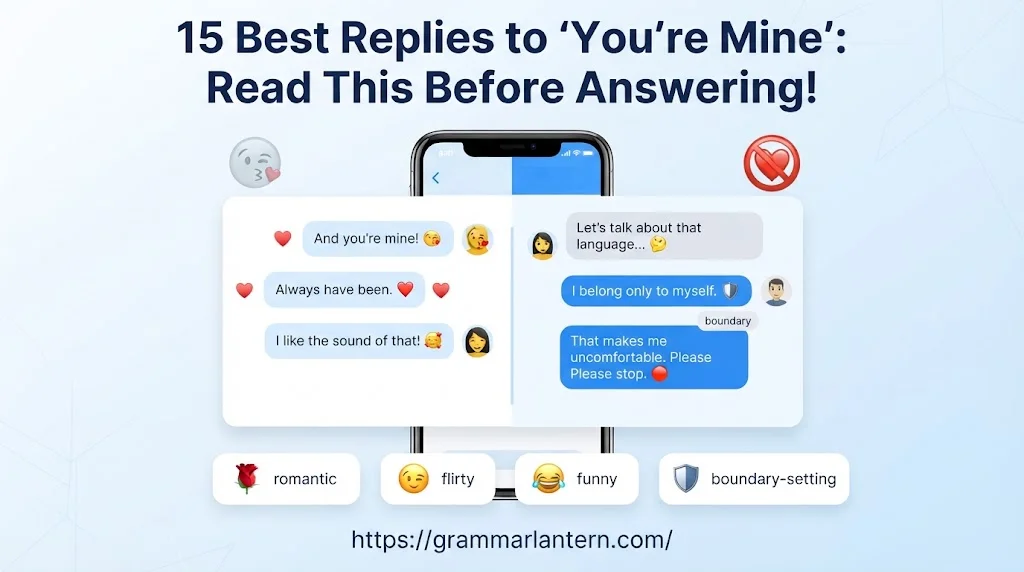
Best Replies to “You’re Mine” Based on Your Relationship
The relationship often tells you more about the appropriate reply than the phrase itself.
If Your Boyfriend or Girlfriend Says “You’re Mine”
With a committed partner, affectionate replies can feel natural.
Try:
- “Only if you’re mine too.”
- “Looks like we’re stuck with each other.”
- “Happily yours.”
- “And I’m choosing you every day.”
- “You already know where my heart is.”
The best option depends on whether your relationship feels playful, sentimental, or serious.
If Your Crush Says “You’re Mine”
This situation requires a little more care.
If you like them, you can flirt without making a huge commitment.
Good choices include:
- “Are you sure you can handle me?”
- “You wish.”
- “That’s a confident claim.”
- “And what makes you think that?”
- “Maybe you’ll have to earn it.”
These replies keep the conversation alive while giving you room to gauge their intentions.
If Someone You’re Dating Says It
Early dating can be tricky because you’re still learning each other’s communication styles.
A playful response can work if the relationship already feels comfortable.
If you’re unsure about their meaning, ask rather than assume.
“What do you mean by that?” can reveal whether they’re flirting, joking, or expressing something more serious.
If a Friend Says “You’re Mine”
Don’t automatically interpret the phrase as romantic.
Close friends sometimes use exaggerated language as a joke. Your response can stay playful:
- “Your paperwork says otherwise.”
- “Nice try.”
- “Since when?”
- “You don’t own me.”
- “That’s not how friendship works.”
Choose based on the existing friendship dynamic.
If an Ex Says “You’re Mine”
This situation deserves more caution.
If you don’t want to restart the relationship, avoid flirty responses that create confusion.
A clear answer could be:
“We aren’t together anymore, and I’m moving forward.”
You don’t owe an ex a romantic response simply because they still use familiar language.
If the contact becomes threatening or persistent, prioritize your safety and boundaries rather than winning the conversation.
If a Stranger Says “You’re Mine”
You don’t need to make the exchange entertaining.
A stranger’s statement doesn’t create any obligation to flirt, joke, or respond.
You can say:
“I’m not comfortable with that.”
You can also disengage entirely.
If the person continues after you’ve made your position clear, ending the interaction is often more useful than finding the perfect comeback.
Flirty Replies
Flirting works best when both people understand the game.
Here are some confident options:
- “Only if you can keep up.”
- “That’s a bold claim.”
- “Prove it.”
- “Are you sure you’re ready for me?”
- “Maybe I’ll let you think that.”
- “You sound pretty confident.”
- “We’ll see about that.”
Notice the pattern. These replies don’t simply say yes. They create playful tension.
That tension is often what makes flirting enjoyable.
Cute Replies
If you want warmth rather than intense flirting, choose softer language.
- “Aww, that’s sweet.”
- “And you’re pretty special to me too.”
- “Then take good care of me.”
- “I like the sound of that.”
- “You have my heart.”
- “I’m happy we’re together.”
Cute replies work particularly well in established relationships where affection already feels secure.
Funny Replies
Humor can defuse an overly serious moment.
Try:
- “Do I get a receipt?”
- “Where’s the contract?”
- “Was there an application process?”
- “I don’t remember signing anything.”
- “Bold of you to assume.”
- “You’ll need better paperwork.”
- “That’s going to require a committee meeting.”
These work because they turn literal ownership into an absurd idea.
Still, humor isn’t always appropriate. If the statement genuinely makes you uncomfortable, don’t hide that discomfort behind a joke.
Savage or Confident Replies
Sometimes you want to respond with confidence without becoming cruel.
Try:
- “I’m not something you own.”
- “You don’t get to decide that for me.”
- “I choose who gets my time.”
- “That’s not how I work.”
- “Confidence is attractive. Ownership isn’t.”
- “You can ask. You can’t claim.”
The strongest confident response isn’t necessarily the harshest one.
A calm boundary often carries more weight than an insult.
How to Respond If You Don’t Like “You’re Mine”
You don’t have to laugh along with language that makes you uncomfortable.
Start by identifying what bothers you. Maybe you dislike possessive wording but feel secure in the relationship. Or perhaps the phrase reflects behavior that genuinely concerns you.
Your response can match the seriousness of the situation.
For a gentle correction:
“I know you mean it affectionately, but I don’t really like being called ‘mine’ or ‘yours.’”
For a firmer boundary:
“I care about you, but I’m not anyone’s possession.”
For repeated behavior:
“I’ve already told you that language makes me uncomfortable. Please respect that boundary.”
A healthy response from the other person should involve listening rather than punishment.
When “You’re Mine” Becomes a Red Flag
One sentence doesn’t automatically define a relationship.
Patterns matter more than isolated phrases.
The phrase becomes more concerning when it appears alongside controlling behavior.
| Behavior | Why It Matters |
| Controlling your friendships | Limits your social independence |
| Checking your phone without permission | Violates privacy |
| Constant accusations of cheating | Can create fear and instability |
| Demanding your location | May become intrusive control |
| Telling you what to wear | Attempts to control personal choices |
| Ignoring your boundaries | Shows disrespect for your autonomy |
| Threatening you when you disagree | Moves beyond ordinary relationship conflict |
Healthy affection leaves room for individuality.
You can be deeply committed to someone while maintaining friends, interests, privacy, and personal decisions.
“You’re Mine” vs. “I Choose You”
These phrases might sound similar, but they communicate different ideas.
“You’re mine” can emphasize possession depending on context.
“I choose you” emphasizes voluntary commitment.
That difference is more than wordplay.
When someone chooses to remain with you, their commitment comes from personal agency. They aren’t staying because another person owns them.
This distinction also explains why some people enjoy “you’re mine” in playful romantic settings while others dislike it completely.
The emotional meaning depends on the people involved.
How to Reply Over Text
Texting creates one major problem: you can’t hear the other person’s tone.
A sentence that sounds playful aloud can look cold or aggressive on a screen.
Emojis can help, but don’t rely on them to fix unclear wording.
If you’re flirting, a light emoji may reinforce the tone. If you’re establishing a serious boundary, clear words usually work better than sarcasm.
Before sending your response, ask:
- Does this reflect what I actually feel?
- Could the other person misunderstand my intention?
- Am I encouraging something I don’t want?
- Do I need to be clearer?
- Does the response fit our relationship?
A five-second pause can prevent a surprisingly awkward conversation.
What Not to Say When Someone Says “You’re Mine”
Sometimes the best response is the one you don’t send.
Avoid agreeing simply because you’re afraid of disappointing someone. You also don’t need to become insulting when a calm boundary will work.
Don’t:
- Promise commitment you don’t feel
- Encourage possessiveness that bothers you
- Use jealousy to manipulate someone
- Mock someone for expressing affection
- Flirt if you actually want distance
- Ignore repeated boundary violations
- Confuse control with love
Your response should make the situation clearer, not messier.
A Simple Case Study: When the Same Words Mean Different Things
Consider two conversations.
Conversation A:
Partner: “You’re mine.”
You: “Only if you’re mine too.”
Partner: “Deal.”
Here, both people participate in playful mutual affection.
Now consider another situation:
Person: “You’re mine.”
You: “I don’t like that.”
Person: “You don’t get a choice.”
Those conversations contain the same opening phrase. Their meanings are completely different.
The second exchange introduces disregard for consent and boundaries. That’s why context matters so much when interpreting relationship language.
Read More: Scoup vs. Scoop: Which Spelling Is Correct?
FAQs
1. What does “You’re Mine” mean from a guy?
It can mean different things depending on the context, tone, and relationship. He may be expressing affection, attraction, emotional attachment, or a desire for exclusivity. In some situations, it can also sound possessive, so pay attention to how he treats you beyond the words.
2. Is “You’re Mine” romantic?
Yes, it can be romantic when both people understand it as a playful or affectionate expression. A partner might use it to show strong feelings or emotional closeness. However, romance should still include mutual respect, trust, and personal freedom.
3. How should I reply to “You’re Mine” flirtatiously?
You can match his energy with a playful response such as, “Only if you’re mine too.” This keeps the conversation flirty without making it overly serious. Choose something that genuinely matches your feelings.
4. What is a cute reply to “You’re Mine”?
A cute response could be, “Aww, and I kind of like being yours.” This works well when you already share a comfortable and affectionate relationship. You can also add humor if that better reflects your personality.
5. How do I respond if I like him?
If you like him, you can respond with confidence and a little romantic excitement. Something like, “Maybe I was hoping you’d say that” can show interest without revealing too much too quickly.
6. What if “You’re Mine” feels possessive?
You do not have to respond romantically if the phrase makes you uncomfortable. You can calmly say, “I like you, but I’m not comfortable with being treated like someone’s possession.” A healthy partner should respect your boundaries.
7. Can “You’re Mine” be playful?
Absolutely. Friends who are flirting, couples, or people enjoying a teasing conversation may use it playfully. The surrounding conversation, facial expression, timing, and relationship usually reveal whether the statement is serious or simply teasing.
8. What does “You’re Mine” mean in a new relationship?
In a new relationship, it may express excitement, attraction, or a desire to become exclusive. However, it does not automatically mean that you have agreed to exclusivity. If the relationship is still developing, clear communication can prevent misunderstandings.
9. How can I reply without sounding too serious?
Keep your response light and playful. You could say, “Oh really? Who gave you permission?” or “That sounds pretty confident.” These replies can keep the flirty conversation moving without immediately making a serious commitment.
10. What is the best reply to “You’re Mine”?
There is no single best reply because your response should match your feelings and the situation. If you feel the same, flirt back. If you are unsure, keep it playful. If the statement crosses a boundary, respond clearly and confidently.
Conclusion
“You’re Mine” can be a sweet romantic phrase, a playful tease, a flirty statement, or an expression of possessiveness. Its meaning depends heavily on the person saying it, your relationship, the timing, and the overall context. That is why your response should reflect how you genuinely feel rather than simply matching the other person’s intensity.
Whether you want to flirt back, make him laugh, show affection, or establish a boundary, choose words that feel natural to you. A confident and thoughtful reply can turn the moment into something romantic, funny, memorable, and meaningful while still protecting your comfort and individuality.

Muhammad Haroon is the voice behind many of the clear, practical grammar guides you’ll find on Grammar Lantern. With a strong background in content writing and a genuine love for the English language, Haroon specializes in breaking down intimidating grammar topics into simple, digestible lessons. His goal is simple: to empower readers to write with confidence and clarity. Whether he’s explaining tricky tenses or demystifying punctuation, Haroon approaches each topic with patience, precision, and a touch of warmth—because he knows that learning grammar is a journey, not a race.