Rain can create many different sounds, and writers use onomatopoeic words to make these sounds easy to imagine. The most familiar example is pitter-patter, which describes the soft, repeated sound of raindrops hitting a window, roof, or other surface. Other useful words include splash, drip, and tap, depending on the strength and rhythm of the rain. Choosing the right word can make your writing more vivid and engaging.
These rain-related onomatopoeic words are useful in both creative writing and formal writing when you want to add clear sensory detail. For example, pitter-patter works well for gentle rainfall, while splash can describe water striking the ground or puddles. Drip suggests individual drops, and tap can describe light drops hitting a windowpane. Using these words carefully also improves English usage and helps create consistency in descriptions.
Understanding 5 Ways To Describe The Sound Of Rain (Onomatopoeia) gives you practical options for storytelling, broadcasting, content creation, and educational writing. These expressions can help readers picture and almost hear the scene. Whether you are describing a peaceful evening, a sudden storm, or a rainy morning, selecting the right sound word makes your message clearer, more expressive, and memorable.
Quick Answer
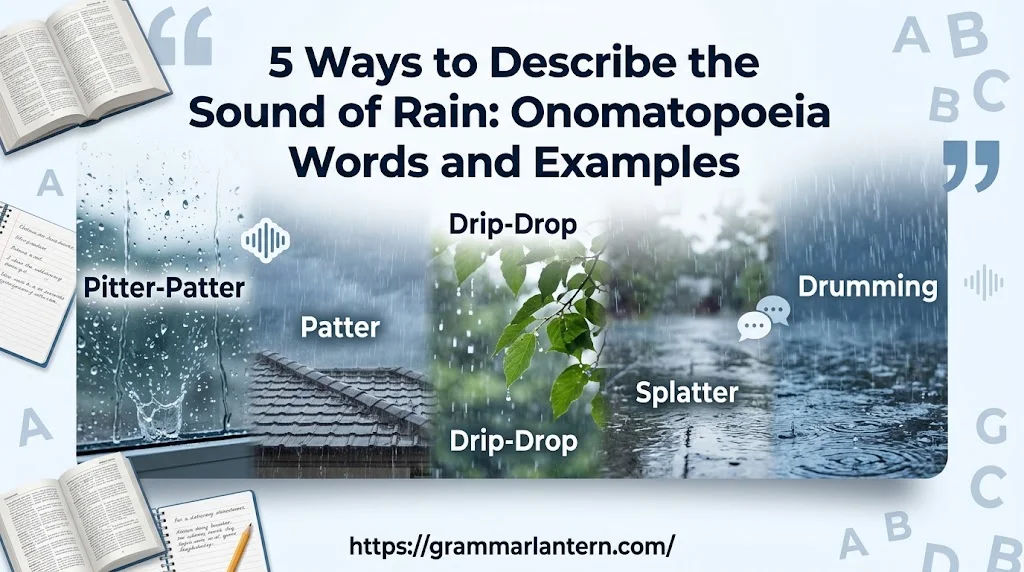
The most common onomatopoeic expression for the sound of gentle rain is pitter-patter. Other useful words include patter, drip-drop, splatter, and drumming.
Each word creates a slightly different sound:
| Rain sound word | Best for | Sound or effect |
| Pitter-patter | Light rain | Quick, soft taps |
| Patter | Light or steady rain | Repeated gentle impacts |
| Drip-drop | Individual drops | Separate falling drops |
| Splatter | Rain hitting hard surfaces | Scattered wet impacts |
| Drumming | Heavy rain | Strong, continuous beating |
Pitter-patter is usually the safest choice when you want a familiar expression for gentle rainfall. However, it isn’t automatically the best word for every rainy scene.
What Is Onomatopoeia for the Sound of Rain?
Onomatopoeia refers to words that imitate or suggest the sounds they describe. Words such as buzz, hiss, bang, and clang give readers an idea of a sound through the word itself.
Rain provides several useful examples because falling water produces different sounds depending on its speed, volume, and surroundings.
For example:
The pitter-patter of rain tapped against the bedroom window.
The repeated sounds in pitter-patter reinforce the idea of small, quick impacts. The word doesn’t merely tell you that rain is falling. It gives the sentence a rhythm.
However, not every word connected with rain is technically onomatopoeia. Drizzle, for example, describes a type of light rain rather than imitating its sound. Likewise, downpour describes very heavy rainfall rather than reproducing the noise it makes.
That distinction matters when you’re looking for genuine rain sound words.
Sound Words vs. Rain Description Words
| Word | What it primarily describes |
| Pitter-patter | The sound of light repeated impacts |
| Patter | Repeated light impacts on a surface |
| Drip | A single drop or small amount of liquid falling |
| Splatter | Liquid striking and scattering into drops |
| Drumming | A strong repeated beating sound |
| Drizzle | Very light rain |
| Downpour | Very heavy rainfall |
| Shower | A period of rain, often brief |
The difference becomes especially useful when you’re trying to create precise descriptions.
Pitter-Patter: The Classic Sound of Gentle Rain
Pitter-patter is probably the most recognizable expression associated with gentle rain. It describes a series of quick, light knocking sounds.
Imagine sitting inside while a mild shower moves across the roof. You don’t hear a powerful roar. Instead, hundreds of tiny drops create a delicate rhythm.
That’s pitter-patter.
The pitter-patter of rain on the leaves made the forest feel peaceful.
The expression works particularly well with:
- Light rain
- Small raindrops
- Rain on leaves
- Rain against windows
- Rain on rooftops
- Gentle evening showers
Pitter-Patter as a Noun
You can use pitter-patter as a noun when you want to name the sound.
The pitter-patter of rain filled the quiet room.
We fell asleep to the pitter-patter of raindrops.
This structure works beautifully in descriptive writing because it allows the sound to become part of the setting.
Pitter-Patter as a Verb
You can also use it as a verb.
Rain pitter-pattered against the skylight.
The drops pitter-pattered on the metal roof.
This version feels more active because the rain performs the action.
Read More: “Otherwise” Comma Rules Explained: When to Use a Comma
When Pitter-Patter Doesn’t Work
Picture a severe thunderstorm. Rain is hammering the roof. Water is rushing down the street. Wind is shaking the trees.
Calling that sound pitter-patter would make the storm seem much gentler than it really is.
For intense rainfall, a stronger word such as drumming or splattering may fit better.
Patter: A Simple and Flexible Rain Sound Word
Patter describes the sound of many things gently and repeatedly hitting a surface. That makes it especially useful for rain.
Rain pattered against the window throughout the night.
We listened to the patter of rain on the roof.
The word is closely related to pitter-patter, but it gives you more flexibility. You don’t need the playful repetition of pitter-patter. A single patter can sound more understated and natural.
Patter vs. Pitter-Patter
The two expressions overlap, but they don’t feel exactly the same.
Pitter-patter sounds more rhythmic and expressive. It often creates a cozy or gentle image.
Patter sounds slightly more neutral. It works well when you want to describe the physical sound without emphasizing its charm.
Compare these:
The pitter-patter of rain lulled the child to sleep.
Rain pattered against the windshield as the car moved down the highway.
The first sentence emphasizes atmosphere. The second focuses more on the action.
Drip-Drop: The Sound of Individual Raindrops
Drip-drop works best when you can distinguish individual drops instead of hearing one continuous sheet of rain.
Think about what happens after a storm. The rain has mostly stopped, but drops still fall from the roof, trees, or gutters.
Drip-drop. One last bead of water fell from the edge of the roof.
The expression draws attention to separate drops.
When to Use Drip-Drop
Use drip-drop when:
- Rain is sparse.
- The storm has almost ended.
- Water is falling from leaves.
- Drops are coming from a roof or gutter.
- The surrounding environment is quiet.
- You want each drop to feel noticeable.
It isn’t the strongest choice for describing a heavy downpour.
A sentence such as “The drip-drop of torrential rain shook the windows” creates a mismatch. Heavy rainfall produces a much denser and stronger sound.
Drip vs. Drip-Drop
Drip can describe one isolated drop or the sound of liquid falling.
A drop of rain dripped from the leaf.
Drip-drop creates a more noticeable rhythm.
The drip-drop from the roof continued long after the storm had passed.
The repeated structure makes the second expression more distinctly sound-focused.
Splatter: Rain Hitting With Force
When rain strikes a surface and breaks into scattered drops, splatter can be a useful choice.
The word has a wetter and messier quality than patter. It suggests liquid striking a surface and scattering.
Heavy rain splattered against the windshield.
Raindrops splattered across the pavement.
Where Splatter Works Best
Splatter fits particularly well when rain hits:
- Pavement
- Puddles
- Mud
- Car windows
- Windshields
- Wet streets
- Other hard surfaces
It also works well when the writing needs movement.
Rain splattered across the empty street as pedestrians hurried beneath their umbrellas.
That sentence feels more energetic than:
Rain pitter-pattered across the empty street.
The second version sounds softer. The first suggests harder impacts and scattered droplets.
Splatter vs. Spatter
These two words are related and can overlap in some contexts.
Spatter often emphasizes small drops being scattered or falling in small drops.
Splatter tends to create a stronger image of liquid hitting and scattering across a surface.
For rain descriptions, either may work depending on the sentence. Splatter usually feels more forceful and visually messy.
Drumming: The Sound of Heavy Rain
When rain becomes heavy and continuous, drumming can capture its intensity.
Picture a hard rainstorm hitting a metal roof. Individual drops become difficult to distinguish. Instead, they blend into a steady, powerful rhythm.
Rain drummed against the roof throughout the night.
Here, drumming works as a metaphor for the repeated beating created by thousands of raindrops.
It gives the reader a stronger auditory image than pitter-patter.
Why Drumming Works for Heavy Rain
The word suggests:
- Repetition
- Force
- Rhythm
- Continuous impact
- A loud or noticeable sound
It works particularly well in descriptions involving roofs, awnings, windows, and other surfaces that amplify rainfall.
The storm drummed against the metal roof, drowning out the conversation inside.
That sentence immediately gives the reader a sense of volume.
Drumming vs. Pitter-Patter
These words sit at opposite ends of the intensity spectrum.
| Feature | Pitter-patter | Drumming |
| Rain | Light | Heavy |
| Impact | Soft | Strong |
| Rhythm | Delicate | Powerful |
| Mood | Calm | Intense |
| Common setting | Window, leaves | Roof, metal surface |
| Writing effect | Cozy | Dramatic |
Neither word is inherently better. The right choice depends on what the scene sounds like.
At a Glance
The easiest way to choose the right expression is to consider both rainfall intensity and the surface receiving the drops.
| Word | Rain intensity | Typical sound | Best surfaces | Mood |
| Pitter-patter | Light | Quick, soft taps | Leaves, windows, roofs | Peaceful |
| Patter | Light to moderate | Repeated tapping | Roofs, windows, pavement | Calm |
| Drip-drop | Very light or scattered | Individual drops | Leaves, gutters, roof edges | Quiet |
| Splatter | Moderate to heavy | Scattered wet impacts | Pavement, puddles, cars | Energetic |
| Drumming | Heavy | Strong repeated beating | Roofs, awnings, metal | Intense |
How to Choose the Right Word
Choosing a rain sound word becomes easier when you stop thinking only about rainfall itself.
Think about what the drops are hitting.
Rain falling through open air doesn’t sound the same as rain striking a tin roof. A drop landing on a leaf produces a different impression from one hitting a puddle.
Consider the Rainfall Intensity
Start by asking how hard the rain is falling.
- Very light: drip-drop
- Light: pitter-patter
- Light to moderate: patter
- Moderate to heavy: splatter
- Heavy and sustained: drumming
These aren’t rigid scientific categories. They’re practical writing choices.
Consider the Surface
The surface can completely change your word choice.
1. Rain pitter-pattered on the leaves.
2. Rain pattered against the glass.
3. Rain splattered across the pavement.
4. Rain drummed on the metal roof.
The rain itself hasn’t necessarily changed in every example. The soundscape has.
Consider the Mood
A peaceful scene may need softer language.
The pitter-patter of rain softened the quiet evening.
A tense scene may need something harder.
Rain drummed against the roof while the wind rattled the windows.
The vocabulary changes the emotional temperature of the scene.
Different Rain Sounds for Different Types of Rain
Writers often make the mistake of treating all rain as if it sounds identical. It doesn’t.
Light Rain
Best choices:
- Pitter-patter
- Patter
- Drip-drop
Example:
A gentle pitter-patter came from the garden as the first drops began to fall.
Steady Rain
Best choices:
- Patter
- Drumming
Example:
Rain pattered steadily against the bedroom window.
Heavy Rain
Best choices:
- Splatter
- Drumming
Example:
Heavy rain drummed against the roof and blurred the streetlights outside.
Rain After a Storm
Best choices:
- Drip
- Drip-drop
- Patter
Example:
After the storm passed, only the drip-drop from the gutters remained.
How to Describe Rain Sounds in Creative Writing
Strong rain descriptions usually combine sound, movement, setting, and atmosphere.
Instead of writing:
It was raining heavily.
Try:
Rain drummed against the roof while water streamed down the windows.
The second sentence gives the reader several sensory details. You can hear the rain, see the water, and understand its intensity.
Use Strong Verbs
Rain descriptions become more dynamic when the rain performs an action.
Useful verbs include:
- patter
- pitter-patter
- splatter
- drip
- drum
- splash
- spatter
For example:
Rain pattered against the glass.
Drops splattered across the pavement.
Water dripped from the branches.
Heavy rain drummed on the roof.
These verbs create movement without requiring long explanations.
Combine Sound With Other Senses
Sound becomes more convincing when you connect it to something visible or physical.
The pitter-patter of rain blended with the smell of wet earth.
Rain drummed on the roof while puddles rippled beneath the streetlights.
Drops splattered against the windshield, turning the headlights ahead into blurred halos.
Notice how each sentence gives the sound a setting. That’s what makes the description feel real rather than decorative.
A Practical Case Study: Describing the Same Storm Five Ways
The same rainfall can produce very different descriptions depending on what you want the reader to notice.
Version One: Peaceful
The pitter-patter of rain against the bedroom window made the evening feel calm.
This version focuses on comfort.
Version Two: Quiet and Observational
Rain pattered against the glass as the room slowly grew darker.
This feels more restrained.
Version Three: Isolated Drops
Drip-drop, water fell from the roof after the storm had passed.
This focuses on individual drops.
Version Four: Wet and Energetic
Rain splattered across the pavement, sending tiny droplets toward the curb.
This emphasizes physical impact.
Version Five: Powerful Storm
Heavy rain drummed against the roof, drowning out every conversation inside.
This creates intensity and volume.
The lesson is simple: don’t choose a sound word just because it’s associated with rain. Choose it because it matches the specific scene.
Common Mistakes
Even familiar rain vocabulary can sound awkward when the word doesn’t match the situation.
Using Pitter-Patter for a Violent Storm
Pitter-patter suggests quick, light impacts. It usually doesn’t communicate the force of torrential rainfall.
For an intense storm, drumming, pounding, or splattering may create a stronger image.
Calling Drizzle an Onomatopoeia
Drizzle describes a type of light rain. It doesn’t primarily imitate the sound of falling water.
You can certainly write about the soft patter of drizzle, but the word drizzle itself isn’t the sound effect.
Confusing Rain With Thunder
Thunder produces a rumble, boom, or crash. Rain creates sounds such as patter, pitter-patter, and drumming.
For example:
Rain drummed against the roof while thunder rumbled in the distance.
That sentence separates the two sounds clearly.
Using Splash Without the Right Context
Splash works particularly well when water hits or moves through another body of water.
Raindrops splashed into the puddles.
But if the focus is rain striking a dry window, patter may be more precise.
Repeating One Word Too Often
Even the perfect sound word becomes dull through repetition.
Instead of writing pitter-patter in every paragraph, vary the description according to the scene:
Rain pattered against the glass.
Later:
The shower intensified, drumming on the roof.
Finally:
By midnight, only a few drops dripped from the gutters.
The changing vocabulary mirrors the changing rainfall.
Is “Pitter-Patter” the Best Word for the Sound of Rain?
Yes, when the rain is light and gentle.
Pitter-patter is one of the clearest and most familiar ways to describe the sound of small raindrops repeatedly striking a surface. Dictionaries specifically associate the expression with quick, light knocking sounds and examples involving rain. However, “best” depends on the scene.
If rain is lightly tapping a window, pitter-patter is a natural choice, If individual drops are falling from a gutter, drip-drop may be better. If rain is striking pavement forcefully, splatter creates a stronger image. For heavy rain hammering a roof, drumming conveys much more intensity.
The goal isn’t to find one magical word. It’s to find the word that makes the reader hear the rain you have in mind.
How to Use Rain Onomatopoeia in a Sentence
Rain sound words can work as nouns, verbs, or parts of descriptive phrases.
As a Noun
The pitter-patter of rain filled the quiet house.
The patter of rain continued until morning.
As a Verb
Rain pattered against the window.
Drops splattered across the sidewalk.
Heavy rain drummed on the roof.
In a More Literary Description
Beyond the glass, the rain pitter-pattered through the trees.
The storm drummed against the roof while puddles spread across the yard.
After midnight, the steady patter faded into occasional drips from the gutters.
Using the word as a verb often makes the sentence feel more immediate because the rain becomes an active part of the scene.
Five Best Onomatopoeia Words for Rain
If you need a quick reference, these five choices cover a useful range:
- Pitter-patter — gentle, quick tapping from light rain.
- Patter — repeated light impacts against a surface.
- Drip-drop — distinct individual drops, especially after rainfall.
- Splatter — scattered liquid impacts, often with more force.
- Drumming — strong, continuous rainfall striking a surface.
A useful rule is to match the word to the sound rather than forcing the sound to match the word.
Read More: Signer vs Signor: Which Word Is Correct?
FAQs
1. What is an onomatopoeic word for the sound of rain?
Pitter-patter is one of the most common onomatopoeic expressions for the sound of gentle rain.
2. How do you describe the sound of heavy rain?
You can use words such as splash, patter, or drumming to describe heavy rainfall, depending on the surface and intensity.
3. What word describes rain hitting a window?
Tap or pitter-patter can describe raindrops hitting a window, especially when the rain is light.
4. Is “pitter-patter” an example of onomatopoeia?
Yes. Pitter-patter imitates the repeated, light sound made by raindrops.
5. What is a word for the sound of a single raindrop?
Drip is commonly used to describe the sound of an individual drop of water falling.
6. Can “splash” describe the sound of rain?
Yes. Splash works well when raindrops hit puddles, wet ground, or other surfaces and create a sharper sound.
7. What is the best word for gentle rain?
Pitter-patter is a natural choice for describing soft, gentle rainfall.
8. Why use onomatopoeia for rain sounds?
Onomatopoeic words make descriptions more vivid, helping readers imagine or hear the scene more clearly.
9. Can rain sounds be used in creative writing?
Yes. Rain sounds are especially useful in creative writing, stories, poems, and descriptive passages because they add atmosphere and sensory detail.
10. What are five ways to describe the sound of rain?
Five useful expressions are pitter-patter, drip, tap, splash, and patter. The best choice depends on the type and intensity of the rain.
Conclusion
Learning 5 Ways To Describe The Sound Of Rain (Onomatopoeia) gives you simple ways to make your writing more expressive. Words such as pitter-patter, drip, tap, splash, and patter can describe different types of rainfall and help readers imagine the sound more clearly. Each word creates a slightly different feeling, so choosing the right one can improve the detail and mood of your writing.
Whether you’re writing a story, article, poem, or everyday description, rain onomatopoeia can make your words feel more alive. Pay attention to the intensity, rhythm, and surface where the rain falls, then choose the sound word that fits best. With practice, these simple expressions can make your descriptions clearer, more natural, and more engaging.

For Shafiq ur Rehman, writing is an art form and grammar is the toolbox that makes it beautiful. As a dedicated content writer at Grammar Lantern, Shafiq approaches every topic like an architect carefully laying down strong foundations of understanding before adding the finer details. He loves diving into the trickiest grammar points and resurfacing with simple, bite-sized takeaways that anyone can grasp. When he’s not crafting articles, you’ll likely find him strategizing over a game of chess, exploring dusty local bookshops, or quietly jotting down poetic observations in his notebook.