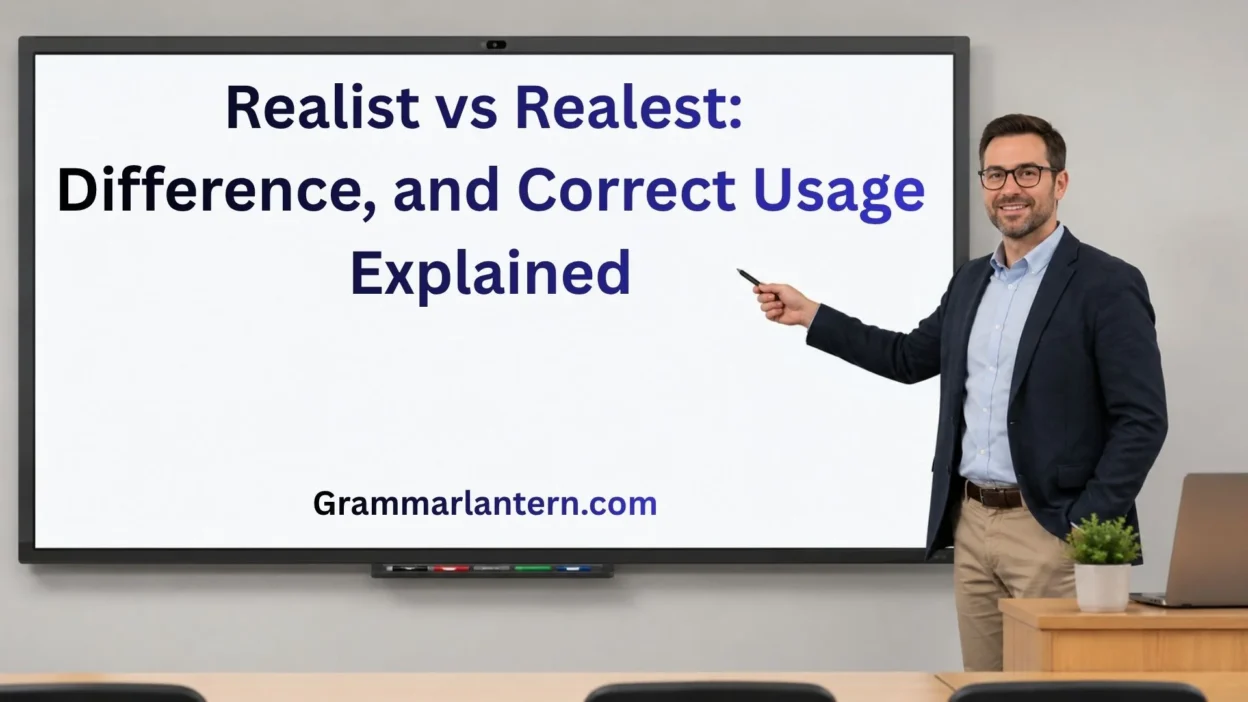
The difference between Realist vs Realest often confuses learners because these words sound alike but have different meanings in daily communication. These two words may seem similar because they come from the root word real, but their actual usage serves completely different purposes.
Many English learners and native speakers mix them up and mistakenly use them as interchangeable terms, which can create awkward sentences or incorrect sentences. Understanding this distinction is important because choosing the wrong word can change meaning in both writing and speaking.
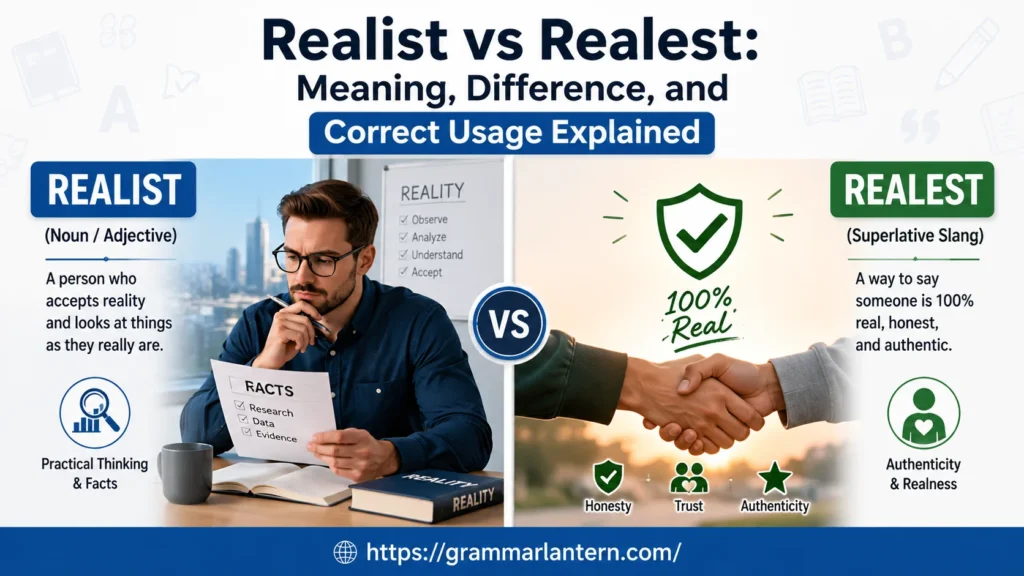
A realist is a noun that describes a person who thinks in a practical, grounded, and fact-based way. This type of thinking focuses on logic, decision-making, philosophy, and real-world planning instead of emotions or wishful thinking.
A realist sees life as it truly is and focuses on facts. In contrast, realest is an informal expression used in modern language to describe someone or something that is extremely genuine, honest, and authentic. It is commonly used on social media, in music, and during casual conversations, while it appears less often in formal writing.
Learning what each word means, how they differ, and using practical examples can improve your writing skills and speaking skills while helping you avoid common mistakes. The difference becomes easy to remember when you understand the situations where each word fits naturally.
Quick Answer: Realist vs Realest Meaning and Difference
Realist and realest come from the same root word, but they have different meanings.
| Word | Meaning | Usage |
| Realist | A person who accepts facts and thinks practically | Used to describe a person’s mindset or beliefs |
| Realest | The most genuine, honest, or authentic | Used to describe someone or something as extremely real |
A simple way to remember:
- Realist = a person
- Realest = the highest level of being real
For example:
- “John is a realist because he looks at situations logically.”
- “John is the realest friend I have because he always tells the truth.”
Although both words relate to reality, they serve different purposes.
What Does Realist Mean?
The word realist refers to someone who understands and accepts reality. A realist looks at situations based on facts, evidence, and practical possibilities instead of relying only on hopes or wishes.
A realist does not necessarily think negatively. Many people confuse realism with pessimism, but they are different.
A pessimist expects bad outcomes.
A realist evaluates all possible outcomes and prepares accordingly.
For example:
A student who says, “I need to study consistently if I want good grades,” is being realistic.
A student who says, “I will get top marks without studying because I am lucky,” may not be thinking realistically.
A realist focuses on what can actually happen.
Realist Definition in Different Contexts
The meaning of realist can change slightly depending on the situation.
Realist in Everyday Life
In normal conversations, a realist is someone who:
- Makes decisions based on facts.
- Understands limitations.
- Plans for possible challenges.
- Avoids unrealistic expectations.
Example:
“Maria is a realist. She knows success takes patience and hard work.”
Realist in Philosophy
In philosophy, realism is the belief that reality exists independently of human thoughts or opinions.
A philosophical realist believes that things exist even if people do not recognize or observe them.
For example:
A realist may argue that mountains, planets, and physical objects exist regardless of whether humans think about them.
Realist in Art and Literature
A realist can also describe an artist or writer who represents life as it actually appears.
Realist writers often focus on:
- Ordinary people.
- Real-life problems.
- Social issues.
- Everyday experiences.
Instead of creating fantasy worlds, realism tries to show life honestly.
What Does Realest Mean?
The word realest means the most real, genuine, authentic, or honest.
It is the superlative form of the adjective real.
The basic comparison works like this:
| Form | Meaning |
| Real | Genuine or true |
| Realer | More genuine than something else |
| Realest | The most genuine or authentic |
However, “realest” is mostly used in informal English.
You will often see it in:
- Conversations.
- Social media.
- Music lyrics.
- Popular culture.
- Personal messages.
For example:
“She is the realest person I know.”
This means:
“She is the most honest and genuine person I know.”
It does not mean she is a person who thinks practically.
Read More: Offered vs Offerred: Correct Spelling Explained and Usage
Realist vs Realest: Main Differences
The biggest difference between realist and realest is their grammatical function and meaning.
| Feature | Realist | Realest |
| Part of speech | Noun | Adjective |
| Describes | A person | A quality or level |
| Meaning | Someone practical and realistic | The most genuine or authentic |
| Formality | Common in formal and informal writing | Mostly informal |
| Example | “He is a realist.” | “He is the realest friend.” |
The easiest question to ask yourself is:
Am I describing a person’s way of thinking or someone’s level of authenticity?
If you describe thinking, use realist.
If you describe honesty or genuineness, use realest.
Realist vs Realest Examples
Examples make the difference easier to understand.
Examples Using Realist
- “My father is a realist and always plans for unexpected problems.”
- “A realist understands that every goal requires effort.”
- “She became a realist after experiencing the challenges of business.”
- “Realists usually consider both opportunities and risks.”
In each example, realist refers to a person.
Examples Using Realest
- “That was the realest conversation we ever had.”
- “He is the realest person in our group.”
- “Her advice was the realest thing anyone told me.”
- “This movie shows the realest side of human emotions.”
In these examples, realest describes something as extremely genuine.
Realist vs Realistic vs Real vs Realest
Many people also confuse realist with related words such as realistic and real.
Here is the difference:
| Word | Meaning | Example |
| Real | Actually existing or true | “This is a real problem.” |
| Realistic | Practical or likely to happen | “That is a realistic goal.” |
| Realist | A person who thinks practically | “She is a realist.” |
| Realest | Most genuine or authentic | “He is the realest friend.” |
Think of these words as connected family members. They share the same root but perform different jobs.
Why Do People Confuse Realist and Realest?
The confusion happens because both words begin with real.
However, English uses different endings to create different meanings.
The ending -ist often creates a noun that describes a person connected with an idea or belief.
Examples:
- Artist = a person who creates art.
- Scientist = a person who studies science.
- Realist = a person who follows realism.
The ending -est usually creates the superlative form of an adjective.
Examples:
- Small → Smallest
- Fast → Fastest
- Real → Realest
Understanding these patterns makes similar words easier to recognize.
Is Realest a Correct English Word?
Yes, realest is a recognized English word, but its use depends on context.
It is acceptable in informal communication.
For example:
- Text messages.
- Social media captions.
- Casual conversations.
However, many professional writers avoid it because formal English often prefers alternatives.
Instead of:
“She is the realest leader.”
Formal writing may use:
“She is the most authentic leader.”
Other alternatives include:
- Most genuine.
- Most honest.
- Most sincere.
- Most trustworthy.
The choice depends on your audience.
Is Realist a Positive or Negative Word?
The word realist is usually neutral or positive.
A realist is often admired because they:
- Think carefully.
- Make practical decisions.
- Understand challenges.
- Avoid unrealistic expectations.
However, some people mistakenly believe realists are negative because they point out problems.
For example:
A realist may say:
“This project needs more time and resources.”
Someone else may interpret this as negativity.
In reality, the realist may simply be identifying facts to improve the outcome.
Realist vs Realest in Daily Life
These words appear in different situations.
In Friendships
A realist friend gives practical advice.
Example:
“You should create a budget before buying a new car.”
The realest friend gives honest and genuine support.
Example:
“She stayed with me during my hardest moments. She is the realest.”
In Business
A business realist:
- Studies market conditions.
- Calculates risks.
- Makes practical plans.
The realest business feedback:
- Comes from someone who gives honest opinions.
- Helps improve performance.
In Social Media
People commonly use “realest” online to praise authenticity.
Examples:
- “The realest interview I have watched.”
- “You are the realest person here.”
This usage is informal but widely understood.
Common Mistakes With Realist and Realest
Avoid these common errors:
Using Realist to Mean Authentic
Incorrect:
“She is the realist person I know.”
Correct:
“She is the realest person I know.”
Why?
Because you are describing authenticity, not practical thinking.
Using Realest to Describe a Practical Person
Incorrect:
“My brother is a realest because he always thinks logically.”
Correct:
“My brother is a realist because he always thinks logically.”
Using Realest in Formal Writing Without Considering Style
While “realest” is understandable, formal documents often sound better with words like:
- Authentic.
- Genuine.
- Sincere.
Realist vs Realest: Quick Memory Trick
Remember this simple rule:
A realist analyzes reality.
The realest represents the highest level of authenticity.
Another way to remember:
- Realist = mindset
- Realest = quality
FAQs
1. What is the main difference between realist and realest?
A realist is a person who views situations based on facts, logic, and reality. Realest is an informal word that describes someone or something as the most genuine, honest, or authentic.
2. Are realist and realest the same word?
No, realist and realest have different meanings. Although both words come from real, they are used in different situations and cannot always replace each other.
3. Is realist a noun or an adjective?
Realist is mainly a noun because it describes a person who has a practical and realistic way of thinking.
4. Is realest a correct English word?
Yes, realest is a valid informal word. It is commonly used in casual conversations, music, and social media, but it is less suitable for formal writing.
5. When should I use the word realist?
You should use realist when talking about someone who accepts reality, focuses on facts, and makes decisions using logic rather than unrealistic expectations.
6. When should I use the word realest?
You can use realest when describing someone or something as extremely genuine, honest, or authentic, especially in informal settings.
7. Why do people confuse realist and realest?
People often confuse these words because they look and sound similar. Their shared root word real makes them appear connected, but their meanings are different.
8. Can realest be used in formal writing?
Usually, realest should be avoided in formal writing because it is an informal expression. In professional contexts, words like genuine, authentic, or most real may work better.
9. What is an example of a realist?
A person who carefully studies facts before making a decision is a realist because they rely on practical thinking and realistic expectations.
10. What is an example of realest in a sentence?
An example is: “She is the realest person I know because she is always honest and authentic.” This usage shows strong appreciation for someone’s genuineness.
Conclusion
Understanding the difference between realist and realest helps you communicate more clearly and avoid common language mistakes. A realist focuses on facts, logic, and practical thinking, while realest describes the highest level of genuineness or authenticity in informal language. Although these words share the same root, their meanings and uses are different. Knowing when to use each term can improve your writing, speaking, and overall English communication skills.

Muhammad Haroon is the voice behind many of the clear, practical grammar guides you’ll find on Grammar Lantern. With a strong background in content writing and a genuine love for the English language, Haroon specializes in breaking down intimidating grammar topics into simple, digestible lessons. His goal is simple: to empower readers to write with confidence and clarity. Whether he’s explaining tricky tenses or demystifying punctuation, Haroon approaches each topic with patience, precision, and a touch of warmth—because he knows that learning grammar is a journey, not a race.