Trama vs Trauma explains why small spelling changes create confusion between terms and helps learners understand the correct English usage of trauma. When people search online for trama and trauma, they often experience confusion because these terms look similar and appear interchangeable. However, trauma is a recognized English word with medical and psychological meanings, while trama is usually a misspelling, spelling error, or incorrect English spelling.
Many people, including writers, students, and professionals, make this spelling mistake because of a small spelling change. The real difference depends on the meaning, definition, and context of each word. Trauma describes a traumatic experience, distressing experience, emotional injury, psychological injury, or physical injury caused by events like an accident, loss, frightening event, or sudden change that creates a deep emotional impact on how a person thinks and feels.
These words appear in medical discussions, emotional health, psychology, medicine, literature, and literary references. Using the correct term in academic writing, professional documents, an essay, a blog post, or workplace communication helps people communicate accurately and create a clear, credible, and trustworthy message with better accuracy, clarity, and confidence in every situation.
Quick Answer
The correct English spelling is trauma.
- ✅ Trauma = physical injury, emotional suffering, or psychological distress.
- ❌ Trama = not the correct English spelling for injury or emotional pain.
However, trama does exist in other languages.
For example:
- In Spanish, trama means the plot or storyline of a book, movie, or situation.
- In Italian, trama can describe a storyline or the weave of fabric.
Examples:
- ✅ The accident caused severe trauma.
- ❌ The accident caused severe trama.
If you are writing in English about harm, injury, or emotional suffering, always use trauma.
What Does Trauma Mean?
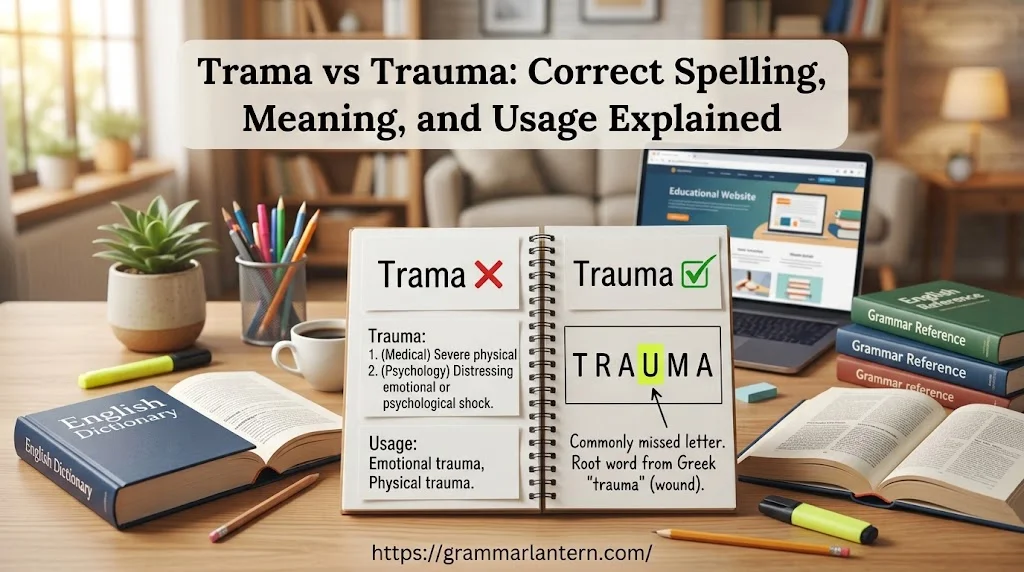
The word trauma describes a deeply distressing experience that causes physical or emotional harm. It comes from the Greek word trauma, which means “wound” or “injury.”
Today, English speakers commonly use trauma in two major ways:
- Physical trauma
- Emotional or psychological trauma
Although both types involve harm, they affect different areas of human life.
Read More: Useful vs Usefull: Which Spelling Is Correct?
Physical Trauma Meaning
Physical trauma refers to bodily injury caused by an outside force. It often happens suddenly and may require immediate medical attention.
Common causes of physical trauma include:
- Car accidents
- Falls
- Sports injuries
- Workplace accidents
- Violence
- Natural disasters
- Serious burns
For example:
“The patient suffered severe trauma after the motorcycle accident.”
In medical settings, trauma care focuses on treating serious injuries quickly. Doctors, nurses, and emergency teams often need to make fast decisions because a few minutes can make a major difference.
Common examples of physical trauma include:
| Type of Trauma | Example |
| Head trauma | A brain injury caused by a collision or fall |
| Bone trauma | Broken bones caused by accidents |
| Internal trauma | Damage to organs after a strong impact |
| Spinal trauma | Injuries affecting the spine |
Trauma medicine is a specialized field that helps patients recover from life-threatening injuries.
Emotional and Psychological Trauma Meaning
Trauma can also describe emotional damage caused by frightening, painful, or overwhelming experiences.
A person may experience emotional trauma after:
- Losing someone important
- Experiencing abuse
- Surviving a disaster
- Witnessing violence
- Going through a major life change
- Facing repeated stress
Emotional trauma can affect the way people think, feel, and respond to situations.
Possible effects include:
- Anxiety
- Fear
- Stress
- Sleep problems
- Emotional reactions
- Difficulty trusting others
- Feeling unsafe
For example:
“The accident caused emotional trauma that affected her confidence for years.”
Unlike a visible injury, emotional trauma may not always be easy to recognize. Some people experience its effects immediately, while others notice changes much later.
What Does Trama Mean?
The word trama is usually not an English word for trauma. Many English learners write it by mistake because it looks very similar to the correct spelling.
However, trama is a valid word in other languages.
Its meaning depends on the language where it appears.
Trama in Spanish
In Spanish, trama usually means the plot or storyline of a story, movie, novel, or event.
Example:
“La trama de la película fue emocionante.”
English translation:
“The plot of the movie was exciting.”
In this context, trama has nothing to do with injuries, pain, or psychological suffering.
A movie can have an interesting trama, but a person can experience trauma.
These two ideas are completely different.
Trama in Italian
In Italian, trama has more than one meaning.
It can refer to:
- The plot of a book, film, or story.
- The texture or structure of woven material.
Example:
“La trama del romanzo era complessa.”
Translation:
“The plot of the novel was complex.”
This difference shows why understanding language context matters. A familiar-looking word may carry a completely different meaning in another language.
Key Differences
The easiest way to understand trama vs trauma is by comparing their meanings.
| Word | Language | Meaning | Example |
| Trauma | English | Physical injury or emotional suffering | “The accident caused serious trauma.” |
| Trama | Spanish/Italian | Plot, storyline, or woven structure | “The trama of the novel was fascinating.” |
The biggest difference between these words is meaning, not appearance.
A single letter changes everything:
- Trauma → injury or emotional harm
- Trama → storyline or structure
Why Do People Confuse?
The confusion between trama and trauma happens for several reasons.
Similar Spelling
The two words look nearly identical:
- Trauma
- Trama
When people type quickly, they may accidentally remove the second “u.”
Incorrect:
“The victim experienced emotional trama.”
Correct:
“The victim experienced emotional trauma.”
This mistake happens because people often recognize the overall shape of a word instead of checking every letter carefully.
Influence of Other Languages
People who speak more than one language may accidentally transfer spelling patterns from their native language into English.
For example, someone who knows Spanish may already recognize the word trama. When writing in English, they may choose the familiar spelling even though the meaning is different.
This is called language interference. It happens when knowledge from one language affects the use of another language.
Pronunciation Confusion
Pronunciation can also create spelling mistakes.
The word trauma is commonly pronounced:
TRAW-muh
Because the “u” sound is not strongly emphasized, some learners forget that the letter belongs in the spelling.
Remembering the written form is important because pronunciation alone does not always show every letter.
Common Mistakes
Learning the correct spelling is important, but understanding the correct usage matters too.
Mistake: Writing Trama Instead of Trauma
Incorrect:
“The war caused emotional trama.”
Correct:
“The war caused emotional trauma.”
The English word always includes the second u.
Mistake: Using Trauma Only for Physical Injuries
Some people think trauma only describes medical injuries. That is not true.
Trauma can describe both physical and emotional experiences.
Examples:
Physical:
“The athlete suffered trauma after the collision.”
Emotional:
“The experience created lasting trauma.”
Both sentences use trauma correctly.
Mistake: Confusing Trauma With Drama
The words trauma and drama may sound similar, but they have different meanings.
| Word | Meaning | Example |
| Trauma | Serious physical or emotional harm | “The accident caused trauma.” |
| Drama | Conflict, tension, or theatrical performance | “The argument created unnecessary drama.” |
A disagreement may create drama, but a serious accident may cause trauma.
How to Remember the Correct Spelling
A simple memory trick can help you remember the correct spelling.
Think:
Trauma = Trouble, Hurt, or Harm
The extra “u” separates trauma from trama.
Another helpful reminder:
- Trauma relates to wounds and suffering.
- The extra letter reminds you that the word carries a serious meaning.
Correct spelling:
T + R + A + U + M + A = TRAUMA
Trauma in Medical and Psychological Fields
The word trauma has an important role in both healthcare and mental health.
Trauma in Medicine
Doctors use trauma to describe injuries caused by external forces.
Trauma medicine often deals with:
- Broken bones
- Brain injuries
- Internal bleeding
- Burns
- Spinal injuries
Hospitals with trauma centers provide specialized emergency care for patients with serious injuries.
Quick treatment is important because severe injuries can become life-threatening without immediate attention.
Read More: Plushie or Plushy: Which Spelling Is Correct?
Trauma in Mental Health
Mental health professionals use trauma to describe the emotional impact of distressing experiences.
Common forms of psychological trauma include:
Childhood Trauma
Childhood experiences can influence emotional development and relationships later in life.
Examples include:
- Abuse
- Neglect
- Loss of a caregiver
- Unsafe environments
Acute Trauma
Acute trauma happens after a single shocking event.
Examples:
- A serious accident
- A natural disaster
- A violent event
Chronic Trauma
Chronic trauma develops through repeated or ongoing stressful experiences.
Examples:
- Long-term abuse
- Continuous exposure to danger
- Repeated emotional harm
Every person responds differently to trauma. Recovery often depends on personal circumstances, support systems, and access to care.
Real-Life Examples
Physical Trauma Examples
- “Doctors treated patients with severe trauma after the earthquake.”
- “The player recovered from knee trauma before returning to competition.”
- “The emergency team examined him for possible head trauma.”
Emotional Trauma Examples
- “She experienced trauma after losing her home.”
- “Therapy helped him manage the effects of past trauma.”
- “The survivor explained how trauma changed her daily life.”
Related Words Connected
Understanding related words can improve your vocabulary.
| Word | Meaning | Example |
| Trauma | Injury or emotional distress | “The event caused trauma.” |
| Traumatic | Causing trauma | “It was a traumatic experience.” |
| Traumatize | To cause trauma | “The event traumatized many people.” |
| Recovery | The process of healing | “Recovery takes time.” |
These words come from related ideas but have different grammatical uses.
FAQs
1. Is Trama a correct English word?
No, trama is not considered a standard English word when discussing emotional or physical experiences. In most cases, it is a spelling mistake of trauma. However, it may appear in some foreign languages or specific literary contexts with different meanings.
2. What is the correct spelling, Trama or Trauma?
The correct English spelling is trauma. It refers to a deeply distressing experience that can cause emotional, psychological, or physical harm. Trama is generally an incorrect spelling in English.
3. Why do people confuse Trama and Trauma?
People confuse these words because they look almost identical and differ by only one letter. This small spelling difference can easily create confusion, especially when writing quickly, typing online, or learning English vocabulary.
4. What does trauma mean?
Trauma means a serious emotional, psychological, or physical response caused by a distressing event. It can happen after experiences such as accidents, loss, illness, violence, or major life changes.
5. Can trauma affect both the mind and body?
Yes, trauma can affect both the mind and body. A person may experience emotional stress, fear, difficulty coping, physical reactions, or changes in behavior after a traumatic event.
6. Is trauma only related to medical situations?
No, trauma is used in both medical and everyday conversations. It can describe physical injuries, emotional struggles, psychological experiences, and difficult events that leave a lasting impact.
7. How can I remember the difference between Trama and Trauma?
A simple way to remember is that trauma has the word “au,” just like the sound of a reaction to pain. Whenever you discuss emotional or physical harm, use trauma, not trama.
8. Is using Trama instead of Trauma considered a grammar mistake?
Yes, in English writing, using trama instead of trauma is usually considered a spelling mistake rather than a grammar mistake. Correct spelling helps make your message clear and professional.
9. Where is the word Trauma commonly used?
The word trauma is commonly used in medicine, psychology, mental health discussions, academic writing, professional documents, and everyday conversations about difficult experiences.
10. Why is understanding the difference between Trama and Trauma important?
Understanding the difference helps improve vocabulary, writing accuracy, and communication skills. Using the correct term allows readers to understand your message clearly and avoids unnecessary confusion.
Conclusion
The difference between Trama vs Trauma may seem small, but the meaning behind these words is completely different. Trauma is a recognized English word connected with emotional, psychological, and physical experiences, while trama is usually an incorrect spelling. Learning this distinction helps you avoid common writing errors and use language more confidently.
Whether you are writing an essay, preparing professional documents, communicating online, or discussing health-related topics, choosing the correct word matters. A small spelling change can affect the entire meaning of a sentence, so understanding the proper usage of trauma improves clarity, accuracy, and effective communication.

For Shafiq ur Rehman, writing is an art form and grammar is the toolbox that makes it beautiful. As a dedicated content writer at Grammar Lantern, Shafiq approaches every topic like an architect carefully laying down strong foundations of understanding before adding the finer details. He loves diving into the trickiest grammar points and resurfacing with simple, bite-sized takeaways that anyone can grasp. When he’s not crafting articles, you’ll likely find him strategizing over a game of chess, exploring dusty local bookshops, or quietly jotting down poetic observations in his notebook.



[…] Read More: Trama vs Trauma: Correct Spelling, Meaning, and Usage Explained […]
[…] Read More: Trama vs Trauma: Correct Spelling, Meaning, and Usage Explained […]