
Columbarium vs. Columbary refers to two terms for a special place where families keep urns containing cremated remains, usually inside individual niches.
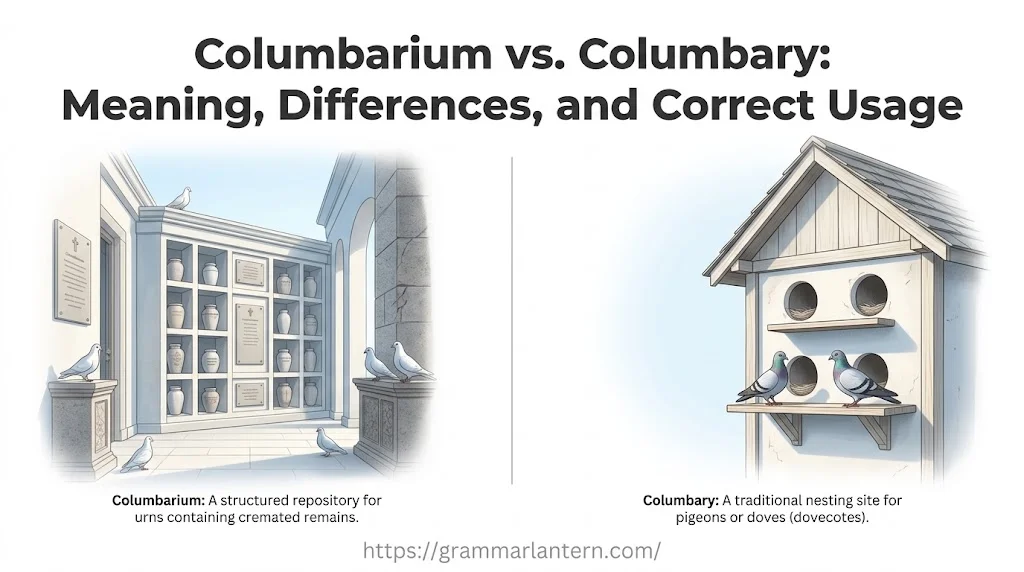
A columbarium is a structure, vault, or memorial park feature designed for urn storage. It contains recessed compartments, called niches, that hold cremation urns and human ashes. This architectural structure may be an above-ground building, an underground structure, or a wall. In modern funeral terminology, columbarium is the standard term and the common English term. A columbary, however, is a rare variant that sometimes appears in regional memorial park names, such as Columbary Park.
Both words share the same word origin. They come from the Latin word columba, meaning dove. In ancient times, a columbarium referred to a dovecote or pigeon house. Its rows of small nesting cubbies for birds resembled the wall niches used to store urns. This historical connection explains their shared meaning today.
Quick Answer
Columbarium usually refers to a structure, room, or wall containing individual niches for urns holding cremated human remains. These structures commonly appear in cemeteries, memorial gardens, churches, and other places where people honor the deceased.
Columbary generally refers to a structure or enclosure designed to house pigeons or doves. The term has a historical association with bird housing, although some contexts use it for a structure containing funerary urns.
The main distinction is the context in which each word appears.
- Columbarium: The standard modern term for a structure containing niches for cremation urns.
- Columbary: A term commonly associated with pigeon or dove housing, with some overlap in funerary usage.
- Best choice for funeral writing: Use columbarium when referring to a modern memorial structure for cremated remains.
- Best choice for bird housing: Use columbary when that term accurately describes the structure or matches the terminology used in a historical source.
Although the words are related, you shouldn’t automatically treat them as interchangeable.
What Does Columbarium Mean?
A columbarium is a structure designed to hold urns containing cremated human remains. It contains individual compartments called niches, where families can place urns and sometimes personal memorial items.
Columbaria are common in cemeteries, cremation gardens, religious institutions, and memorial parks. They offer a dedicated place where families can remember loved ones without requiring a traditional burial plot for each person.
A columbarium can take several forms. It might be a large building with indoor niches, an outdoor wall with individual compartments, or a smaller structure surrounded by a memorial garden.
The defining feature is its purpose: providing spaces for cremation urns.
What Is a Columbarium Niche?
A columbarium niche is an individual compartment within a columbarium. It holds one or more urns, depending on its dimensions and the facility’s rules.
Families may select a niche based on its location, size, price, and memorial options. Some prefer a niche at eye level because it is easy to visit and maintain. Others choose a location near a garden, chapel, or family memorial area.
A niche may include:
- A nameplate identifying the deceased.
- Birth and death dates.
- An inscription, quotation, or short tribute.
- A plaque or front panel covering the compartment.
- Space for an urn or multiple urns, where permitted.
Not every columbarium offers the same features. Some facilities allow photographs or small decorations, while others maintain strict rules to preserve a uniform appearance.
For example, a family might place their mother’s urn in a niche engraved with her name and dates. Relatives can then visit the location, read the inscription, and spend time remembering her.
Origin and Etymology of Columbarium
The word columbarium comes from Latin columba, meaning “dove” or “pigeon.” The Latin word columbarium was associated with a pigeon house and, in Roman funerary contexts, with structures containing niches for cremation urns.
This connection explains why the modern word relates to both birds and funeral architecture.
In ancient Rome, cremation was a common burial practice during certain periods. Some burial structures contained rows of small niches where urns holding cremated remains could be placed.
The arrangement resembled the compartments found in pigeon housing. Over time, the term became firmly associated with this type of funerary structure.
Today, when someone mentions a columbarium in a cemetery or funeral setting, the intended meaning is usually clear: a place for cremation urns.
Columbarium Examples in Sentences
Here are several examples showing how to use columbarium naturally.
- “The cemetery built a new columbarium to accommodate families choosing cremation.”
- “We placed Grandfather’s urn in a columbarium niche near the memorial garden.”
- “The church’s columbarium provides a peaceful place for prayer and remembrance.”
- “Each niche in the columbarium has a plaque bearing the person’s name.”
- “The family visited the columbarium on the anniversary of their loved one’s death.”
In these examples, the word refers to a structure or designated area for cremated remains.
Read More: Begun vs. Began: Which Is Correct? Helpful Examples
What Does Columbary Mean?
A columbary is generally a structure or enclosure used to house pigeons or doves. Depending on the setting and terminology, the word may also refer to a structure associated with funerary urns.
The term is related to columbarium, which helps explain the overlap between their meanings. However, the two words aren’t equally common in every context.
In modern funeral writing, columbarium is the more recognizable and established term for a place where cremated remains are kept. In discussions about birds or historical architecture, columbary may be the more appropriate word.
The important point is to consider what the structure actually does rather than choosing a word based only on its spelling.
Origin and Etymology of Columbary
Like columbarium, columbary belongs to a family of words connected with Latin columba, meaning dove or pigeon.
The connection reflects the long history of keeping pigeons in specially designed structures. These buildings provided sheltered spaces where birds could nest, rest, and sometimes be managed for food or other practical purposes.
A traditional pigeon house might contain numerous nesting compartments. Depending on the region and architectural tradition, such structures may also be called dovecotes or pigeon houses.
The terms aren’t always exact synonyms. A dovecote is a recognized general term for a structure housing doves or pigeons, while a pigeon loft often refers to a building or enclosed space used to keep domestic pigeons.
The word columbary can appear in historical or specialized descriptions of bird-housing structures. Its meaning should be interpreted according to the period, location, and context in which it appears.
Columbary Examples in Sentences
Consider these examples involving bird housing.
- “The old estate contained a columbary where pigeons nested.”
- “The historic garden included a small columbary beside the courtyard.”
- “The architect restored the traditional columbary while preserving its original design.”
- “Visitors learned how the estate’s columbary once sheltered domestic pigeons.”
These examples use columbary in a bird-related context.
In a funerary setting, a historical document might use the word differently. If you’re quoting or explaining such a document, preserve its terminology and clarify what the structure contains.
Key Differences
The clearest way to distinguish the two terms is to compare their primary uses.
Both words share a historical connection with pigeons, but modern readers are more likely to encounter columbarium in funeral and memorial contexts.
Difference in Meaning
A columbarium is primarily understood as a structure containing niches for cremation urns. It gives families a permanent or designated place to keep and visit the remains of deceased loved ones.
A columbary generally refers to a place for housing pigeons or doves, although some sources use the term in funerary contexts.
For example, a cemetery brochure describing a wall of cremation niches would normally use columbarium. A description of a historic estate with a structure for pigeons might use columbary.
The surrounding details help establish the intended meaning.
Difference in Usage
The words differ most noticeably in contemporary usage.
Use columbarium when:
- Describing a cemetery’s cremation niches.
- Explaining funeral or memorial arrangements.
- Discussing a church’s designated space for cremated remains.
- Writing about urn storage and memorial architecture.
Use columbary when:
- Describing a pigeon- or dove-housing structure.
- Discussing historical architecture that uses this terminology.
- Referring to a structure specifically identified as a columbary in a reliable description or historical record.
If you’re writing for a general audience, choose columbarium for modern funeral contexts. Readers are more likely to recognize it and understand its purpose.
Difference in Spelling and Word Form
The spelling difference is easy to spot:
- Columbarium ends in -arium.
- Columbary ends in -ary.
Despite their similar appearance, the words shouldn’t be treated as simple spelling variants in every sentence. Their meanings overlap, but their preferred contexts differ.
A useful way to remember the distinction is to connect columbarium with cremation and memorial niches. Connect columbary with pigeons and doves.
This memory aid isn’t a complete definition of every historical use, but it works well for common modern writing.
Comparison Table
| Feature | Columbarium | Columbary |
| Primary modern meaning | Structure containing niches for cremation urns | Structure or enclosure for pigeons or doves |
| Common context | Cemeteries, memorial gardens, churches | Bird housing, historical architecture |
| Typical contents | Urns containing cremated remains | Living or nesting pigeons and doves |
| Connection to Latin | Related to columba, meaning dove or pigeon | Related to the same Latin word |
| Modern funeral usage | Standard and widely recognized | Less common and context-dependent |
| Best use in general writing | Modern cremation memorials | Bird housing or specifically documented historical usage |
The table summarizes the usual distinction. Specialized terminology and historical sources may use the words differently.
Columbarium vs. Mausoleum: What’s the Difference?
A columbarium and a mausoleum can both serve as memorial structures, but they generally accommodate different forms of remains.
A columbarium contains niches for urns holding cremated remains. Its compartments are usually smaller than spaces designed for coffins or caskets.
A mausoleum is a building designed to house human remains above ground. It may contain crypts for coffins or caskets, and some mausoleums also include niches for cremation urns.
The distinction is therefore based on their primary design and function, not simply whether a structure stands above ground.
For example, a cemetery might have a mausoleum containing several levels of crypts. Nearby, a columbarium wall might hold urns in individual compartments.
Both structures provide designated places for remembrance. However, they serve different needs, and their names shouldn’t be used interchangeably without considering their actual design.
Columbarium vs. Columbary for Pigeons
The connection between these terms becomes clearer when you consider traditional pigeon housing.
Pigeons have been kept in specially designed structures for centuries. These buildings provide shelter, nesting areas, and compartments where birds can settle.
A columbary may be described as a pigeon house or dove house. In historical settings, it might appear as a freestanding tower, a small building, or a section of a larger estate.
A modern columbarium, by contrast, is usually associated with cremation urns rather than living birds.
Columbary, Dovecote, and Pigeon Loft
These three terms describe related structures, but their usage can differ.
- Columbary: A term associated with housing pigeons or doves, particularly in historical or specialized contexts.
- Dovecote: A structure designed to house doves or pigeons, often with nesting compartments.
- Pigeon loft: A building or enclosed area used to keep domestic pigeons, including birds raised for racing or breeding.
For example, a historic manor might have a stone dovecote in its garden. A pigeon enthusiast might keep racing birds in a pigeon loft. A historical description might refer to a bird-housing structure as a columbary.
These labels depend partly on architectural tradition and regional usage.
The essential distinction remains straightforward: determine whether you’re describing a bird-housing structure or a memorial facility for cremated remains.
How Is a Columbarium Used Today?
Modern columbaria provide dedicated spaces for people who choose cremation. They can be part of large cemetery complexes or smaller memorial areas attached to religious institutions.
Their designs vary, but their central purpose remains the same: to house urns containing cremated remains in an organized and respectful setting.
Columbarium Niches and Cremation Urns
Each niche provides space for one or more urns, depending on the facility’s design and policies.
Some niches have glass fronts that allow visitors to see an urn or memorial objects. Others use stone, metal, or another solid material, often with an engraved plaque.
Before selecting a niche, families may need to consider:
- Capacity: How many urns can the niche accommodate?
- Location: Is the niche indoors, outdoors, or near a garden?
- Memorial options: Can the family add photographs, inscriptions, or decorative items?
- Maintenance: Who cleans and maintains the surrounding area?
- Rules: Are there restrictions on urn materials, flowers, or personal objects?
- Cost: What fees apply to the niche, inscription, and ongoing maintenance?
Policies vary by cemetery, religious institution, and local regulations. Families should confirm the details before making arrangements.
Types of Columbaria
Columbaria come in several common forms.
Indoor Columbaria
An indoor columbarium is located inside a building, chapel, or dedicated memorial room.
It offers a sheltered environment where visitors can pay their respects regardless of weather. Some facilities include seating, quiet prayer areas, or spaces for private reflection.
Outdoor Columbaria
An outdoor columbarium may consist of freestanding walls, stone structures, or rows of niches within a landscaped cemetery.
Gardens, trees, and walkways can make these areas peaceful places for remembrance. However, outdoor structures need suitable materials and maintenance to withstand local weather.
Freestanding Columbaria
A freestanding columbarium is a separate structure rather than a wall integrated into another building.
Its size can range from a modest memorial feature to a large architectural installation. The term describes the structure’s physical arrangement rather than a different type of funerary purpose.
Where Can You Find a Columbarium?
You may find a columbarium in several settings:
- Cemeteries and memorial parks.
- Cremation gardens.
- Churches and other religious institutions.
- Dedicated memorial buildings.
- Certain temple grounds and other religious burial settings, where permitted.
The availability of these facilities depends on local customs, religious practices, planning rules, and the services offered by the organization.
How to Use Correctly
Choosing between the words becomes easier when you start with the subject of your sentence.
If you’re discussing cremation, urns, or memorial niches, columbarium is generally the appropriate choice. If you’re describing a pigeon house or a historical structure identified as a columbary, use columbary.
When to Use Columbarium
Use columbarium in contemporary funeral, cemetery, and memorial writing.
Examples include:
- “The cemetery’s columbarium contains niches for cremation urns.”
- “The family reserved a columbarium niche for their father’s remains.”
- “The new columbarium includes an outdoor garden for visitors.”
- “The church maintains a columbarium for members of its community.”
Each example clearly refers to a place for cremated remains.
If your readers are unfamiliar with the term, define it the first time you use it. A short explanation can prevent confusion without interrupting the article’s flow.
When to Use Columbary
Use columbary when it accurately describes a pigeon- or dove-housing structure, or when you need to preserve terminology used by a historical source.
Examples include:
- “The estate’s columbary once sheltered pigeons.”
- “The restoration project preserved the old columbary.”
- “The historical record describes a columbary near the main courtyard.”
If you’re writing about a modern cemetery, don’t choose columbary simply because it resembles columbarium. Confirm the facility’s terminology and intended meaning.
Common Mistakes to Avoid
Several mistakes can make these words confusing.
Treating the terms as perfect synonyms: Their meanings overlap, but their primary modern uses aren’t identical.
Calling a columbarium a pigeon loft: A columbarium in a cemetery generally holds cremation urns. A pigeon loft houses birds.
Assuming columbary is always a misspelling: The word has legitimate bird-related usage and can appear in historical or specialized contexts.
Using columbarium for every above-ground burial structure: A mausoleum, crypt, and columbarium have different typical functions, although a larger facility may combine them.
Ignoring context: A word’s intended meaning can change with the period, region, and subject being discussed.
The safest approach is to describe the structure accurately and use the established term for that setting.
Practical Examples
The following examples show how context determines the better word.
| Situation | Appropriate term | Why |
| A cemetery wall holds cremation urns | Columbarium | It contains niches for cremated remains |
| A church provides memorial niches for urns | Columbarium | The structure serves a funerary purpose |
| A historic estate has a structure for pigeons | Columbary | The structure houses birds |
| A historical document calls a bird house a columbary | Columbary | The original terminology is relevant |
| A cemetery offers spaces for family urns | Columbarium | The modern memorial function is clear |
| A building combines crypts and urn niches | Depends on the specific area | The structure may include a mausoleum and a columbarium |
A Practical Case Study: Choosing the Right Term
Imagine you’re editing two descriptions for a heritage website.
The first describes a modern memorial garden with a stone wall containing engraved niches. Each niche holds an urn, and families visit to remember deceased relatives.
The appropriate term is columbarium because the structure accommodates cremated remains.
The second description covers a historic country estate with a small tower containing nesting spaces for pigeons. The structure forms part of the property’s traditional architecture.
Here, columbary may be appropriate if that term matches the estate’s historical or architectural description. Dovecote might also be a suitable choice.
Although both structures share a linguistic connection with pigeons, their functions are different. Choosing the correct word makes each description more precise.
Read More: Scoup vs. Scoop: Which Spelling Is Correct?
FAQs
1. Is it columbarium or columbary?
Columbarium is the standard English term for a structure that holds urns containing cremated remains. Columbary is a less common variant used in some regions and memorial park names.
2. What is a columbarium?
A columbarium is a building, wall, or designated structure with small compartments called niches. Families use these niches to place urns containing cremated remains.
3. What does columbary mean?
Columbary refers to a place where cremation urns are kept. It has the same general meaning as columbarium but is less common in standard English.
4. What is the difference between columbarium and columbary?
The main difference is usage rather than meaning. Columbarium is the widely recognized term, while columbary is a rare alternative that appears in certain regional contexts.
5. What is a niche in a columbarium?
A niche is a small compartment inside a columbarium. It holds an urn containing cremated remains and may have a cover or plaque displaying the person’s name and memorial details.
6. Where are columbaria usually located?
Columbaria are commonly found in cemeteries, memorial parks, crematoriums, and religious burial grounds. They may be built indoors, outdoors, underground, or along a memorial wall.
7. Why is it called a columbarium?
The word columbarium comes from the Latin word columba, meaning dove. Ancient Romans used the term for structures with compartments that resembled the nesting spaces found in dovecotes.
8. Is a columbarium the same as a cemetery?
No. A cemetery is a larger area used for burials and memorials, while a columbarium is specifically designed to hold urns containing cremated remains. A columbarium can be located within a cemetery.
9. Is columbary an incorrect spelling?
Columbary is not necessarily incorrect. It is a rare variant of columbarium, although columbarium is the safer choice for general English writing and formal documents.
10. What is the plural of columbarium?
The plural of columbarium is columbaria. The word columbariums is also used in English. Both forms refer to multiple structures designed to hold cremation urns.
Conclusion
Understanding columbarium vs. columbary is easier when you focus on their meaning and common usage. Both words describe a place where families can keep urns containing cremated remains, but columbarium is the standard and more widely recognized term.
Although columbary appears in some regional names and memorial settings, it is less common in everyday English. If you are writing an article, preparing a formal document, or describing a memorial structure, choose columbarium for clarity. Remembering this simple difference will help you use the correct term with confidence.